


NASA plans to send telescope into the stratosphere on a stadium-sized balloon to study the cosmos
The balloon stationed at a 40-km altitude will study far-infrared light, which is invisible to the human eye.

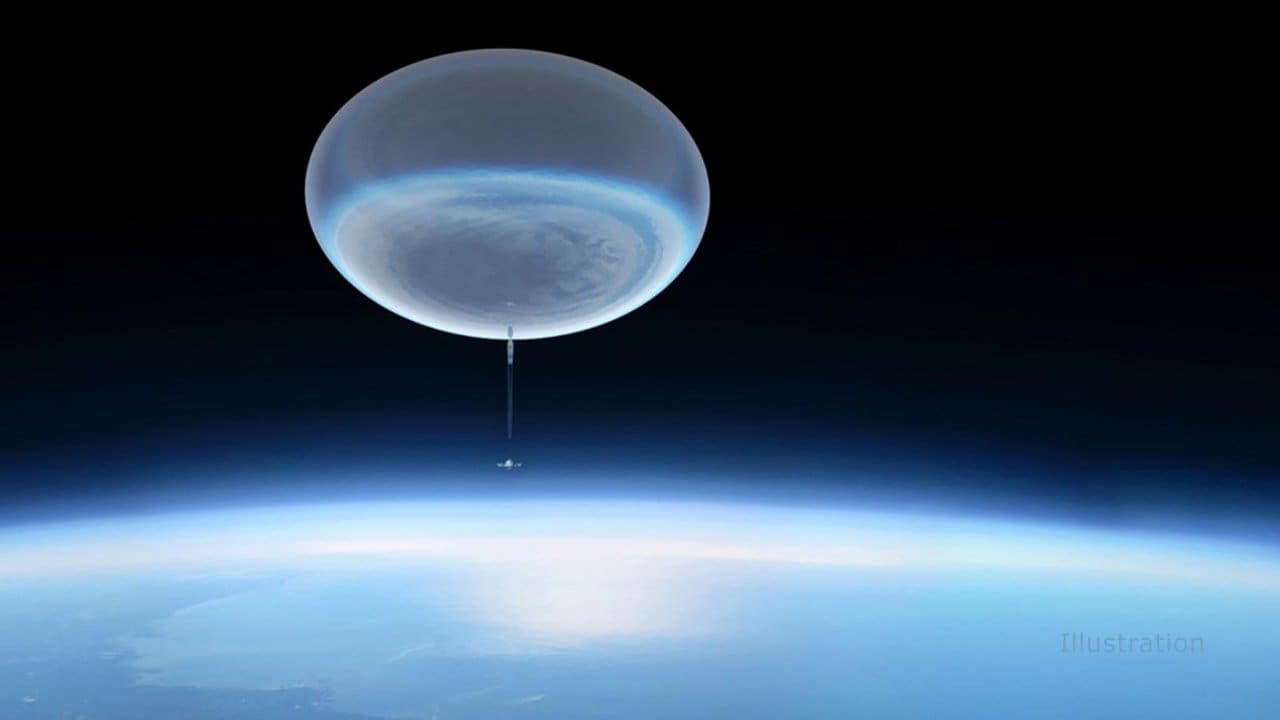
Illustration of a high-altitude balloon ascending into the upper atmosphere. Image: NASA[/caption]The main payloads in the balloon are going to be a telescope, science instruments, and certain subsystems like cooling and electronic systems. By early August 2020, JPL engineers will begin integration and testing of subsystems. It was only recently that the team completed the design for the telescope's payload."Balloon missions like ASTHROS are higher-risk than space missions but yield high-rewards at modest cost," said JPL engineer Jose Siles, who is also the project manager for ASTHROS.He added that this ambitious mission is aiming to successfully conduct observations in astrophysics that have never been attempted before."The mission will pave the way for future space missions by testing new technologies and providing training for the next generation of engineers and scientists," Siles added.The mission will measure the motion and speed of gas around newly formed stars, with four major targets already planned to begin with. ASTHROS will observe two regions in the Milky Way where stars are born. The telescope will also map the presence of two kinds of nitrogen ions that reveal the places where "winds" from supernova explosions have reshaped the clouds of gas and dust in these active, energetic star-forming regions of the galaxy.

Careless Whispers: Scientists discover that plants can 'talk' to each other using smells
Life on Mars? European Space Agency’s Orbiter discovers ice water deposits at equator
Microsoft briefly overtakes Apple as the most valuable company, Apple back on top again
Even NASA is facing a tough time, starts layoffs following major budget cuts
ISRO, NASA's NISAR satellite to get ready by Jan-end, will monitor Earth's snow-covered regions