


A new stealth sheet helps objects that emit heat to hide from infrared cameras
By incorporating electronic heating elements into the stealth sheet, the researchers have also created a high-tech disguise for tricking infrared cameras.

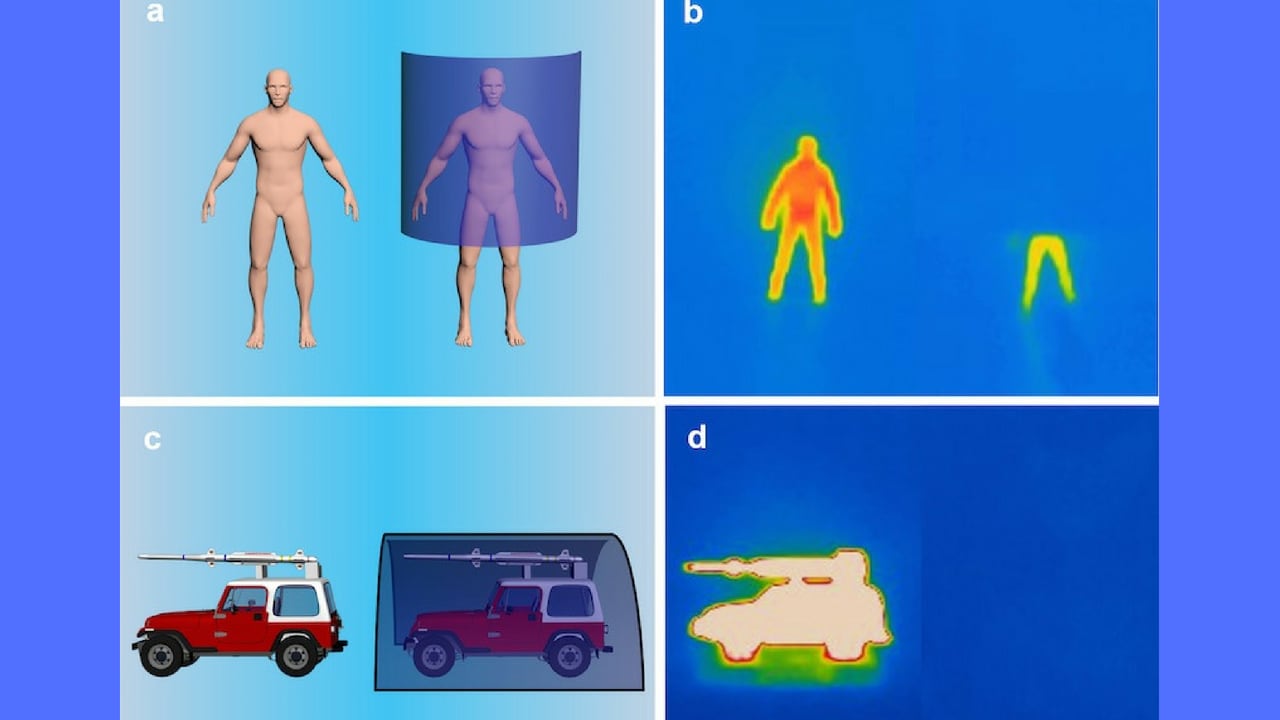
A newly developed stealth sheet can hide hot objects like human bodies or military vehicles from infrared cameras. Image: University of Wisconsin-Madison.[/caption]Less than one millimetre thick, the sheet absorbs approximately 94 per cent of the infrared light it encounters and trapping so much light means that warm objects beneath the cloaking material become almost completely invisible to infrared detectors, according to the study.To trap infrared light, Jiang and his colleagues turned to a unique material called black silicon, which is commonly incorporated into solar cells."What we have shown is an ultrathin stealth sheet. Right now, what people have is much heavier metal armour or thermal blankets," said Jiang Hongrui, professor of electrical and computer engineering at the University of Wisconsin-Madison. "It's a matter of the weight, the cost and ease of use."Also, the stealth material can strongly absorb light in the so-called mid- and long-wavelength infrared range, the type of light emitted by objects at approximately human body temperature.By incorporating electronic heating elements into the stealth sheet, the researchers have also created a high-tech disguise for tricking infrared cameras."You can intentionally deceive an infrared detector by presenting a false heat signature," said Jiang. "It could conceal a tank by presenting what looks like a simple highway guardrail."Black silicon absorbs light because it consists of millions of microscopic needles called nanowires, all pointing upward like a densely-packed forest. Incoming light reflects back and forth between the vertical spires, bouncing around within the material instead of escaping.The scientists boosted its absorptive properties by tweaking the method through which they created their material."We didn't completely reinvent the whole process, but we did extend the process to much taller nanowires," said Jiang.They made those nanowires by using tiny particles of silver to help etch down into a thin layer of solid silicon, which resulted in a thicket of tall needles. Both the nanowires and the silver particles contribute to absorbing infrared light.The researchers' black silicon also has a flexible backing interspersed with small air channels. Those air channels prevent the stealth sheet from heating up too quickly as it absorbs infrared light.

Careless Whispers: Scientists discover that plants can 'talk' to each other using smells
Life on Mars? European Space Agency’s Orbiter discovers ice water deposits at equator
Microsoft briefly overtakes Apple as the most valuable company, Apple back on top again
Even NASA is facing a tough time, starts layoffs following major budget cuts
ISRO, NASA's NISAR satellite to get ready by Jan-end, will monitor Earth's snow-covered regions