


10 new moons of Jupiter discovered, including one that is crashing into other moons
Jupiter’s 79 moons are the most of any planet in the solar system, followed by the 62 of Saturn.

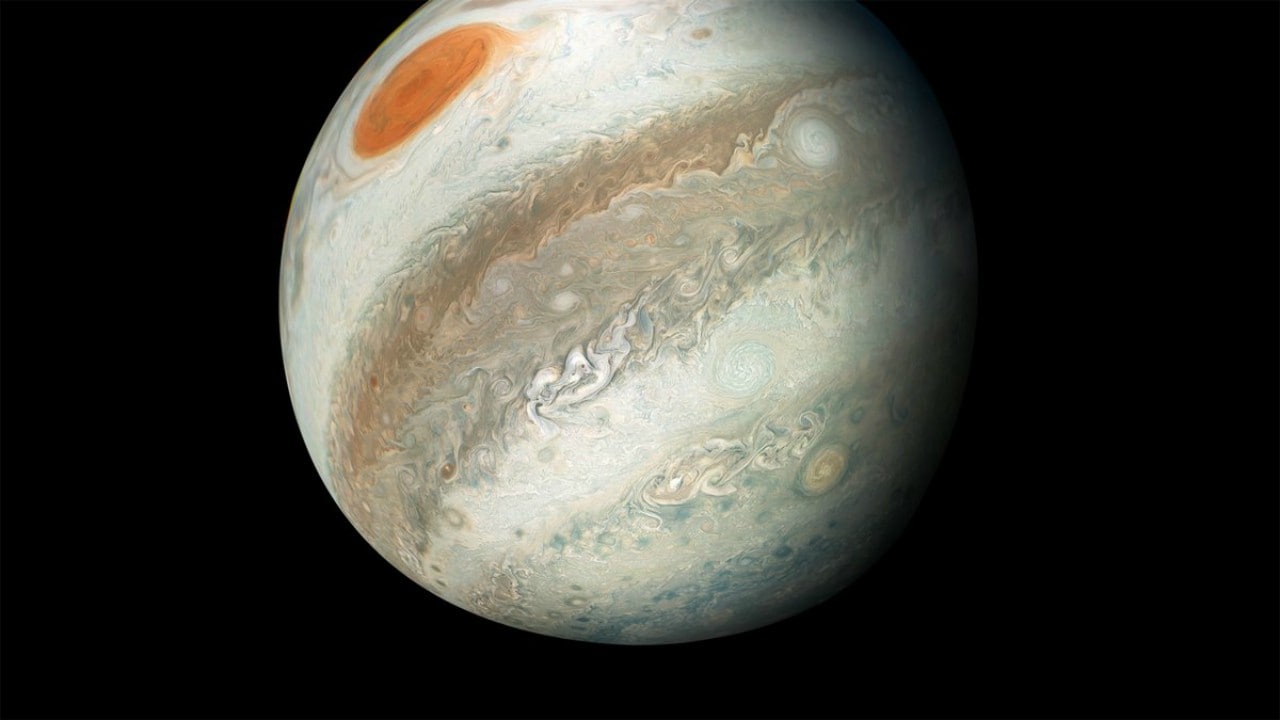
In this image from May 2018, the extraordinary view of Jupiter from the south makes the Great Red Spot appear as though it is in northern territory. Twitter@NASAJuno[/caption]“Jupiter is like a big vacuum cleaner because it’s so massive,” Sheppard said. “These objects started orbiting Jupiter, instead of falling into it. So we think they’re intermediate between rocky asteroids and icy comets. So they’re probably half ice and half rock.”The most interesting of the new moons is Valetudo (pronounced val-eh-TOO-doh), named after the ancient Roman god Jupiter’s great-granddaughter, the goddess of health and hygiene. Valetudo orbits Jupiter in the same direction that the planet spins, but a bunch of other small moons share the same orbital path while traveling in the opposite direction.“Valetudo’s going down the highway the wrong way, so it’s very likely it will collide with these other objects. It probably has collided with them over time,” Sheppard said.Jupiter’s 79 known moons are the most of any planet in the solar system, followed by the 62 identified around the giant ringed gas planet Saturn. Sheppard said Jupiter and Saturn may actually have a similar number of moons, with some of Saturn’s smaller ones not yet detected.A moon is defined as any object, regardless of size, that orbits a planet, not the Sun. Only the two innermost planets in the solar system, Mercury and Venus, have none. Of Jupiter’s 79 moons, 26 remain unnamed, including nine of the 10 new ones.

Careless Whispers: Scientists discover that plants can 'talk' to each other using smells
Life on Mars? European Space Agency’s Orbiter discovers ice water deposits at equator
Microsoft briefly overtakes Apple as the most valuable company, Apple back on top again
Even NASA is facing a tough time, starts layoffs following major budget cuts
ISRO, NASA's NISAR satellite to get ready by Jan-end, will monitor Earth's snow-covered regions