


Pova 8 review: Big battery, bold design—but is it worth the price?
The Pova 8 stands out with its massive battery, distinctive design, and useful AI features, though its older chipset and IPS LCD display hold it back against rivals

Pros
- Excellent battery life
- Unique Alive Matrix LED design
- Reliable day-to-day performance
- Useful AI features
- Stable connectivity with 20 5G bands
Cons
- IPS LCD display feels dated at this price
- Heavy and bulky design
- Cameras tend to overexpose shots
- No ultra-wide camera
- 6nm Process Chip- slightly older processor
Score- 3.5 /5
The Rs 25,000–30,000 smartphone segment has changed profoundly. Gone are the days when phones in this category stood out simply because flagship features had trickled down to a lower price point. Consumers have grown tired of tepid smartphone innovation. Rather than settling for a one-trick pony, they now seek a balanced device with dependable battery life, a seamless operating system, robust performance, and an impressive camera system.
It would be fair to say that the Pova 8 fulfils most of these requirements. Here's what we liked—and disliked—during our time with the smartphone.
The Pova series has always been a strong performer for Tecno. The Pova 7 was a capable smartphone in its own right, which means the Pova 8 has big shoes to fill if it hopes to lead the segment. Here's how it plans to stand out.
 More from Reviews
Pova 8 Review: Design
Forget the usual and the orthodox with this one. Tecno has seemingly left no stone unturned in ensuring that the Pova 8 stands out from the crowd.
We had the 18-bit White colour variant with us during testing, though the device is also available in a Terminal Green shade. The white version combines silver and white tones with orange accents. The back panel features an intricate pattern that mimics the smartphone's internal chassis, giving it a futuristic aesthetic.
Thanks to the massive battery, the phone is slightly thick in hand, but that's the price you pay for a significant increase in battery capacity.
Positioned neatly alongside the primary camera setup is the Alive Matrix Display. We're fairly certain you haven't seen anything quite like this before. It consists of an arrangement of tiny LEDs that respond to music, notifications, and user interactions. The lights pulse and shift across a geometric matrix, turning the rear panel into a dynamic visual display. The dot matrix display offers a unique opportunity for personalisation. Users can choose from a variety of preset designs and animations, or create their own custom patterns through the dedicated companion app, allowing the device's rear panel to reflect their individual style.
Novelty aside, at 225g, this is a heavy device to wield. Its 8.8mm thickness does little to improve ergonomics, and prolonged one-handed use can become tiring.
Display
The Pova 8 features a 6.76-inch IPS LCD display with a 144Hz refresh rate. It is bright, fluid, and showcases vibrant colours. However, the best refresh rate I could consistently achieve while playing Call of Duty at the highest settings was 90fps. More surprisingly, the previous-generation device featured a pixel density of 396ppi, while the newer model operates at 381ppi.
For comparison, the Motorola Edge 60 Pro, which retails for around Rs 30,000, offers a P-OLED display with a 444ppi pixel density. Similarly, the OnePlus Nord CE 6 provides a 144Hz AMOLED panel with HDR support and a pixel density of 450ppi.
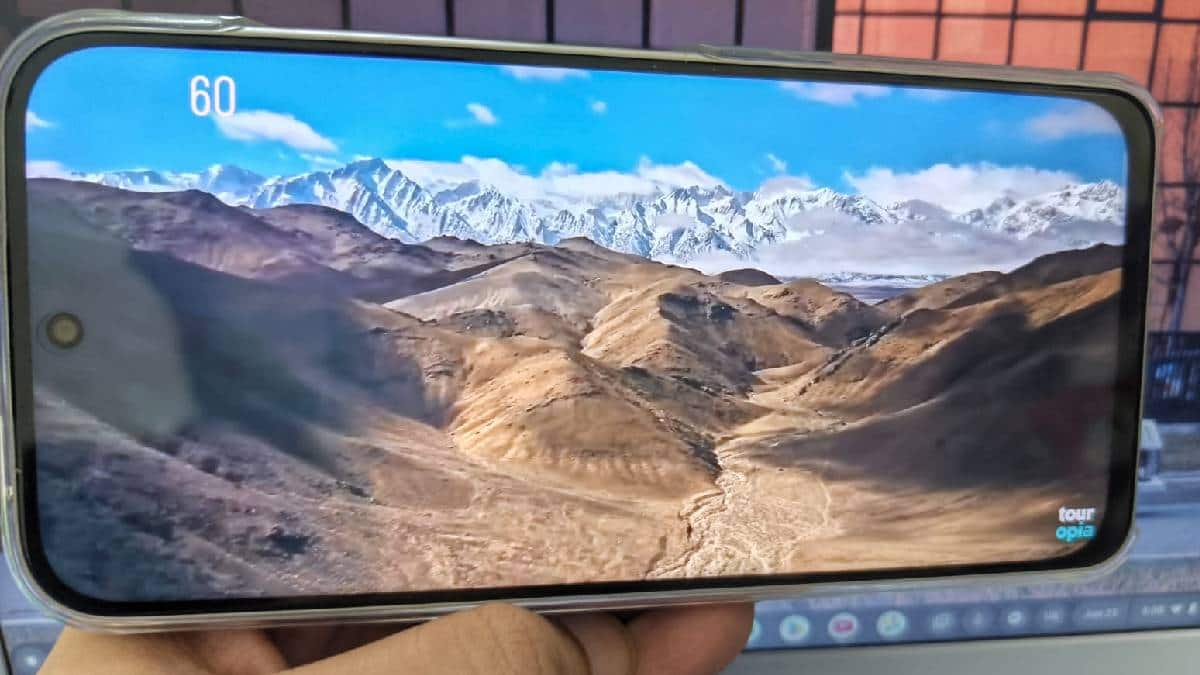
Scrolling through menus and applications felt exceptionally smooth. I used an on-screen FPS counter and, even after enabling higher frame-rate settings, it consistently displayed readings around 90fps. It's possible the application wasn't reporting frame rates accurately.
Since the display uses an IPS LCD panel, it is reasonably bright but lacks the deep blacks associated with AMOLED screens. In some situations, details appeared slightly washed out. The difference becomes obvious only when the phone is placed side by side with an AMOLED-equipped competitor. Otherwise, it remains perfectly adequate for watching content on YouTube and other streaming platforms.
Unlike AMOLED displays, LCD panels rely on a constantly active backlight. As a result, black levels are not as deep, and some scenes can appear slightly washed out.
Camera
The Pova 8 comes equipped with a 50MP Sony LYTIA 600 sensor accompanied by a light sensor and AI-assisted camera features. The primary camera has an f/1.8 aperture. In daylight, it performs reasonably well, delivering bright and vibrant photographs with plenty of detail. During our testing, we captured several well-detailed images, although colours occasionally appeared slightly oversaturated.

Night photography is less convincing. The camera tends to overexpose scenes whenever a strong light source is nearby. To capture better results, I often had to manually reduce exposure levels.
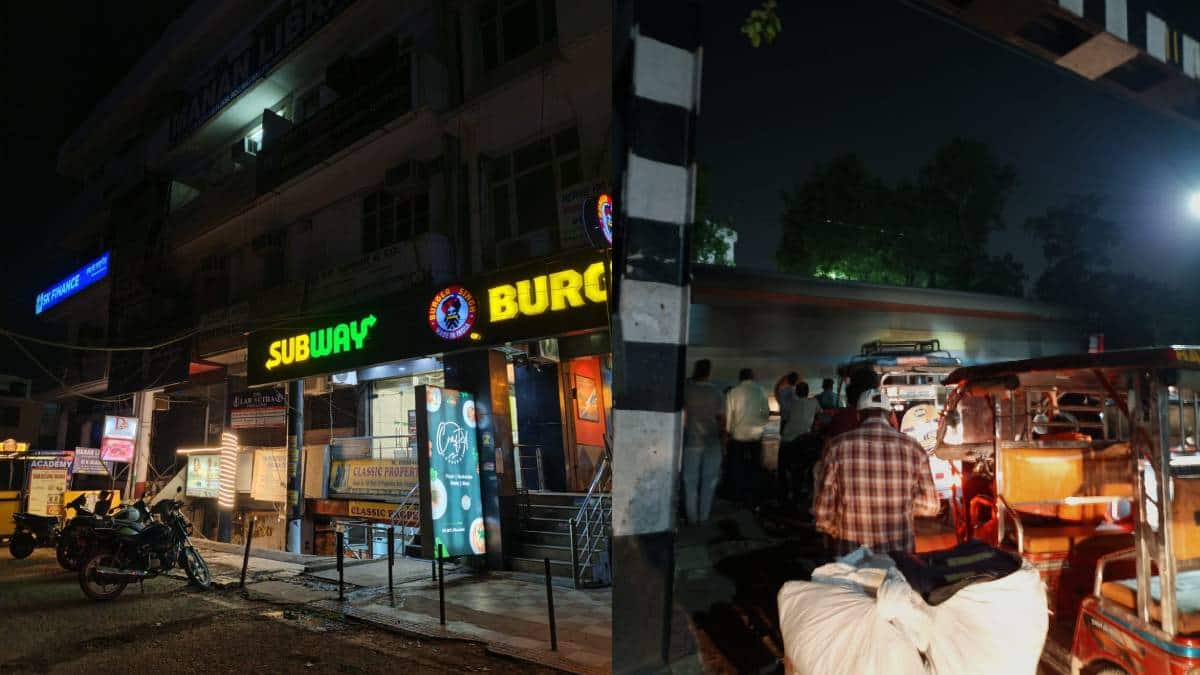
The single-camera arrangement is a bold move considering most competitors continue adding additional lenses wherever possible. To compensate, the phone relies heavily on computational photography. In simpler terms, it crops into the frame to simulate different focal lengths and zoom levels.
Portrait mode performs reasonably well, retaining a convincing background blur effect. However, unless you can overcome the camera's tendency to overexpose subjects, portrait shots may leave you somewhat disappointed.
Zoom levels beyond 2x, as image quality begins to deteriorate noticeably.
That said, credit where it's due. Tecno has packed in enough AI-assisted image processing to improve overall results. I photographed a few particularly energetic furry friends during testing, and none of the shots came out blurry. The camera consistently managed to freeze motion and capture usable images.
To compensate for the missing hardware, Pova 8 has has included a wide selection of shooting modes. These include Portrait, Super Night, AIGC Portrait, Sky Shop, Pro Mode, Slow Motion, Super Macro, and video recording at up to 2K 30fps.
However, considering what competitors offer in this price segment, the video recording capabilities feel somewhat underwhelming.
Performance
The Pova 8 is powered by the MediaTek Dimensity 7100 octa-core processor. It features four ARM Cortex-A78 cores clocked at up to 2.4GHz and four Cortex-A55 efficiency cores running at up to 2.0GHz. Graphics duties are handled by the Mali-G610 MC2 GPU.
Users can choose between 6GB RAM + 128GB storage and 8GB RAM + 128GB storage variants. Both versions support expandable storage via a microSD card slot.
The device runs Android 16 with Tecno's HIOS 16 skin on top. One useful addition is Virtual RAM, which allows internal storage to be allocated as supplementary memory. Users can choose between 3GB, 5GB, or 8GB of additional virtual RAM.
The interface includes extensive customisation options for the Alive Matrix Display, along with several AI-powered tools. However, users will also need to deal with a fair number of pre-installed applications.
The POVA 8 5G is designed to maintain reliable connectivity even in areas with inconsistent network coverage. It features a triple-chipset architecture that includes dedicated G1 and SE1 signal chips, helping improve network stability in both crowded urban locations and remote regions.
With support for 20 5G bands and UPS 3.0 technology, the device also promises faster and smoother digital payment experiences, making it a practical choice for users who rely heavily on mobile connectivity.
The processor choice has left me somewhat puzzled. The Pova 7 was powered by the MediaTek Dimensity 7300, yet its successor arrives with the Dimensity 7100. Why Tecno chose to step back to an older chipset built on a 6nm process remains unclear. On paper, it feels like a downgrade rather than a generational leap, especially in a segment where performance improvements are often a key selling point.
AI Features
Pova 8 has offers a wide range of AI-powered features accessible through the dedicated AI section within Settings.
Ella Smart Touch
This feature allows users to recognise and interact with on-screen content using a single tap. It can extract text, identify objects, and perform contextual actions.
Translation Assistant
During testing, the Translation Assistant proved to be a genuinely useful addition. It offers offline functionality through downloadable language packs and can facilitate conversations across different languages. A Social Assistant feature extends similar functionality to messaging and communication tasks.
AI Notes, Recording Summary and More
The AI Notes feature allows users to sketch rough ideas and enhance them using AI-generated suggestions. We experimented with the tool and found it useful for refining basic concepts.
Additional AI-powered features include Recording Summary and Circle to Search, both of which help streamline everyday tasks. Pova 8 also has three months of Google AI Pro benefits at no additional cost.
In everyday use, the phone performed admirably. It handled routine tasks effortlessly and never appeared to struggle with multitasking or application management.
Gaming performance was generally respectable. While playing Call of Duty at maximum settings and the highest available refresh rate, the game initially ran at 120fps before eventually settling closer to 60fps to maintain stability and manage temperatures.
The device does warm up during extended gaming sessions, though not to an alarming degree.
If gaming is your primary use case, I would recommend sticking to lower graphics settings paired with medium-to-high refresh rates for a more consistent experience.
Benchmark Scores
In the Geekbench benchmark, the Pova 8 achieved a single-core score of 917 and a multi-core score of 2,443. By comparison, the similarly priced Motorola Edge 60 posted a single-core score of 1,024 and a multi-core score of 2,924.
In the 3DMark Wild Life Extreme stress test, the Pova 8 recorded a best loop score of 693. The device did warm up noticeably during benchmarking, though this is not entirely unexpected given the demanding nature of these tests.
It would be fair to say that the Pova 8 does not deliver exceptional benchmark results. However, synthetic stress tests often push smartphones far beyond the workloads that most users would encounter in everyday use. As such, the phone remains perfectly capable of handling routine tasks, multitasking, and casual gaming without issue.
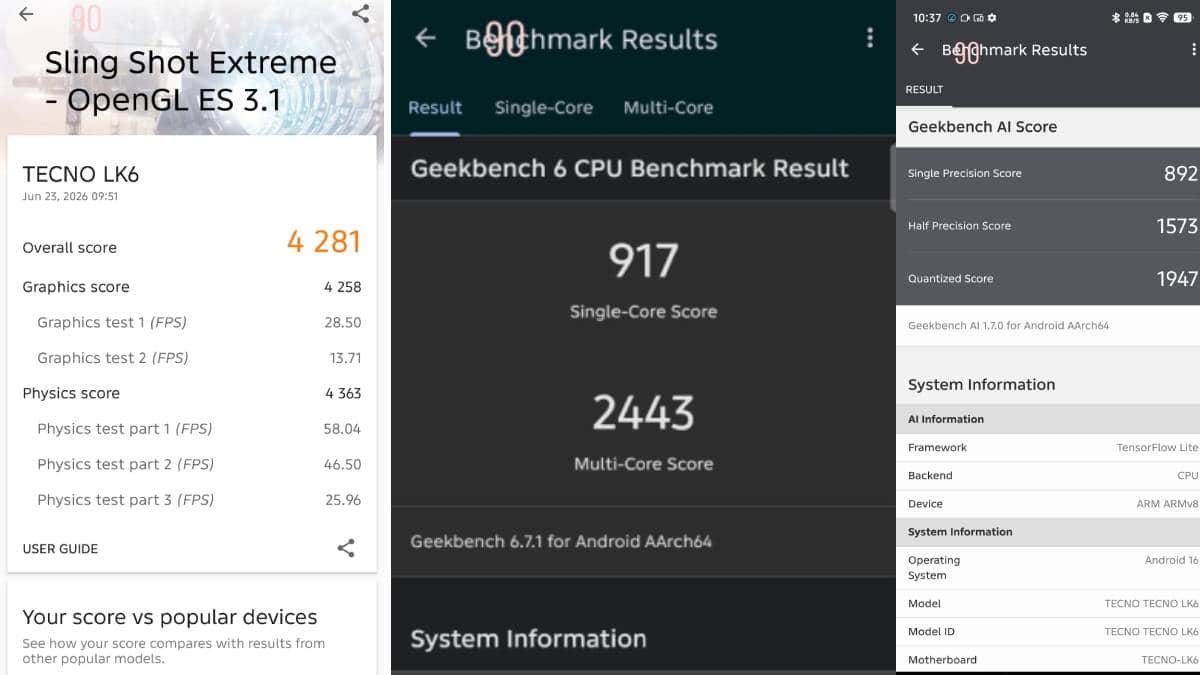
That said, users primarily interested in gaming may be better served by a device powered by the MediaTek Dimensity 7400. Built on a more efficient 4nm process, the newer chipset offers improved performance and thermal efficiency, making it a stronger choice for sustained gaming sessions.
Battery and Charging
The 8,000mAh battery leaves little room for improvement and is easily one of the Pova 8's strongest features. The bundled 45W charger is quick to top up the battery whenever needed.
With my usage, I was able to comfortably achieve two days of battery life on a single charge. More often than not, I found myself plugging in the phone only towards the end of the second day, with around 20% charge still remaining.
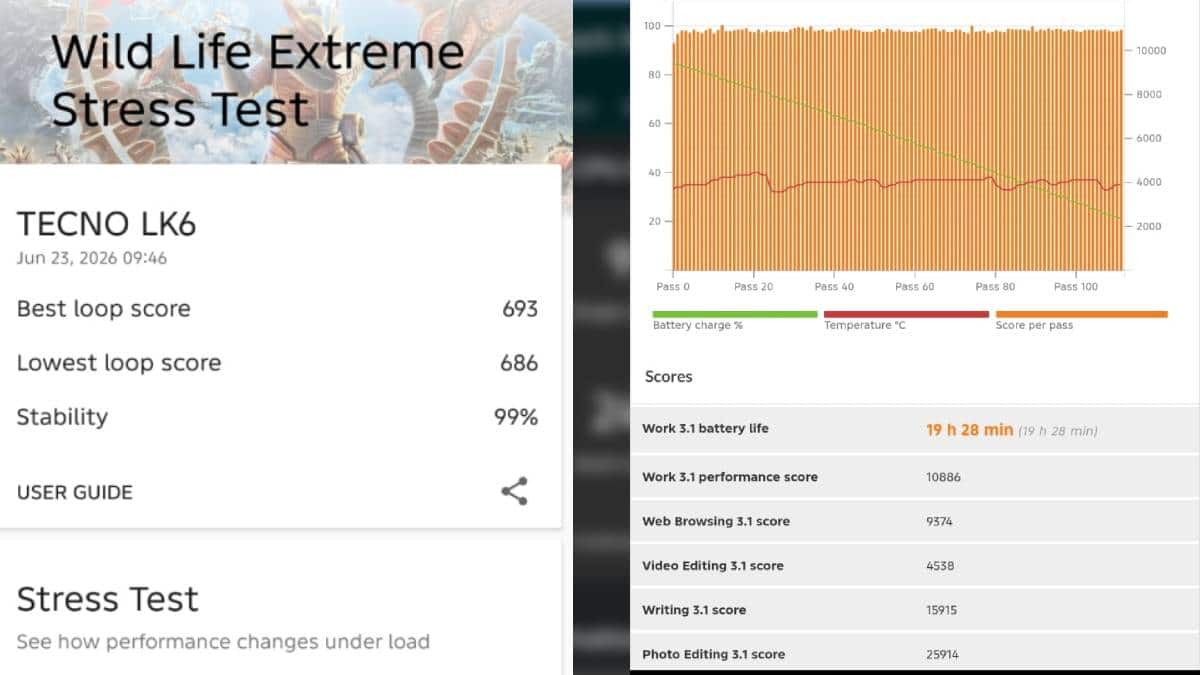
During testing, I connected the phone to the charger at 20%, and within an hour it had climbed to roughly 90%. Battery life is undoubtedly the device's strongest suit, especially when combined with Tecno's claim of up to six years of battery health preservation.
Verdict
If battery life is your top priority and your usage revolves around everyday tasks with light to moderate gaming, the Pova 8 could be an good choice. Its massive battery, dependable day-to-day performance, and unique design help it stand out in a crowded segment.
That said, the older processor, single-camera setup, and 144Hz IPS LCD display do place it at a disadvantage against some of its competitors, many of which offer newer chipsets and AMOLED panels at similar price points.
As for storage variants, the 6GB RAM + 128GB model makes the most sense, especially since the phone already includes a microSD card slot for storage expansion.

Samsung Galaxy Fold 8 quick review: The new entry
Nothing Phone (4b) first impression: A unique design, bold specs and a question to ponder
Oppo Find X9s Review: A little less powerful but equally capable alternative to the Find X9
Samsung Galaxy A27 5G First Impressions: A budget phone with high-end potential
BenQ TH575i Projector review: Big screen entertainment without premium price tag