


US House of Representatives approve net neutrality bill but legislation faces long odds
US House of Reps approved a bill on a 232 to 190 vote to reinstate landmark net neutrality protections.

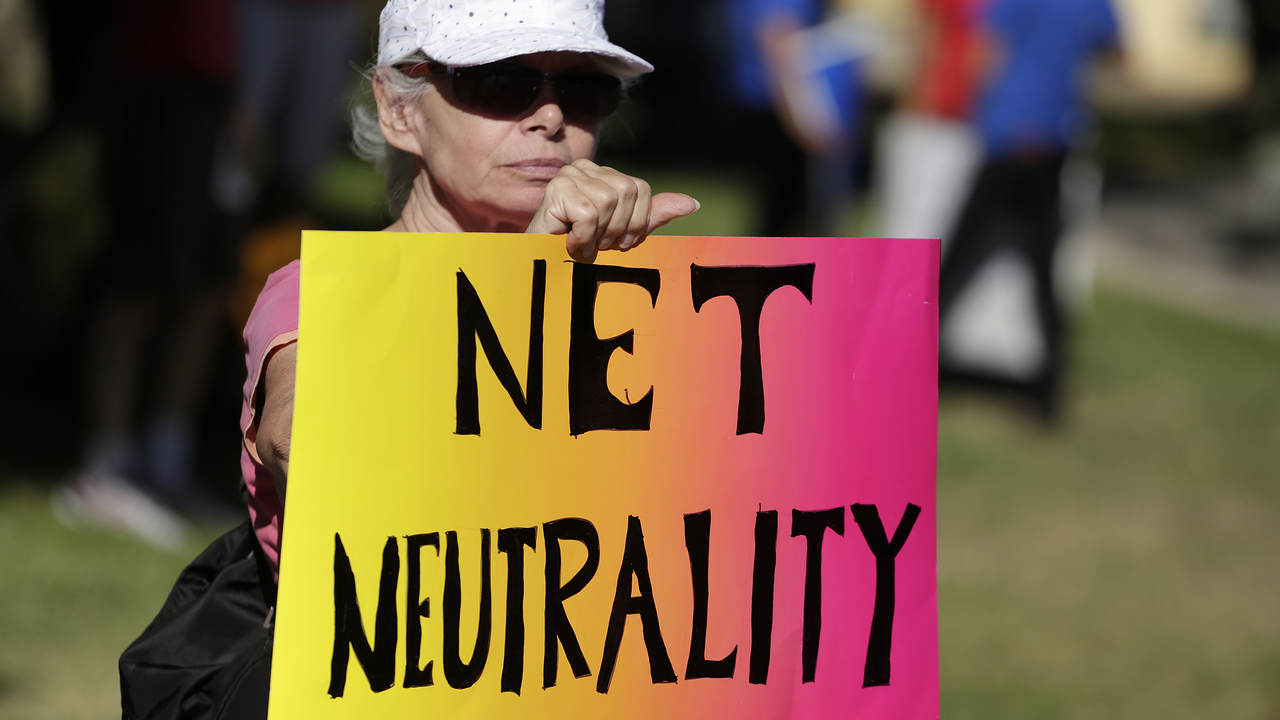
A person at a pro-net neutrality Internet activist rally. Reuters[/caption]The reversal of net neutrality rules has been a win for internet service providers (ISPs) such as Comcast Corp, AT&T Inc and Verizon Communications Inc, but was opposed by companies like Facebook Inc, Amazon.com Inc and Alphabet Inc.Republicans have said the bill would open the door to the FCC imposing rate regulations or adding taxes to internet service similar to levies on cable or phone bills. Democrats say the bill is essential to ensuring the government enforces rules that prohibit improper conduct by internet providers and guarantee Americans access to an open internet.Just one Republican, Florida Representative Bill Posley, voted with 231 Democrats. No Democrats voted against the measure.Representative Mike Doyle, a Democrat, said Wednesday that after repealing net neutrality protections the FCC had replaced them with "nothing, nada, zip, crickets. They did nothing. It's the wild, wild west — let the ISPs do anything they want and consumers be damned."Under FCC chairman Ajit Pai, the commission voted 3-2 to hand ISPs sweeping powers to recast how Americans use the internet, as long as they disclose changes.In a statement Wednesday, Pai called the House bill a "big-government solution in search of a problem."USTelecom, a trade group, said internet providers support net neutrality protections but oppose the 2015 FCC order that reclassified the internet as a utility-style service that handed the FCC sweeping authority to regulate it.A federal appeals court upheld the 2015 net neutrality rules, while another appellate panel is considering whether the 2017 FCC order is legal. California and some other states have adopted their own net neutrality rules but they are on hold pending the outcome of the challenge to Pai's order.

Why AI notetakers are raising serious privacy and security concerns
China's low-cost AI models are changing the global AI race. Here's why Silicon Valley is worried
China's Kimi K3 challenges US AI leaders with frontier-level performance at lower cost
How did Instagram run ads promoting child abuse in India?
Why has India halted WhatsApp’s username feature before launch?