
Advertisement


Sections
US President Donald Trump's push to regulate social media faces uphill battle at FCC
Trump said last week that he wants to "remove or change" a provision of a law that shields social media companies from liability for content posted by their users.

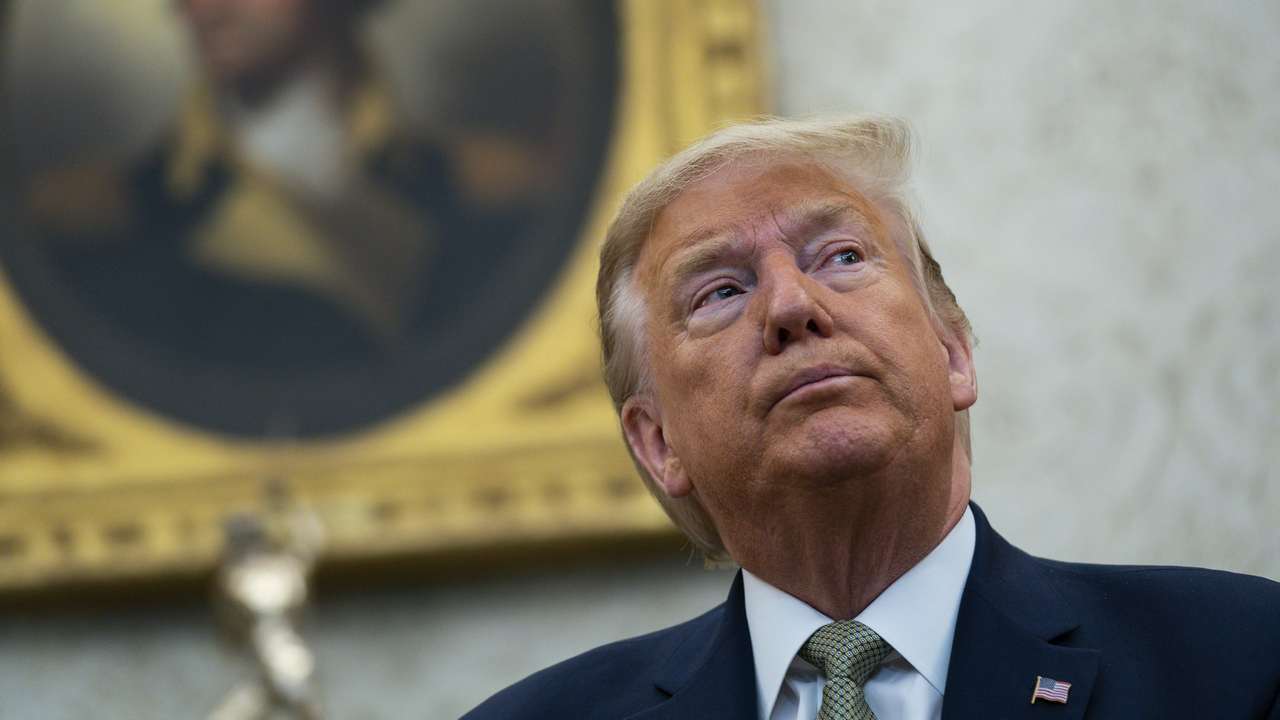
US President Donald Trump's effort to regulate social media companies' content decisions may face an uphill battle from regulators who have previously said they cannot oversee the conduct of internet firms.Trump said last week that he wants to "remove or change" a provision of a law that shields social media companies from liability for content posted by their users.He signed an executive order that directed the Commerce Department to petition the Federal Communications Commission (FCC) to write rules clarifying social media companies' legal protections under Section 230 of the 1996 Communications Decency Act.FCC chairman Ajit Pai did not endorse the proposal but said in a written statement "this debate is an important one" and added the FCC "will carefully review any petition for rulemaking."[caption id="attachment_8150501" align="alignnone" width="1280"]![File image of US president Donald Trump. AP]() File image of Donald Trump. AP[/caption]In August 2018, Pai said he hoped social media companies would embrace free speech but did not see a role for the FCC to regulate websites like Facebook , Alphabet's Google, and Twitter."They are not going to be regulated in terms of free speech," Pai said at a forum. "The government is not here to regulate these platforms. We don't have the power to do that."Another Republican on the five-member commission, Mike O'Rielly, expressed mixed feelings."As a conservative, I'm troubled voices are stifled by liberal tech leaders. At the same time, I'm extremely dedicated to the First Amendment which governs much here," O'Rielly wrote on Twitter. The First Amendment of the US Constitution protects free speech.Former FCC Commissioner Robert McDowell, a Republican, wrote on Twitter that the review is "based on political #speech management of platforms. So many wobbly parts to this govt 'nudge.' I don't see how it survives."Boston College law professor Daniel Lyons said the FCC was not required to act on the petition "especially as the request runs contrary to the strong First Amendment protections that the agency has traditionally extended."He noted one of the 1996 law's authors said his intent was not to create "a Federal Computer Commission with an army of bureaucrats regulating the internet."Another barrier is timing. The FCC will spend at least a few months reviewing and likely seeking public comment before potentially drafting proposed regulations. It could take a year or longer to finalize any rules, long after the November presidential election.Section 230 protects internet companies from liability for illegal content posted by users and allows them to remove lawful but objectionable posts.Trump wants the FCC to "expeditiously propose regulations" to determine what constitutes "good faith" by firms in removing some content. He also wants Congress to repeal the Section 230 protections.FCC Commissioner Brendan Carr, a Republican, said he expects the commission will seek public comment to provide clarity on what "good faith conduct" by companies means and draw a line between permissible and improper behavior."When a final decision is reached, my hope and expectation is that it will provide clarity about that line," Carr said.Twitter called Trump's executive order "a reactionary and politicized approach to a landmark law... Attempts to unilaterally erode it threaten the future of online speech and Internet freedoms."Alexandra Givens, chief executive of the Center for Democracy & Technology, said the order "not only violates the Constitution, it ignores 20 years of well-established law. The Executive Order is designed to deter social media companies from fighting misinformation, voter suppression, and the stoking of violence on their services."FCC Commissioner Jessica Rosenworcel, a Democrat, suggested turning the FCC "into the president's speech police is not the answer. It's time for Washington to speak up for the First Amendment."
File image of Donald Trump. AP[/caption]In August 2018, Pai said he hoped social media companies would embrace free speech but did not see a role for the FCC to regulate websites like Facebook , Alphabet's Google, and Twitter."They are not going to be regulated in terms of free speech," Pai said at a forum. "The government is not here to regulate these platforms. We don't have the power to do that."Another Republican on the five-member commission, Mike O'Rielly, expressed mixed feelings."As a conservative, I'm troubled voices are stifled by liberal tech leaders. At the same time, I'm extremely dedicated to the First Amendment which governs much here," O'Rielly wrote on Twitter. The First Amendment of the US Constitution protects free speech.Former FCC Commissioner Robert McDowell, a Republican, wrote on Twitter that the review is "based on political #speech management of platforms. So many wobbly parts to this govt 'nudge.' I don't see how it survives."Boston College law professor Daniel Lyons said the FCC was not required to act on the petition "especially as the request runs contrary to the strong First Amendment protections that the agency has traditionally extended."He noted one of the 1996 law's authors said his intent was not to create "a Federal Computer Commission with an army of bureaucrats regulating the internet."Another barrier is timing. The FCC will spend at least a few months reviewing and likely seeking public comment before potentially drafting proposed regulations. It could take a year or longer to finalize any rules, long after the November presidential election.Section 230 protects internet companies from liability for illegal content posted by users and allows them to remove lawful but objectionable posts.Trump wants the FCC to "expeditiously propose regulations" to determine what constitutes "good faith" by firms in removing some content. He also wants Congress to repeal the Section 230 protections.FCC Commissioner Brendan Carr, a Republican, said he expects the commission will seek public comment to provide clarity on what "good faith conduct" by companies means and draw a line between permissible and improper behavior."When a final decision is reached, my hope and expectation is that it will provide clarity about that line," Carr said.Twitter called Trump's executive order "a reactionary and politicized approach to a landmark law... Attempts to unilaterally erode it threaten the future of online speech and Internet freedoms."Alexandra Givens, chief executive of the Center for Democracy & Technology, said the order "not only violates the Constitution, it ignores 20 years of well-established law. The Executive Order is designed to deter social media companies from fighting misinformation, voter suppression, and the stoking of violence on their services."FCC Commissioner Jessica Rosenworcel, a Democrat, suggested turning the FCC "into the president's speech police is not the answer. It's time for Washington to speak up for the First Amendment."
 File image of Donald Trump. AP[/caption]In August 2018, Pai said he hoped social media companies would embrace free speech but did not see a role for the FCC to regulate websites like Facebook , Alphabet's Google, and Twitter."They are not going to be regulated in terms of free speech," Pai said at a forum. "The government is not here to regulate these platforms. We don't have the power to do that."Another Republican on the five-member commission, Mike O'Rielly, expressed mixed feelings."As a conservative, I'm troubled voices are stifled by liberal tech leaders. At the same time, I'm extremely dedicated to the First Amendment which governs much here," O'Rielly wrote on Twitter. The First Amendment of the US Constitution protects free speech.Former FCC Commissioner Robert McDowell, a Republican, wrote on Twitter that the review is "based on political #speech management of platforms. So many wobbly parts to this govt 'nudge.' I don't see how it survives."Boston College law professor Daniel Lyons said the FCC was not required to act on the petition "especially as the request runs contrary to the strong First Amendment protections that the agency has traditionally extended."He noted one of the 1996 law's authors said his intent was not to create "a Federal Computer Commission with an army of bureaucrats regulating the internet."Another barrier is timing. The FCC will spend at least a few months reviewing and likely seeking public comment before potentially drafting proposed regulations. It could take a year or longer to finalize any rules, long after the November presidential election.Section 230 protects internet companies from liability for illegal content posted by users and allows them to remove lawful but objectionable posts.Trump wants the FCC to "expeditiously propose regulations" to determine what constitutes "good faith" by firms in removing some content. He also wants Congress to repeal the Section 230 protections.FCC Commissioner Brendan Carr, a Republican, said he expects the commission will seek public comment to provide clarity on what "good faith conduct" by companies means and draw a line between permissible and improper behavior."When a final decision is reached, my hope and expectation is that it will provide clarity about that line," Carr said.Twitter called Trump's executive order "a reactionary and politicized approach to a landmark law... Attempts to unilaterally erode it threaten the future of online speech and Internet freedoms."Alexandra Givens, chief executive of the Center for Democracy & Technology, said the order "not only violates the Constitution, it ignores 20 years of well-established law. The Executive Order is designed to deter social media companies from fighting misinformation, voter suppression, and the stoking of violence on their services."FCC Commissioner Jessica Rosenworcel, a Democrat, suggested turning the FCC "into the president's speech police is not the answer. It's time for Washington to speak up for the First Amendment."
First Published:Jun 02, 2020, 00:16:45 IST
Advertisement
Advertisement

Why AI notetakers are raising serious privacy and security concerns
AI notetakers promise effortless meeting summaries, but experts warn they could expose confidential conversations, corporate secrets and personal voiceprints. As businesses increasingly adopt AI-powered meeting assistants, questions over data storage, privacy, consent and legal risks are becoming impossible to ignore
5 min read
China's low-cost AI models are changing the global AI race. Here's why Silicon Valley is worried
As Chinese firms continue to improve performance while keeping prices low, the AI race is no longer just about building the smartest model—it is increasingly becoming a battle over who can deliver the best value
2 min read
China's Kimi K3 challenges US AI leaders with frontier-level performance at lower cost
Chinese artificial intelligence startup Moonshot AI has unveiled its latest open-weight AI model, Kimi K3, with early results suggesting it could compete with some of the world's most advanced AI systems developed by leading US companies
2 min read
How did Instagram run ads promoting child abuse in India?
India has issued a notice to Meta after an investigation alleged that Instagram displayed paid advertisements promoting child sexual abuse material. MeitY ordered Meta to remove such Instagram ads and explain within seven days how they were approved
8 min read
Why has India halted WhatsApp’s username feature before launch?
India has halted WhatsApp’s planned username feature, citing concerns about cybercrime, impersonation, and law enforcement challenges. As Meta races to address security concerns, here’s why MeitY has paused the rollout, what the feature does, and how it could influence privacy and online safety in India
3 min read
Advertisement
Advertisement