
Advertisement


Sections
Stolen Aadhaar data may have been used to remove voters from electoral roll: Report
Latest investigation finds that stolen data was allegedly being used to try and remove voters from electoral rolls,

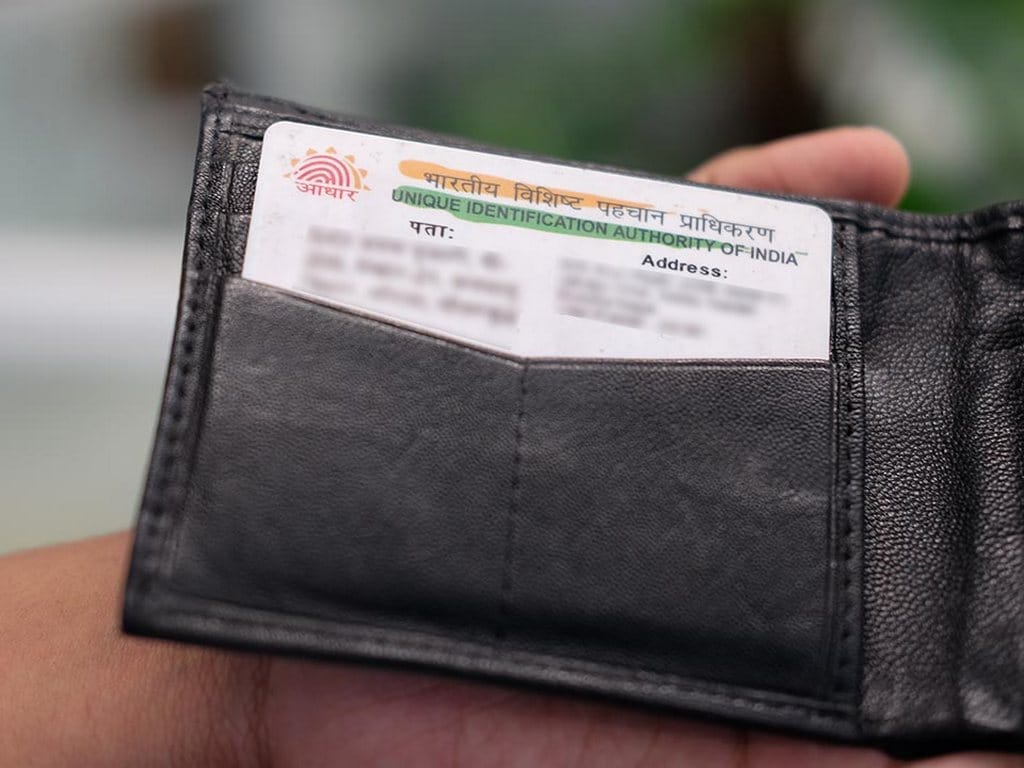
Last week, IT Grids, a company hired by the Telugu Desam Party (TDP) for developing its Seva Mitra app, was found to be allegedly storing data of 7.82 crore Indians from Andhra Pradesh and Telangana, and another 2 crores from Punjab. Later investigation found that the structure and size of the database held by IT Grids was similar to what was owned by the Unique Identification Authority of India (UIDAI). In effect, it was yet another case of Aadhaar data breach.Now as the investigation has been furthered, it has been found that this stolen data was allegedly being used to try and remove voters from electoral rolls, according to a report by Huffington Post. The publication spoke to IG Stephen Raveendra, who is heading the Special Investigating Team (SIT) for this case. He also revealed that when studying the origin of data they found that some parts of it could have only come from UIDAI's database.“We are forensically examining the hard drives to trace where the data came from. But there are several columns of data that are an exact replica of the format used in the SRDH and CIDR,” the publication quotes him as saying.[caption id="attachment_4865121" align="alignnone" width="1024"]![Representational image.]() Representational image.[/caption]To put things in perspective, CIDR is the database that holds the demographic and biometric data of Aadhaar users. SRDH were state-level replicas of the CIDR pertaining to that state, for the "ability to manage resident data."On 12 April, UIDAI filed a complaint in the Madhapur police station citing the findings of the special investigation team (SIT) that discovered this data. The case was registered under sections 37, 38(a), 38(b), 38(g), 40, 42, 44 of the Aadhaar Act 2016 and will be investigated by the SIT.The State Resident Data Hubs (SRDH) have been a matter of concern since their inception. SRDH contain Aadhaar data, including demographic and biometric data, as well as local data from other sources, such as Kerala’s KYR+. And security experts have expressed that these data hubs are vulnerable to attacks.UIDAI officials claim that the core Aadhaar biometric data stored in the CIDR is never shared with anyone. It also repeated the oft-heard come-back, that the biometric data hasn't been affected.The police suspect that IT Grids could have illegally obtained this Aadhaar data and misused it. The mere fact that this data was taken on a removable storage drive is in itself a violation of the Aadhaar Act according to the police.
Representational image.[/caption]To put things in perspective, CIDR is the database that holds the demographic and biometric data of Aadhaar users. SRDH were state-level replicas of the CIDR pertaining to that state, for the "ability to manage resident data."On 12 April, UIDAI filed a complaint in the Madhapur police station citing the findings of the special investigation team (SIT) that discovered this data. The case was registered under sections 37, 38(a), 38(b), 38(g), 40, 42, 44 of the Aadhaar Act 2016 and will be investigated by the SIT.The State Resident Data Hubs (SRDH) have been a matter of concern since their inception. SRDH contain Aadhaar data, including demographic and biometric data, as well as local data from other sources, such as Kerala’s KYR+. And security experts have expressed that these data hubs are vulnerable to attacks.UIDAI officials claim that the core Aadhaar biometric data stored in the CIDR is never shared with anyone. It also repeated the oft-heard come-back, that the biometric data hasn't been affected.The police suspect that IT Grids could have illegally obtained this Aadhaar data and misused it. The mere fact that this data was taken on a removable storage drive is in itself a violation of the Aadhaar Act according to the police.
 Representational image.[/caption]To put things in perspective, CIDR is the database that holds the demographic and biometric data of Aadhaar users. SRDH were state-level replicas of the CIDR pertaining to that state, for the "ability to manage resident data."On 12 April, UIDAI filed a complaint in the Madhapur police station citing the findings of the special investigation team (SIT) that discovered this data. The case was registered under sections 37, 38(a), 38(b), 38(g), 40, 42, 44 of the Aadhaar Act 2016 and will be investigated by the SIT.The State Resident Data Hubs (SRDH) have been a matter of concern since their inception. SRDH contain Aadhaar data, including demographic and biometric data, as well as local data from other sources, such as Kerala’s KYR+. And security experts have expressed that these data hubs are vulnerable to attacks.UIDAI officials claim that the core Aadhaar biometric data stored in the CIDR is never shared with anyone. It also repeated the oft-heard come-back, that the biometric data hasn't been affected.The police suspect that IT Grids could have illegally obtained this Aadhaar data and misused it. The mere fact that this data was taken on a removable storage drive is in itself a violation of the Aadhaar Act according to the police.
First Published:Apr 20, 2019, 15:41:28 IST
Advertisement
Advertisement

Why AI notetakers are raising serious privacy and security concerns
AI notetakers promise effortless meeting summaries, but experts warn they could expose confidential conversations, corporate secrets and personal voiceprints. As businesses increasingly adopt AI-powered meeting assistants, questions over data storage, privacy, consent and legal risks are becoming impossible to ignore
5 min read
China's low-cost AI models are changing the global AI race. Here's why Silicon Valley is worried
As Chinese firms continue to improve performance while keeping prices low, the AI race is no longer just about building the smartest model—it is increasingly becoming a battle over who can deliver the best value
2 min read
China's Kimi K3 challenges US AI leaders with frontier-level performance at lower cost
Chinese artificial intelligence startup Moonshot AI has unveiled its latest open-weight AI model, Kimi K3, with early results suggesting it could compete with some of the world's most advanced AI systems developed by leading US companies
2 min read
How did Instagram run ads promoting child abuse in India?
India has issued a notice to Meta after an investigation alleged that Instagram displayed paid advertisements promoting child sexual abuse material. MeitY ordered Meta to remove such Instagram ads and explain within seven days how they were approved
8 min read
Why has India halted WhatsApp’s username feature before launch?
India has halted WhatsApp’s planned username feature, citing concerns about cybercrime, impersonation, and law enforcement challenges. As Meta races to address security concerns, here’s why MeitY has paused the rollout, what the feature does, and how it could influence privacy and online safety in India
3 min read
Advertisement
Advertisement