


Steep decline of Great Barrier Reef corals over past 25 years, irreversible: Study
Larger corals, like branching and table-shaped forms, have been the hardest hit – almost disappearing from the far northern reaches of the Reef.

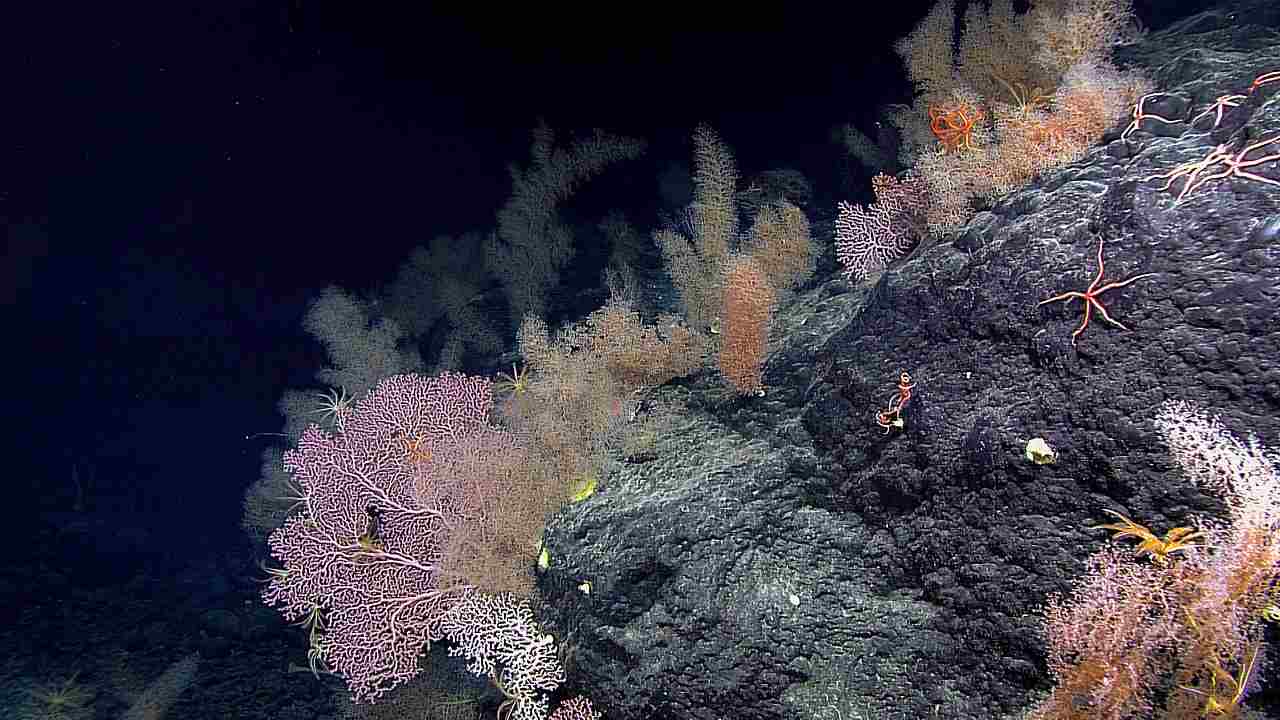
A garden of coral on the Sibelius Seamount at a depth of 2,465 m (8,087 ft). Image: NOAA/Wikimedia Commons[/caption]
The 'big mama' corals
"A vibrant coral population has millions of small, baby corals, as well as many large ones – the big mamas who produce most of the larvae," the study's lead author Andy Dietzel, also of James Cook University, said."Its resilience is compromised compared to the past, because there are fewer babies, and fewer large breeding adults."On top of long-term ocean warming and associated bleaching, the reef has been battered by several cyclones and two outbreaks of crown-of-thorns starfish – which eat the coral – since 1995.When the starfish occur in small numbers, they are considered part of the natural ecosystem, but when a large outbreak happens, they can rapidly destroy parts of the reef.While four mass bleaching events up to 2017 were covered by the latest research, the damage to coral species from bleaching in early 2020 is yet to be assessed.It was the most widespread bleaching on record, impacting swathes of the southern reaches of the reef for the first time.Hughes said scientists expected corals to continue dying off unless nations met their Paris Agreement commitment to keep the increase in global average temperature under 2 degrees Celsius (3.6 degrees Fahrenheit) above pre-industrial levels."It takes about a decade for a half-decent recovery for the fastest-growing species, so the chances of us getting decades between the future sixth, seventh and eighth bleaching events is close to zero because temperatures are because going up and up and up," he said.If temperatures do stabilise later this century under the Paris target, it is hoped that corals will be able to reassemble and rebuild their numbers.Even then, Hughes said, "we don't think they'll rebuild into the mix of species that we've known historically".If the rise is as much as 3 or 4 degrees Celsius, "forget it", he said."The trajectory is changing very, very quickly – we're shocked and surprised by how quickly these changes are happening – and there's further change ahead."

Why AI notetakers are raising serious privacy and security concerns
China's low-cost AI models are changing the global AI race. Here's why Silicon Valley is worried
China's Kimi K3 challenges US AI leaders with frontier-level performance at lower cost
How did Instagram run ads promoting child abuse in India?
Why has India halted WhatsApp’s username feature before launch?