


Someone just unlocked a Samsung Galaxy S10 with a 3D-printed fingerprint
While biometric authentication is indeed convenient, we must remember that it is not foolproof.

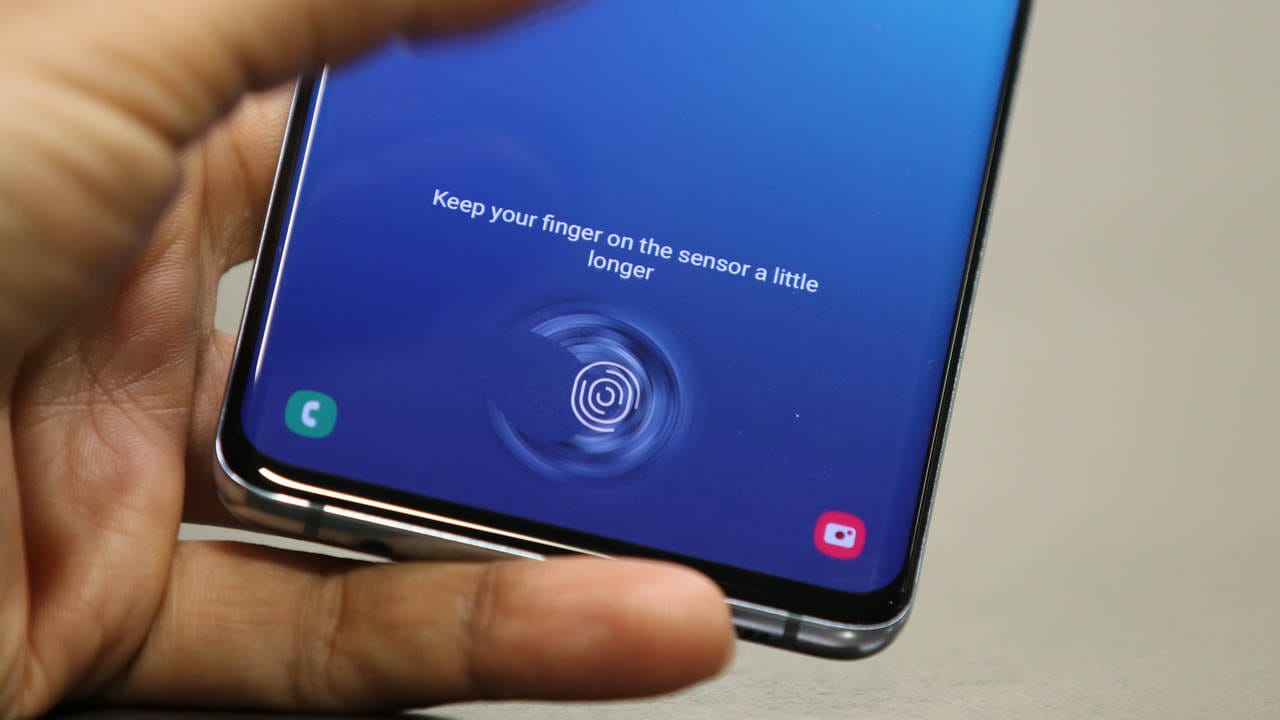
The Samsung Galaxy S10 Plus's fingerprint reader never works as expected almost 50 percent of the time. Image: tech2/Omkar Patne[/caption]Better yet, no system is perfectly secure. Unless you have a twin, Apple’s Face ID has so far proven to be the hardest to crack, but given enough cash and a bit of time, even that system has been fooled.Only recently it was reported that Samsung’s latest and greatest phone, the Galaxy S10, can be fooled by a photograph. Now, yet another report reveals that the in-display fingerprint scanner can be fooled by a 3D-printed fingerprint.Most fingerprint scanners use capacitive sensors. These sense the contact patch your finger makes when it’s on the sensor. It’s a bit like a 2D image but far more secure. An optical scanner just takes a photo.The S10 uses a more secure sensor involving an ultrasonic sensor. This type of sensor uses sound waves to determine the shape of your fingerprint in 3D, making it yet more secure.However, as proven by imgur user darkshark, even this can be fooled by something as simple as a 3D-printed fingerprint.He basically took a photo of his fingerprint on a wine glass, edited in 3DS Max — 3D modelling software — and printed a fingerprint using a 3D printer. The process only took him a few minutes and some tweaking.As reported by The Verge, darkshark said that all he needed to get into his phone was “a photograph, some software, and access to a 3D printer.”To be fair to Samsung, this isn’t exactly a knock against the S10. Most manufacturers use mechanisms that are far less secure, and it’s not like everyone has access to the tools and resources needed to 3D print a fingerprint.If anything, this is just a reminder that we can’t just blindly rely on technology to keep our data safe.

Why AI notetakers are raising serious privacy and security concerns
China's low-cost AI models are changing the global AI race. Here's why Silicon Valley is worried
China's Kimi K3 challenges US AI leaders with frontier-level performance at lower cost
How did Instagram run ads promoting child abuse in India?
Why has India halted WhatsApp’s username feature before launch?