
Advertisement


Sections
Researchers develop an HD video streaming technique that uses a fraction of the power of traditional methods
The group's system uses 1,000 to 10,000 times less power than current streaming technology. But it still has a small battery that supports continuous operation.

Engineers, including one of Indian-origin, have developed a technique that could help wearable tech users share high-definition (HD) live videos without letting their devices consume high battery power.[caption id="attachment_4442071" align="alignleft" width="380"]![This low-power, video-streaming prototype could be used in next-generation wearable cameras, as well as in many other internet-connected devices. Image Credit: Dennis Wise/University of Washington]() This low-power, video-streaming prototype could be used in next-generation wearable cameras, as well as in many other internet-connected devices. Image Credit: Dennis Wise/University of Washington[/caption]Wearable cameras such as Snap Spectacles use smaller batteries to stay lightweight and functional, hence these devices cannot perform HD video streaming.The engineers at the University of Washington developed the HD video streaming technique that skips the power-hungry parts and has some other device, like a smartphone, to process the video.The technique called "backscatter" can share information by reflecting signals that have been transmitted to it."The fundamental assumption people have made so far is that backscatter can be used only for low-data rate sensors such as temperature sensors," said co-author Shyam Gollakota, in the findings that were presented at the Advanced Computing Systems Association's Symposium on Networked Systems Design and Implementation."This work breaks that assumption and shows that backscatter can indeed support even full HD video," he added.The pixels in the camera are directly connected to the antenna and it sends intensity values via backscatter to a nearby smartphone.[caption id="attachment_4442087" align="alignnone" width="1280"]
This low-power, video-streaming prototype could be used in next-generation wearable cameras, as well as in many other internet-connected devices. Image Credit: Dennis Wise/University of Washington[/caption]Wearable cameras such as Snap Spectacles use smaller batteries to stay lightweight and functional, hence these devices cannot perform HD video streaming.The engineers at the University of Washington developed the HD video streaming technique that skips the power-hungry parts and has some other device, like a smartphone, to process the video.The technique called "backscatter" can share information by reflecting signals that have been transmitted to it."The fundamental assumption people have made so far is that backscatter can be used only for low-data rate sensors such as temperature sensors," said co-author Shyam Gollakota, in the findings that were presented at the Advanced Computing Systems Association's Symposium on Networked Systems Design and Implementation."This work breaks that assumption and shows that backscatter can indeed support even full HD video," he added.The pixels in the camera are directly connected to the antenna and it sends intensity values via backscatter to a nearby smartphone.[caption id="attachment_4442087" align="alignnone" width="1280"]![The UW team also created a low-resolution, low-power security camera, shown here on a stand. It can stream at 13 frames per second to another device, such as a smartphone.Image Credit: Dennis Wise/University of Washington]() The UW team also created a low-resolution, low-power security camera, shown here on a stand. It can stream at 13 frames per second to another device, such as a smartphone.Image Credit: Dennis Wise/University of Washington[/caption]The phone, which does not have the same size and weight restrictions as a small streaming camera, can process the video instead."It's sort of similar to how the cells in the brain communicate with each other. Neurons are either signalling or they are not, so the information is encoded in the timing of their action potentials," said co-author Joshua Smith.The group's system uses 1,000 to 10,000 times less power than current streaming technology. But it still has a small battery that supports continuous operation.The next step is to make wireless video cameras that are completely battery-free, Smith added.The team has also created a low-resolution, low-power security camera, which can stream at 13 frames per second. This falls in line with the range of functions the group predicts for this technology.
The UW team also created a low-resolution, low-power security camera, shown here on a stand. It can stream at 13 frames per second to another device, such as a smartphone.Image Credit: Dennis Wise/University of Washington[/caption]The phone, which does not have the same size and weight restrictions as a small streaming camera, can process the video instead."It's sort of similar to how the cells in the brain communicate with each other. Neurons are either signalling or they are not, so the information is encoded in the timing of their action potentials," said co-author Joshua Smith.The group's system uses 1,000 to 10,000 times less power than current streaming technology. But it still has a small battery that supports continuous operation.The next step is to make wireless video cameras that are completely battery-free, Smith added.The team has also created a low-resolution, low-power security camera, which can stream at 13 frames per second. This falls in line with the range of functions the group predicts for this technology.
 This low-power, video-streaming prototype could be used in next-generation wearable cameras, as well as in many other internet-connected devices. Image Credit: Dennis Wise/University of Washington[/caption]Wearable cameras such as Snap Spectacles use smaller batteries to stay lightweight and functional, hence these devices cannot perform HD video streaming.The engineers at the University of Washington developed the HD video streaming technique that skips the power-hungry parts and has some other device, like a smartphone, to process the video.The technique called "backscatter" can share information by reflecting signals that have been transmitted to it."The fundamental assumption people have made so far is that backscatter can be used only for low-data rate sensors such as temperature sensors," said co-author Shyam Gollakota, in the findings that were presented at the Advanced Computing Systems Association's Symposium on Networked Systems Design and Implementation."This work breaks that assumption and shows that backscatter can indeed support even full HD video," he added.The pixels in the camera are directly connected to the antenna and it sends intensity values via backscatter to a nearby smartphone.[caption id="attachment_4442087" align="alignnone" width="1280"]
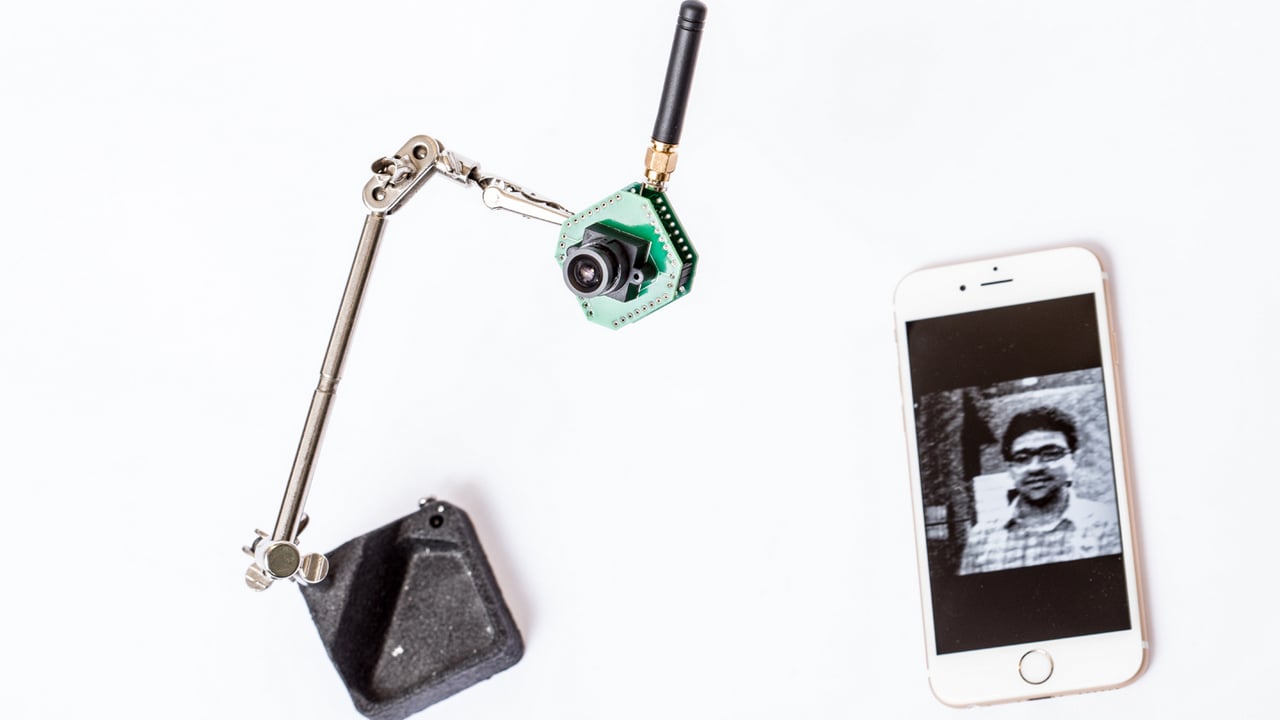 The UW team also created a low-resolution, low-power security camera, shown here on a stand. It can stream at 13 frames per second to another device, such as a smartphone.Image Credit: Dennis Wise/University of Washington[/caption]The phone, which does not have the same size and weight restrictions as a small streaming camera, can process the video instead."It's sort of similar to how the cells in the brain communicate with each other. Neurons are either signalling or they are not, so the information is encoded in the timing of their action potentials," said co-author Joshua Smith.The group's system uses 1,000 to 10,000 times less power than current streaming technology. But it still has a small battery that supports continuous operation.The next step is to make wireless video cameras that are completely battery-free, Smith added.The team has also created a low-resolution, low-power security camera, which can stream at 13 frames per second. This falls in line with the range of functions the group predicts for this technology.
First Published:Apr 23, 2018, 09:20:22 IST
Advertisement
Advertisement

Why AI notetakers are raising serious privacy and security concerns
AI notetakers promise effortless meeting summaries, but experts warn they could expose confidential conversations, corporate secrets and personal voiceprints. As businesses increasingly adopt AI-powered meeting assistants, questions over data storage, privacy, consent and legal risks are becoming impossible to ignore
5 min read
China's low-cost AI models are changing the global AI race. Here's why Silicon Valley is worried
As Chinese firms continue to improve performance while keeping prices low, the AI race is no longer just about building the smartest model—it is increasingly becoming a battle over who can deliver the best value
2 min read
China's Kimi K3 challenges US AI leaders with frontier-level performance at lower cost
Chinese artificial intelligence startup Moonshot AI has unveiled its latest open-weight AI model, Kimi K3, with early results suggesting it could compete with some of the world's most advanced AI systems developed by leading US companies
2 min read
How did Instagram run ads promoting child abuse in India?
India has issued a notice to Meta after an investigation alleged that Instagram displayed paid advertisements promoting child sexual abuse material. MeitY ordered Meta to remove such Instagram ads and explain within seven days how they were approved
8 min read
Why has India halted WhatsApp’s username feature before launch?
India has halted WhatsApp’s planned username feature, citing concerns about cybercrime, impersonation, and law enforcement challenges. As Meta races to address security concerns, here’s why MeitY has paused the rollout, what the feature does, and how it could influence privacy and online safety in India
3 min read
Advertisement
Advertisement