
Advertisement


Sections
Project Loon has delivered internet services to 100,000 people in Hurricane Maria-hit Puerto Rico
he Project Loon is providing internet services to these people who have web access AT&T communications and have 4G LTE-enabled handset.

Alphabet has delivered internet services to 100,000 people who have been hit by the Hurricane Maria in Puerto Rico. This internet service is a part of Alphabet Inc’s Project Loon, where it is providing internet services to people with the help of helium balloons at disaster-hit locations.[caption id="attachment_4202865" align="alignleft" width="380"]![Project Loon screenshot. Project Loon.]() Project Loon screenshot. Project Loon.[/caption]According to the Federal Communications Commission (FCC), the more than forty percent of the locations in hurricane hit Puerto Rico have out of service communications.The Verge said that the Project Loon is providing internet services to these people who have web access to AT&T communications and have 4G LTE-enabled handset.Project Loon is meant to bring services to locations which are rural and remote, basically where there is no internet communication. It uses high altitude balloons which sail for around 20 kilometres. These balloons have solar-powered electronic devices and are “superpressured, allowing them to last much longer.”These balloons are called HBAL199 and HBAL237. These fly 60,000 feet above the land. With the help of algorithms they can ascertain where internet is required. However the downside to this service is that since it is a solar powered electronic set, it can provide services only during daytime.In a blog post Project Loon Head, Alastair Westgarth had said that it has partnered with the AT&T and Sprint network services, along with other government partners. Initially, 30 balloons were put up in the disaster hit areas. These were authorised by the Federal Communications Commission or FCC.Hurricane Maria had affected 3.4 million people, with non-functioning electric and telecom towers. Companies like Sprint had set up a temporary cell sites in the affected areas so that people have access to communicate with their loved ones.Facebook, Cisco and Tesla were other companies who had pledged to support the people during the crisis.
Project Loon screenshot. Project Loon.[/caption]According to the Federal Communications Commission (FCC), the more than forty percent of the locations in hurricane hit Puerto Rico have out of service communications.The Verge said that the Project Loon is providing internet services to these people who have web access to AT&T communications and have 4G LTE-enabled handset.Project Loon is meant to bring services to locations which are rural and remote, basically where there is no internet communication. It uses high altitude balloons which sail for around 20 kilometres. These balloons have solar-powered electronic devices and are “superpressured, allowing them to last much longer.”These balloons are called HBAL199 and HBAL237. These fly 60,000 feet above the land. With the help of algorithms they can ascertain where internet is required. However the downside to this service is that since it is a solar powered electronic set, it can provide services only during daytime.In a blog post Project Loon Head, Alastair Westgarth had said that it has partnered with the AT&T and Sprint network services, along with other government partners. Initially, 30 balloons were put up in the disaster hit areas. These were authorised by the Federal Communications Commission or FCC.Hurricane Maria had affected 3.4 million people, with non-functioning electric and telecom towers. Companies like Sprint had set up a temporary cell sites in the affected areas so that people have access to communicate with their loved ones.Facebook, Cisco and Tesla were other companies who had pledged to support the people during the crisis.
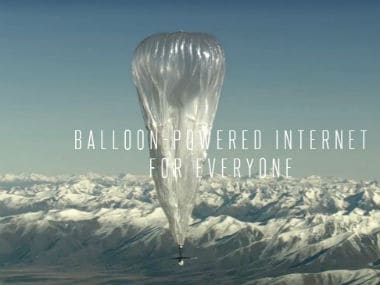 Project Loon screenshot. Project Loon.[/caption]According to the Federal Communications Commission (FCC), the more than forty percent of the locations in hurricane hit Puerto Rico have out of service communications.The Verge said that the Project Loon is providing internet services to these people who have web access to AT&T communications and have 4G LTE-enabled handset.Project Loon is meant to bring services to locations which are rural and remote, basically where there is no internet communication. It uses high altitude balloons which sail for around 20 kilometres. These balloons have solar-powered electronic devices and are “superpressured, allowing them to last much longer.”These balloons are called HBAL199 and HBAL237. These fly 60,000 feet above the land. With the help of algorithms they can ascertain where internet is required. However the downside to this service is that since it is a solar powered electronic set, it can provide services only during daytime.
First Published:Nov 10, 2017, 10:27:25 IST
Advertisement
Advertisement

Why AI notetakers are raising serious privacy and security concerns
AI notetakers promise effortless meeting summaries, but experts warn they could expose confidential conversations, corporate secrets and personal voiceprints. As businesses increasingly adopt AI-powered meeting assistants, questions over data storage, privacy, consent and legal risks are becoming impossible to ignore
5 min read
China's low-cost AI models are changing the global AI race. Here's why Silicon Valley is worried
As Chinese firms continue to improve performance while keeping prices low, the AI race is no longer just about building the smartest model—it is increasingly becoming a battle over who can deliver the best value
2 min read
China's Kimi K3 challenges US AI leaders with frontier-level performance at lower cost
Chinese artificial intelligence startup Moonshot AI has unveiled its latest open-weight AI model, Kimi K3, with early results suggesting it could compete with some of the world's most advanced AI systems developed by leading US companies
2 min read
How did Instagram run ads promoting child abuse in India?
India has issued a notice to Meta after an investigation alleged that Instagram displayed paid advertisements promoting child sexual abuse material. MeitY ordered Meta to remove such Instagram ads and explain within seven days how they were approved
8 min read
Why has India halted WhatsApp’s username feature before launch?
India has halted WhatsApp’s planned username feature, citing concerns about cybercrime, impersonation, and law enforcement challenges. As Meta races to address security concerns, here’s why MeitY has paused the rollout, what the feature does, and how it could influence privacy and online safety in India
3 min read
Advertisement
Advertisement