
Advertisement


Sections
Microsoft Mesh, a new mixed reality platform, sets stage for a future with Star Wars-like Holograms
Mesh is powered by Azure cloud computing systems that combine data center processing power with artificial intelligence.

“You can actually feel like you’re in the same place”.Microsoft on Tuesday set the stage for a future in which long-distance coworkers can collaborate as though in the same room, using augmented reality glasses and cloud computing power. Microsoft technical fellow Alex Kipman appeared on stage at the Ignite virtual event, as a fully realised holoportation of himself, narrating the show’s opening experience in real time as rays of light that simulated his physical body. Kipman was also remotely joined by James Cameron, the filmmaker, and John Hanke, CEO and founder of leading augmented reality company Niantic, Inc, to show how Microsoft Mesh can bring together the virtual and physical world.The US technology colossus launched Microsoft Mesh platform at its annual Ignite developers conference, which was a streamed event this year due to the pandemic. "One of the easiest ways to think about it is Microsoft Mesh connects the physical and digital worlds, allowing us to transcend the traditional boundaries of space and time," co-creator Simon Skaria said in a video presentation.Kipman, whose team created HoloLens augmented reality eyewear that has caught on with businesses, appeared as a hologram to unveil Mesh on a virtual stage.[caption id="attachment_9370131" align="alignright" width="1280"]![Microsoft Mesh announced at the Ignite event on Tuesday. Image: Microsoft]() Microsoft Mesh announced at the Ignite event on Tuesday. Image: Microsoft[/caption]In addition to the Star Wars-like futuristic holograms, Microsoft Mesh will also enable geographically distributed teams to conduct virtual design sessions, host virtual social meetups, among other things. People will be able to express themselves as avatars initially, and eventually use holoportation to project themselves as their most lifelike, photorealistic selves, the company said.Mesh is powered by Azure cloud computing systems that combine data center processing power with artificial intelligence.Holohedrons headgear with a $3,500 price tag is used to overlay digital imagery on real world settings, but the Mesh platform has the potential to be synced to virtual reality gear such as Facebook-owned Oculus as well as smartphones, according to Kipman.Apple, Google, and Facebook are among the tech titans investing in mixed reality.Mesh is designed to let people collaborate and share holographic experiences in real time no matter how far apart them may be, presentations showed.[caption id="attachment_9370121" align="alignright" width="1280"]
Microsoft Mesh announced at the Ignite event on Tuesday. Image: Microsoft[/caption]In addition to the Star Wars-like futuristic holograms, Microsoft Mesh will also enable geographically distributed teams to conduct virtual design sessions, host virtual social meetups, among other things. People will be able to express themselves as avatars initially, and eventually use holoportation to project themselves as their most lifelike, photorealistic selves, the company said.Mesh is powered by Azure cloud computing systems that combine data center processing power with artificial intelligence.Holohedrons headgear with a $3,500 price tag is used to overlay digital imagery on real world settings, but the Mesh platform has the potential to be synced to virtual reality gear such as Facebook-owned Oculus as well as smartphones, according to Kipman.Apple, Google, and Facebook are among the tech titans investing in mixed reality.Mesh is designed to let people collaborate and share holographic experiences in real time no matter how far apart them may be, presentations showed.[caption id="attachment_9370121" align="alignright" width="1280"]![Microsoft Mesh will allow geographically distributed teams to meet and collaborate in shared mixed reality sessions where participants appear as digital representations of themselves. Image: Microsoft.]() Microsoft Mesh will allow geographically distributed teams to meet and collaborate in shared mixed reality sessions where participants appear as digital representations of themselves. Image: Microsoft.[/caption]"You can actually feel like you're in the same place with someone sharing content or you can teleport from different mixed reality devices and be present with people even when you’re not physically together," Kipman said.People will initially be able to appear in Mesh experiences as avatars, but in the future will be able to project lifelike holograms of themselves, according to Microsoft.The pandemic caused a dramatic shift to working and learning remotely, with reliance on cloud computing instead of offices or classrooms expected to remain part of people's lives.The Redmond, Washington-based company expects outside developers and partners to build applications on Mesh, and is working to integrate it in products such as Teams virtual collaboration service.Niantic chief John Hanke took part in the Ignite presentation with a concept version of its popular Pokémon Go mobile game running on HoloLens."This notion of bringing my virtual friends along with me as I go out and walk and explore the world – I just love that concept and I'm really interested to see what we can do with that," Hanke said.With inputs from Agence-France Presse
Microsoft Mesh will allow geographically distributed teams to meet and collaborate in shared mixed reality sessions where participants appear as digital representations of themselves. Image: Microsoft.[/caption]"You can actually feel like you're in the same place with someone sharing content or you can teleport from different mixed reality devices and be present with people even when you’re not physically together," Kipman said.People will initially be able to appear in Mesh experiences as avatars, but in the future will be able to project lifelike holograms of themselves, according to Microsoft.The pandemic caused a dramatic shift to working and learning remotely, with reliance on cloud computing instead of offices or classrooms expected to remain part of people's lives.The Redmond, Washington-based company expects outside developers and partners to build applications on Mesh, and is working to integrate it in products such as Teams virtual collaboration service.Niantic chief John Hanke took part in the Ignite presentation with a concept version of its popular Pokémon Go mobile game running on HoloLens."This notion of bringing my virtual friends along with me as I go out and walk and explore the world – I just love that concept and I'm really interested to see what we can do with that," Hanke said.With inputs from Agence-France Presse
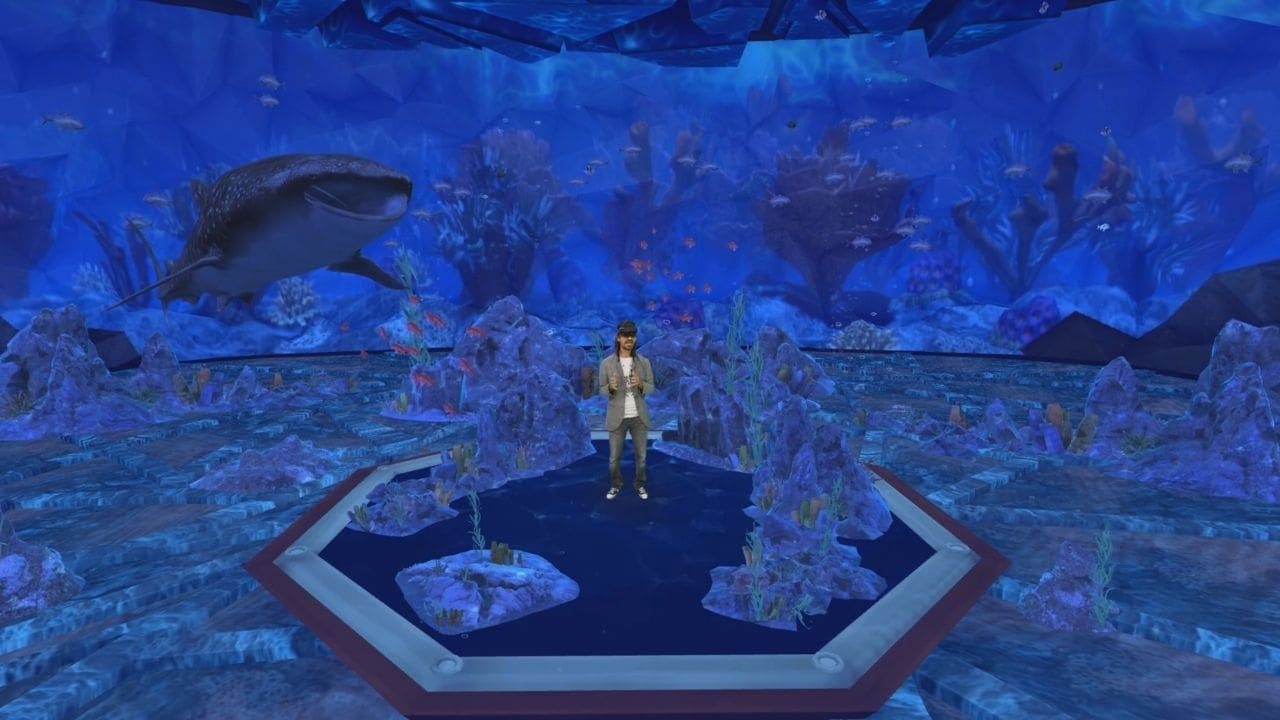 Microsoft Mesh announced at the Ignite event on Tuesday. Image: Microsoft[/caption]In addition to the Star Wars-like futuristic holograms, Microsoft Mesh will also enable geographically distributed teams to conduct virtual design sessions, host virtual social meetups, among other things. People will be able to express themselves as avatars initially, and eventually use holoportation to project themselves as their most lifelike, photorealistic selves, the company said.Mesh is powered by Azure cloud computing systems that combine data center processing power with artificial intelligence.Holohedrons headgear with a $3,500 price tag is used to overlay digital imagery on real world settings, but the Mesh platform has the potential to be synced to virtual reality gear such as Facebook-owned Oculus as well as smartphones, according to Kipman.Apple, Google, and Facebook are among the tech titans investing in mixed reality.Mesh is designed to let people collaborate and share holographic experiences in real time no matter how far apart them may be, presentations showed.[caption id="attachment_9370121" align="alignright" width="1280"]
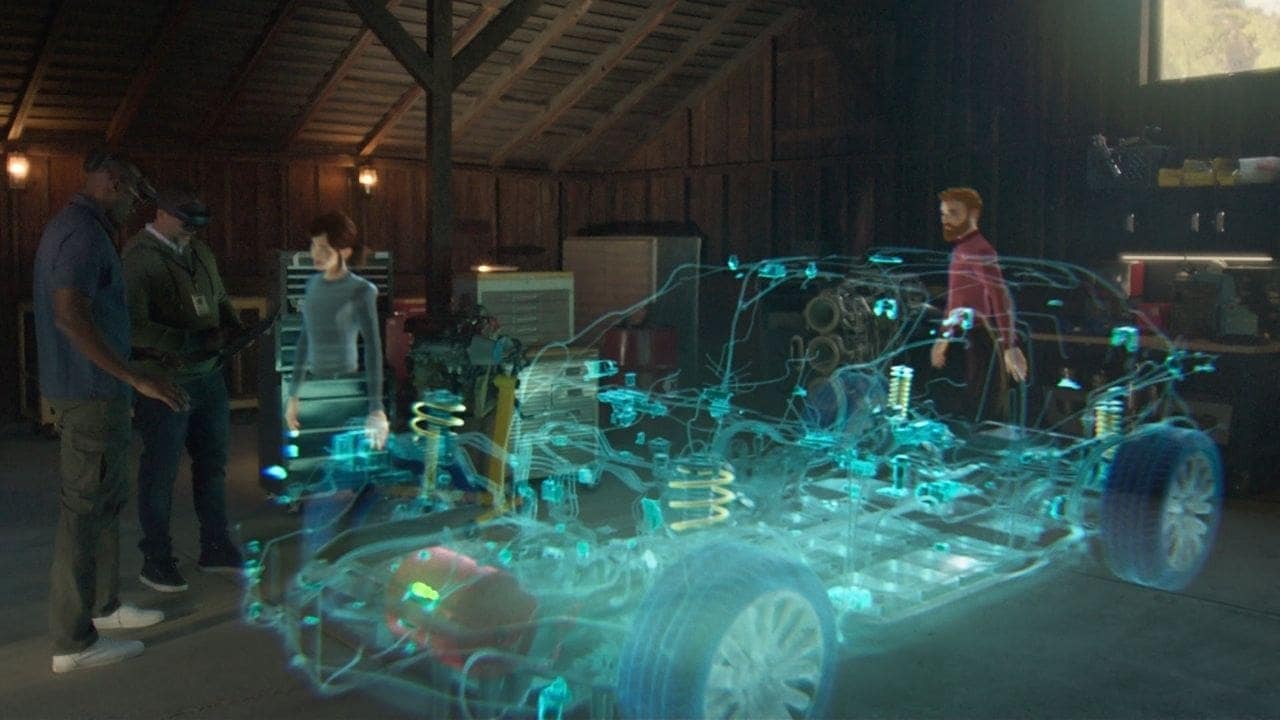 Microsoft Mesh will allow geographically distributed teams to meet and collaborate in shared mixed reality sessions where participants appear as digital representations of themselves. Image: Microsoft.[/caption]"You can actually feel like you're in the same place with someone sharing content or you can teleport from different mixed reality devices and be present with people even when you’re not physically together," Kipman said.People will initially be able to appear in Mesh experiences as avatars, but in the future will be able to project lifelike holograms of themselves, according to Microsoft.The pandemic caused a dramatic shift to working and learning remotely, with reliance on cloud computing instead of offices or classrooms expected to remain part of people's lives.The Redmond, Washington-based company expects outside developers and partners to build applications on Mesh, and is working to integrate it in products such as Teams virtual collaboration service.Niantic chief John Hanke took part in the Ignite presentation with a concept version of its popular Pokémon Go mobile game running on HoloLens."This notion of bringing my virtual friends along with me as I go out and walk and explore the world – I just love that concept and I'm really interested to see what we can do with that," Hanke said.
First Published:Mar 03, 2021, 10:56:21 IST
Advertisement
Advertisement

Why AI notetakers are raising serious privacy and security concerns
AI notetakers promise effortless meeting summaries, but experts warn they could expose confidential conversations, corporate secrets and personal voiceprints. As businesses increasingly adopt AI-powered meeting assistants, questions over data storage, privacy, consent and legal risks are becoming impossible to ignore
5 min read
China's low-cost AI models are changing the global AI race. Here's why Silicon Valley is worried
As Chinese firms continue to improve performance while keeping prices low, the AI race is no longer just about building the smartest model—it is increasingly becoming a battle over who can deliver the best value
2 min read
China's Kimi K3 challenges US AI leaders with frontier-level performance at lower cost
Chinese artificial intelligence startup Moonshot AI has unveiled its latest open-weight AI model, Kimi K3, with early results suggesting it could compete with some of the world's most advanced AI systems developed by leading US companies
2 min read
How did Instagram run ads promoting child abuse in India?
India has issued a notice to Meta after an investigation alleged that Instagram displayed paid advertisements promoting child sexual abuse material. MeitY ordered Meta to remove such Instagram ads and explain within seven days how they were approved
8 min read
Why has India halted WhatsApp’s username feature before launch?
India has halted WhatsApp’s planned username feature, citing concerns about cybercrime, impersonation, and law enforcement challenges. As Meta races to address security concerns, here’s why MeitY has paused the rollout, what the feature does, and how it could influence privacy and online safety in India
3 min read
Advertisement
Advertisement