
Advertisement


Sections
Made-in-India Suzuki Baleno receives zero-star rating in Latin NCAP crash tests: Watch the video here
The Suzuki Baleno tested by Latin NCAP is available with ESC and up to six airbags in Latin American markets, but as standard, only gets two airbags.

Becoming the latest made-in-India Suzuki model to receive a disappointing assessment from a global safety watchdog, the Suzuki Baleno has been handed a dismal zero-star rating by the Latin New Car Assessment Programme (NCAP). The Baleno – manufactured at Suzuki’s plant in Gujarat – follows the Swift in being rated zero stars in the Latin NCAP crash tests, with the latter having been tested in August this year.The Baleno received a score of 20.03 percent on adult occupant protection, 17.06 percent on child occupant protection, 64.06 percent on pedestrian protection and 6.98 percent on safety assists. The model tested by Latin NCAP had just two front airbags, as the Baleno for Latin American markets only gets two front airbags as standard.[caption id="attachment_10094401" align="alignnone" width="1431"]![The Baleno Latin NCAP tested was fitted with two front airbags only, as six airbags are available only as an option in Latin American markets. Image: Latin NCAP]() The Baleno Latin NCAP tested was fitted with two front airbags only, as six airbags are available only as an option in Latin American markets. Image: Latin NCAP[/caption]In the frontal impact test, Latin NCAP says the Baleno ‘showed stable structure performance’. In its detailed report, Latin NCAP noted that protection offered to the driver and passenger head and neck was good. Chest protection was rated adequate, and protection for both the driver and front passenger’s tibias was noted to be sufficient, with the footwell area deemed stable. The Baleno’s bodyshell was also rated stable, and deemed capable of withstanding further loadings.However, the Baleno lost points as Latin NCAP said the knees of both front occupants can ‘impact with dangerous structures behind the fascia’.It was in the side impact test that the Baleno lost the most ground. The side impact test revealed a high amount of door intrusion, and while head, pelvis and abdomen protection levels were sufficient, the high degree of door intrusion resulted in ‘poor’ protection for the chest of the passenger. Neck protection for Baleno occupants in the whiplash test was deemed marginal.Latin NCAP attributed the zero-star rating for the Baleno to its poor side impact protection, marginal whiplash protection, lack of standard side body and head protection airbags, lack of standard Electronic Stability Control (ESC) and the decision of Suzuki of not recommending Child Restraint Systems (CRS) for the tests.It must be noted here that Suzuki does offer the option of six airbags and electronic stability control (ESC) on the Baleno in Latin America, but not as standard. What’s also worth noting is the Maruti Suzuki Baleno on sale in India only gets two airbags, even on the top-spec variant – six airbags and ESC aren’t available as even an option.In its statement, Latin NCAP shared that Suzuki refused to test the version with optional safety equipment, which the safety watchdog says raises questions about the ‘effectiveness of those extra safety elements.’Commenting on the Baleno’s performance in the tests, Alejandro Furas, Secretary General of the Latin NCAP, said, “Baleno’s zero-star rating is part of an ongoing disappointment, after the Swift’s zero star rating some weeks ago. With specially poor safety performance in adult and child occupant protection on offer from Suzuki as standard to Latin American consumers. Latin NCAP calls on Toyota and Suzuki to significantly improve the standard safety equipment on these models as soon as possible and for them to be tested to demonstrate the improvements. Basic vehicle safety, which is taken for granted in mature markets, is a right that Latin American consumers should claim without having to pay extra for them.”It's worth remembering at this point that Latin NCAP’s crash tests are more comprehensive than the Global NCAP tests India is familiar with, as it takes into account several aspects of a vehicle pertaining to safety, including pedestrian protection and safety assist systems. Global NCAP hasn’t yet tested the Baleno, which is now well over six years old, having been launched in India all the way back in October 2015.Also read: Top 10 safest cars in India as rated by Global NCAP - Tata Punch tops the list
The Baleno Latin NCAP tested was fitted with two front airbags only, as six airbags are available only as an option in Latin American markets. Image: Latin NCAP[/caption]In the frontal impact test, Latin NCAP says the Baleno ‘showed stable structure performance’. In its detailed report, Latin NCAP noted that protection offered to the driver and passenger head and neck was good. Chest protection was rated adequate, and protection for both the driver and front passenger’s tibias was noted to be sufficient, with the footwell area deemed stable. The Baleno’s bodyshell was also rated stable, and deemed capable of withstanding further loadings.However, the Baleno lost points as Latin NCAP said the knees of both front occupants can ‘impact with dangerous structures behind the fascia’.It was in the side impact test that the Baleno lost the most ground. The side impact test revealed a high amount of door intrusion, and while head, pelvis and abdomen protection levels were sufficient, the high degree of door intrusion resulted in ‘poor’ protection for the chest of the passenger. Neck protection for Baleno occupants in the whiplash test was deemed marginal.Latin NCAP attributed the zero-star rating for the Baleno to its poor side impact protection, marginal whiplash protection, lack of standard side body and head protection airbags, lack of standard Electronic Stability Control (ESC) and the decision of Suzuki of not recommending Child Restraint Systems (CRS) for the tests.It must be noted here that Suzuki does offer the option of six airbags and electronic stability control (ESC) on the Baleno in Latin America, but not as standard. What’s also worth noting is the Maruti Suzuki Baleno on sale in India only gets two airbags, even on the top-spec variant – six airbags and ESC aren’t available as even an option.In its statement, Latin NCAP shared that Suzuki refused to test the version with optional safety equipment, which the safety watchdog says raises questions about the ‘effectiveness of those extra safety elements.’Commenting on the Baleno’s performance in the tests, Alejandro Furas, Secretary General of the Latin NCAP, said, “Baleno’s zero-star rating is part of an ongoing disappointment, after the Swift’s zero star rating some weeks ago. With specially poor safety performance in adult and child occupant protection on offer from Suzuki as standard to Latin American consumers. Latin NCAP calls on Toyota and Suzuki to significantly improve the standard safety equipment on these models as soon as possible and for them to be tested to demonstrate the improvements. Basic vehicle safety, which is taken for granted in mature markets, is a right that Latin American consumers should claim without having to pay extra for them.”It's worth remembering at this point that Latin NCAP’s crash tests are more comprehensive than the Global NCAP tests India is familiar with, as it takes into account several aspects of a vehicle pertaining to safety, including pedestrian protection and safety assist systems. Global NCAP hasn’t yet tested the Baleno, which is now well over six years old, having been launched in India all the way back in October 2015.Also read: Top 10 safest cars in India as rated by Global NCAP - Tata Punch tops the list
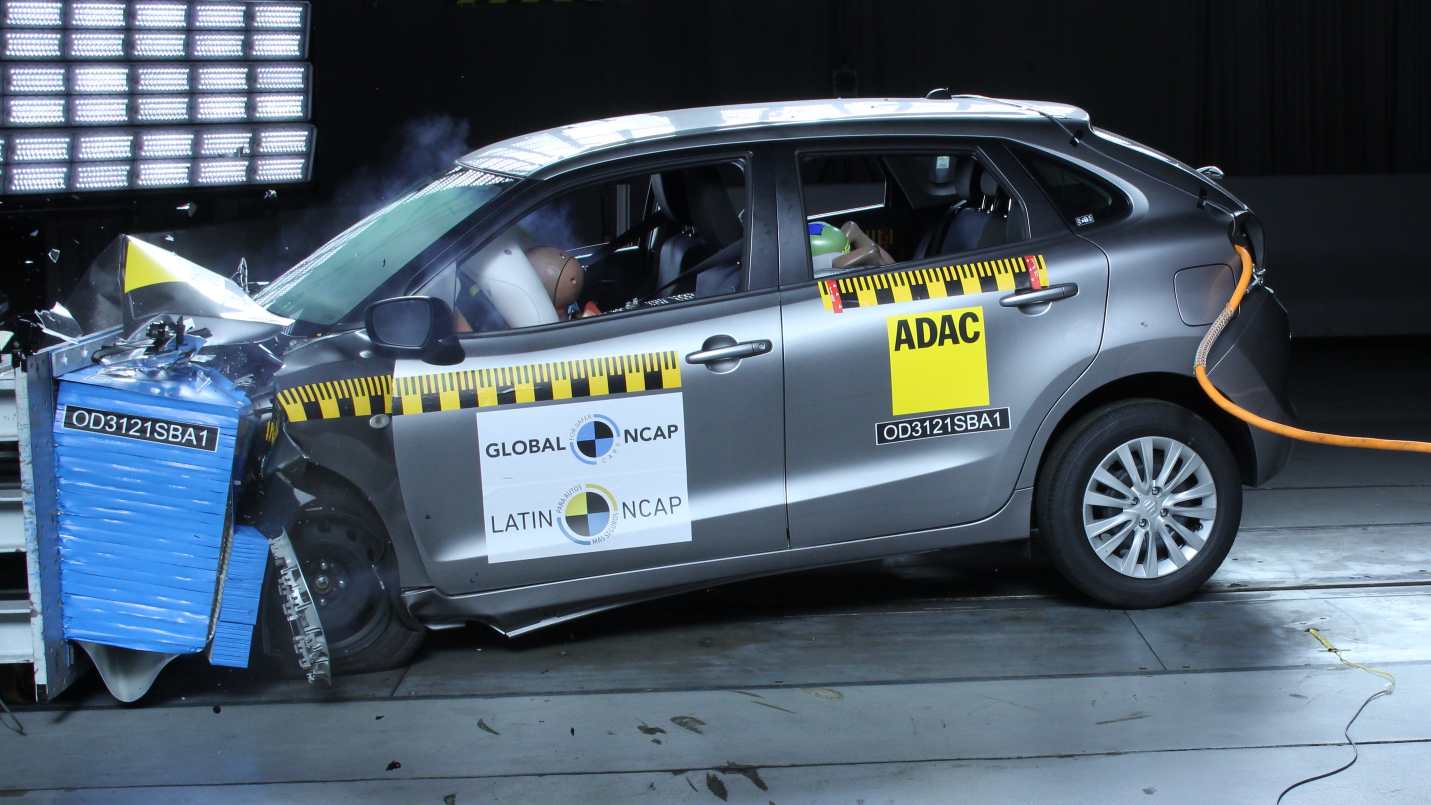 The Baleno Latin NCAP tested was fitted with two front airbags only, as six airbags are available only as an option in Latin American markets. Image: Latin NCAP[/caption]In the frontal impact test, Latin NCAP says the Baleno ‘showed stable structure performance’. In its detailed report, Latin NCAP noted that protection offered to the driver and passenger head and neck was good. Chest protection was rated adequate, and protection for both the driver and front passenger’s tibias was noted to be sufficient, with the footwell area deemed stable. The Baleno’s bodyshell was also rated stable, and deemed capable of withstanding further loadings.However, the Baleno lost points as Latin NCAP said the knees of both front occupants can ‘impact with dangerous structures behind the fascia’.
First Published:Oct 28, 2021, 20:19:26 IST
Advertisement
Advertisement

Why AI notetakers are raising serious privacy and security concerns
AI notetakers promise effortless meeting summaries, but experts warn they could expose confidential conversations, corporate secrets and personal voiceprints. As businesses increasingly adopt AI-powered meeting assistants, questions over data storage, privacy, consent and legal risks are becoming impossible to ignore
5 min read
China's low-cost AI models are changing the global AI race. Here's why Silicon Valley is worried
As Chinese firms continue to improve performance while keeping prices low, the AI race is no longer just about building the smartest model—it is increasingly becoming a battle over who can deliver the best value
2 min read
China's Kimi K3 challenges US AI leaders with frontier-level performance at lower cost
Chinese artificial intelligence startup Moonshot AI has unveiled its latest open-weight AI model, Kimi K3, with early results suggesting it could compete with some of the world's most advanced AI systems developed by leading US companies
2 min read
How did Instagram run ads promoting child abuse in India?
India has issued a notice to Meta after an investigation alleged that Instagram displayed paid advertisements promoting child sexual abuse material. MeitY ordered Meta to remove such Instagram ads and explain within seven days how they were approved
8 min read
Why has India halted WhatsApp’s username feature before launch?
India has halted WhatsApp’s planned username feature, citing concerns about cybercrime, impersonation, and law enforcement challenges. As Meta races to address security concerns, here’s why MeitY has paused the rollout, what the feature does, and how it could influence privacy and online safety in India
3 min read
Advertisement
Advertisement