


India imposes 25 percent duty on import of solar cells from China for one year
India plans to make renewable power account for 40 percent of its total installed capacity by 2030.

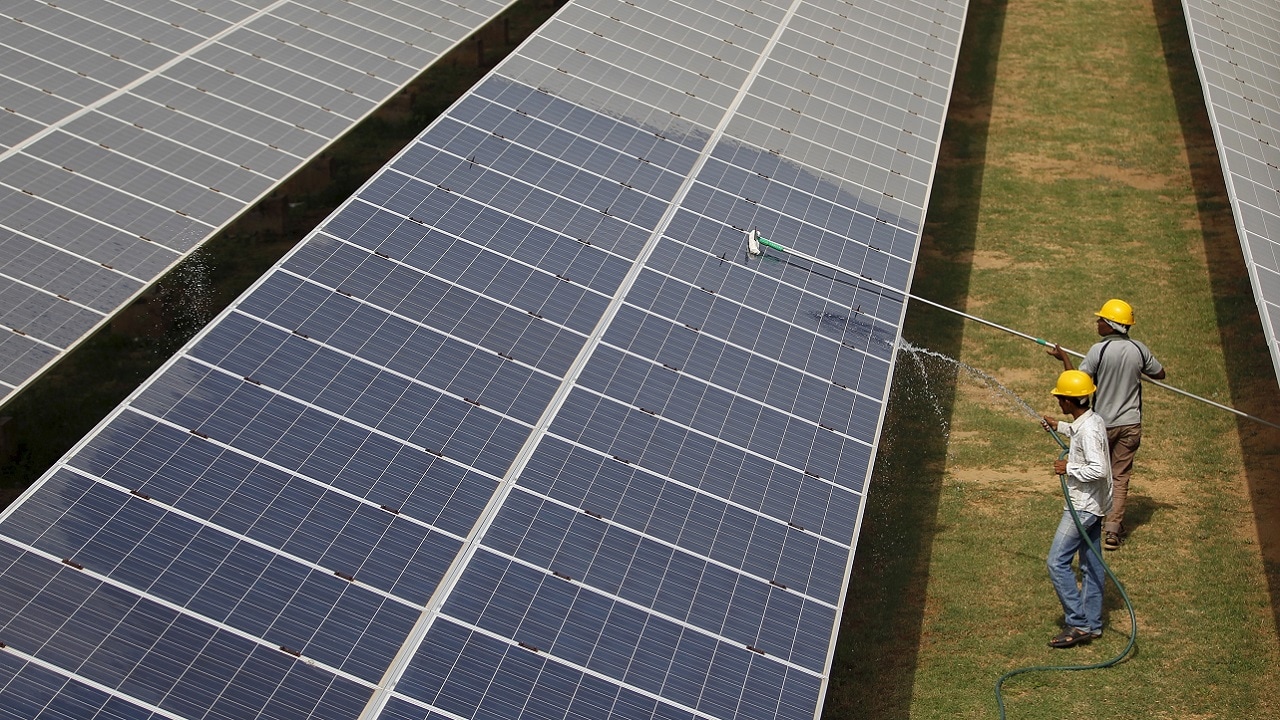
Representational image. Reuters[/caption]The recommendation, contained in a report published by the ministry and to be submitted to the government for approval, is intended to address a serious threat to the domestic solar manufacturing industry from Chinese imports, the directorate general of trade remedies (DGTR) said in the report.Indian solar cell and module manufacturers said cheap Chinese imports were hurting the domestic industry, while Chinese manufacturers say imports are helping India accelerate its renewable energy adoption programme.“Solar module manufacturers are facing tough and unhealthy competition from imported modules,” the report quoted the North India Module Manufacturer Association as saying.The China Chamber of Commerce for Imports and Exports of Machinery and Electronic Products said the “real cause of injury to the domestic industry is aggressive pricing practices of other Indian producers and not imports.”Trade relations between the two Asian nations have thawed recently despite fears of a trade war elsewhere, with the two sides discussing ways to increase Indian sales of farm products and India pushing China to give access to its software service firms.However, the trade deficit has widened to $62.9 billion in China’s favour, an over nine-fold increase over the last decade.India’s share in China’s exports of solar cells and modules rose from about a fifth in the first half of 2016 to two-fifths a year later, the DGTR wrote, adding that China had “started targeting the Indian market more vigorously.”Some Indian solar power generators, like Avaada Ltd, have expressed reservations about the duties. A safeguard duty would put solar projects worth more than 1000 billion Indian rupees ($14.59 billion) under jeopardy, Avaada told DGTR.

Why AI notetakers are raising serious privacy and security concerns
China's low-cost AI models are changing the global AI race. Here's why Silicon Valley is worried
China's Kimi K3 challenges US AI leaders with frontier-level performance at lower cost
How did Instagram run ads promoting child abuse in India?
Why has India halted WhatsApp’s username feature before launch?