
Advertisement


Sections
iFixit tears down the Google Pixel 2; the technology behind the squeeze action revealed
iFixit revealed were heat-pipes in the device that were earlier unavailable for the original Pixel and Pixel XL phone.

It is no surprise that Google's latest flagship devices, the Google Pixel 2 and Pixel 2 XL come with squeezable frame quite similar to the one seen in the HTC U11. A recent teardown of the device by iFixit has revealed the Squeezable Frame Technology along with the Pixel Visual Core image processor.[caption id="attachment_4111023" align="alignleft" width="380"]![Image credits: Google]() Image credits: Google[/caption]Upon opening the device a tightly walled 3,520 mAh battery is revealed. The battery is not easy to pull out due to the absence of any pull-tab adhesive beneath the battery. The lack of pull-tab adhesive marks a deviation from what was revealed while tearing out the Pixel and Pixel XL. iFixit also revealed heat-pipes in the device that were absent in the original Pixel and Pixel XL.The Active Edge feature or the squeezable frame feature allows users to launch the Google Assistant by just squeezing the phone. The teardown revealed that the smartphone's Active Edge sensor comprises a bendable circuit board, a line of steel blocks and strain gauges (resistors) placed in between them. The software on both the Pixel devices enables the smartphone to understand different levels of pressure. iFixit has awarded the phone with a repairability score of 6/10 which is less than the 7/10 rating that the original Pixel received last year.[caption id="attachment_4160229" align="alignleft" width="800"]
Image credits: Google[/caption]Upon opening the device a tightly walled 3,520 mAh battery is revealed. The battery is not easy to pull out due to the absence of any pull-tab adhesive beneath the battery. The lack of pull-tab adhesive marks a deviation from what was revealed while tearing out the Pixel and Pixel XL. iFixit also revealed heat-pipes in the device that were absent in the original Pixel and Pixel XL.The Active Edge feature or the squeezable frame feature allows users to launch the Google Assistant by just squeezing the phone. The teardown revealed that the smartphone's Active Edge sensor comprises a bendable circuit board, a line of steel blocks and strain gauges (resistors) placed in between them. The software on both the Pixel devices enables the smartphone to understand different levels of pressure. iFixit has awarded the phone with a repairability score of 6/10 which is less than the 7/10 rating that the original Pixel received last year.[caption id="attachment_4160229" align="alignleft" width="800"]![Pixel 2 Squeeze sensor. iFixit]() Pixel 2 Squeeze sensor. iFixit[/caption]The teardown comes right at the time when XDA-Developers figured out an app called Button Mapper that can let you remap the squeeze feature. This means that users can reassign the squeeze feature to other useful things such as returning to the home screen, turning on the Do Not Disturb mode, launching the flashlight etc.
Pixel 2 Squeeze sensor. iFixit[/caption]The teardown comes right at the time when XDA-Developers figured out an app called Button Mapper that can let you remap the squeeze feature. This means that users can reassign the squeeze feature to other useful things such as returning to the home screen, turning on the Do Not Disturb mode, launching the flashlight etc.
 Image credits: Google[/caption]Upon opening the device a tightly walled 3,520 mAh battery is revealed. The battery is not easy to pull out due to the absence of any pull-tab adhesive beneath the battery. The lack of pull-tab adhesive marks a deviation from what was revealed while tearing out the Pixel and Pixel XL. iFixit also revealed heat-pipes in the device that were absent in the original Pixel and Pixel XL.The Active Edge feature or the squeezable frame feature allows users to launch the Google Assistant by just squeezing the phone. The teardown revealed that the smartphone's Active Edge sensor comprises a bendable circuit board, a line of steel blocks and strain gauges (resistors) placed in between them. The software on both the Pixel devices enables the smartphone to understand different levels of pressure. iFixit has awarded the phone with a repairability score of 6/10 which is less than the 7/10 rating that the original Pixel received last year.[caption id="attachment_4160229" align="alignleft" width="800"]
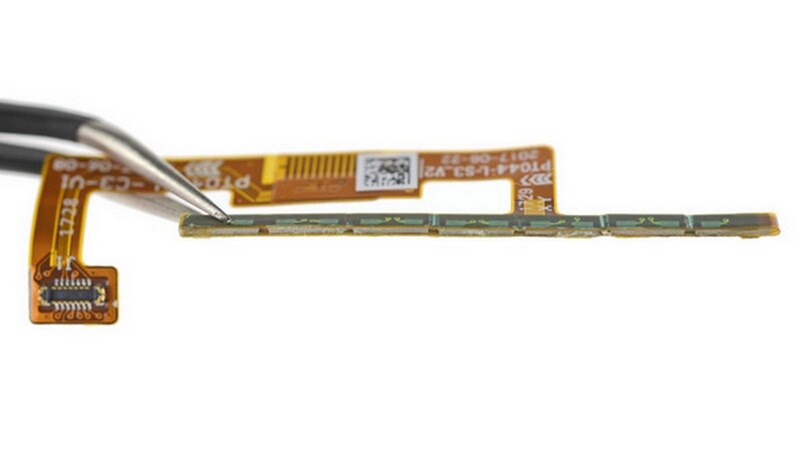 Pixel 2 Squeeze sensor. iFixit[/caption]
First Published:Oct 20, 2017, 21:15:09 IST
Advertisement
Advertisement

Why AI notetakers are raising serious privacy and security concerns
AI notetakers promise effortless meeting summaries, but experts warn they could expose confidential conversations, corporate secrets and personal voiceprints. As businesses increasingly adopt AI-powered meeting assistants, questions over data storage, privacy, consent and legal risks are becoming impossible to ignore
5 min read
China's low-cost AI models are changing the global AI race. Here's why Silicon Valley is worried
As Chinese firms continue to improve performance while keeping prices low, the AI race is no longer just about building the smartest model—it is increasingly becoming a battle over who can deliver the best value
2 min read
China's Kimi K3 challenges US AI leaders with frontier-level performance at lower cost
Chinese artificial intelligence startup Moonshot AI has unveiled its latest open-weight AI model, Kimi K3, with early results suggesting it could compete with some of the world's most advanced AI systems developed by leading US companies
2 min read
How did Instagram run ads promoting child abuse in India?
India has issued a notice to Meta after an investigation alleged that Instagram displayed paid advertisements promoting child sexual abuse material. MeitY ordered Meta to remove such Instagram ads and explain within seven days how they were approved
8 min read
Why has India halted WhatsApp’s username feature before launch?
India has halted WhatsApp’s planned username feature, citing concerns about cybercrime, impersonation, and law enforcement challenges. As Meta races to address security concerns, here’s why MeitY has paused the rollout, what the feature does, and how it could influence privacy and online safety in India
3 min read
Advertisement
Advertisement