


Hold big corporations accountable for plastic waste they produce, Greenpeace tells govt
Days after the government pledged to eliminate single-use plastic from the country by 2022, Greenpeace said there should be stricter implementation of laws

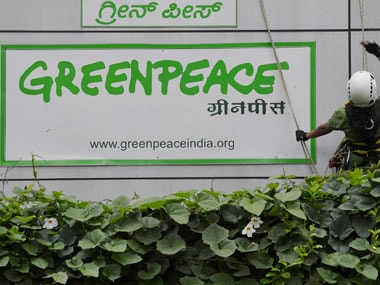
Representational image. AFP[/caption]During an event to celebrate World Environment Day on 5 June, Union environment minister Harsh Vardhan, in the presence of Prime Minister Narendra Modi, had pledged to eliminate single-use plastic by 2022."The government must hold big corporations accountable for the plastic waste they produce. The companies need to drastically reduce their plastic production and distribution and stop passing the onus of dealing with their plastic waste onto the end consumer," Sivalingam said."If the government is serious about a plastic-free India by 2022, it cannot just continue to frame laws and dilute them, like it has been doing in the past," he said.India played the global host to the World Environment Day that was themed beat plastic pollution'."In the recent past, we were disturbed by state violence in Tuticorin in which the major culprit was industrial pollution and systemic failures by the pollution control body to regulate," Sivalingam said."There is an urgent need to control pollution from the industries and the power sector to improve air, water and public health. We still have a long way to go," Sivalingam said.He said Greenpeace was surprised that the government chose not to address the issue of air pollution, which is right now plaguing the country and has created a situation of national health emergency."The government must come up with the final National Clean air Action Plan (NCAP) and incorporate the recommendations of stakeholders and air pollution experts, who have given their inputs to the draft NCAP. The draft plan lacked time-bound implementation targets and had completely overlooked the implementation of emission norms for thermal power plants," he said.World Environment Day celebrations began pan-India and the events included cleanliness campaigns by state governments, cleaning of 24 beaches and 24 rivers in 19 states, making national parks and sanctuaries plastic free, media as well as social media campaigns and organising Envithon mini-marathons in five other cities, besides Delhi."We expect that the government manages to retain the momentum of the proactiveness shown on World Environment Day. Or else World Environment Day will be reduced to a day of tokenism signifying big promises and little implementation whatsoever," Sivalingam said.

Why AI notetakers are raising serious privacy and security concerns
China's low-cost AI models are changing the global AI race. Here's why Silicon Valley is worried
China's Kimi K3 challenges US AI leaders with frontier-level performance at lower cost
How did Instagram run ads promoting child abuse in India?
Why has India halted WhatsApp’s username feature before launch?