


Harward-Google to develop an AI model to predict aftershock locations post a quake
Earthquakes typically occur in sequences — an initial "mainshock" is often followed by "aftershocks."

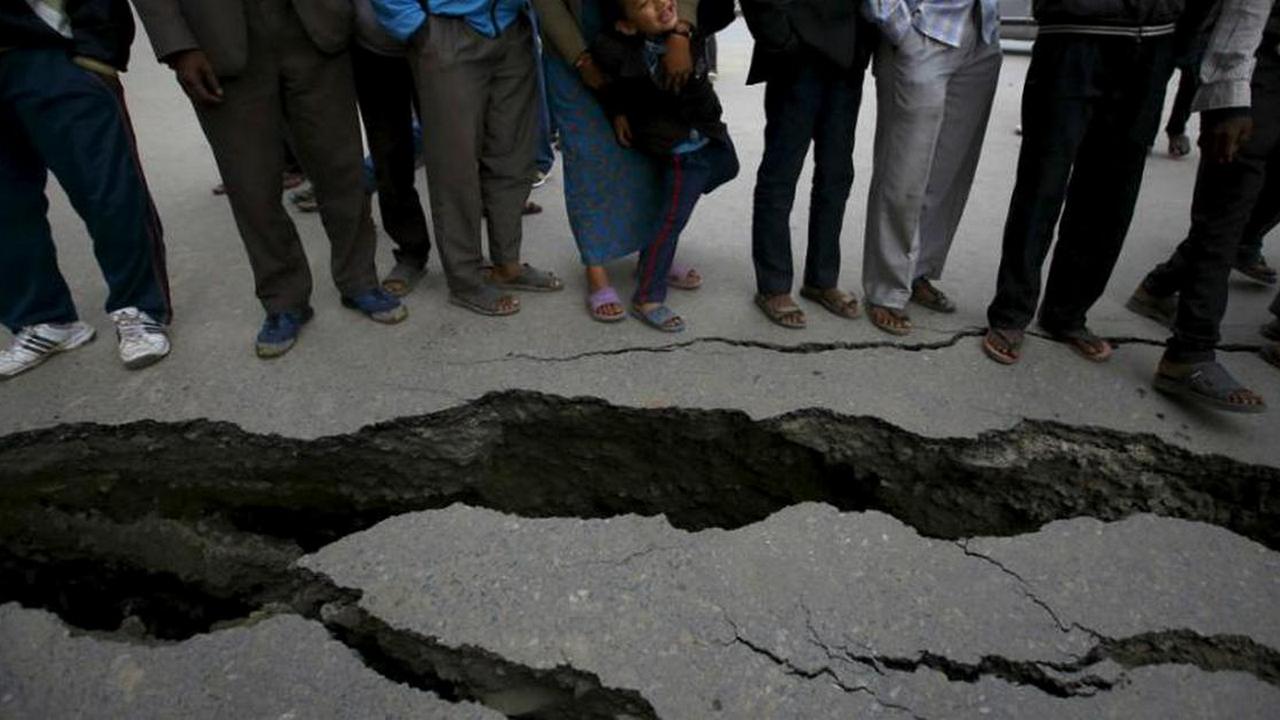
Representational image. Reuters.[/caption]Earthquakes typically occur in sequences — an initial "mainshock" (the event that usually gets the headlines) is often followed by a set of "aftershocks."Though these aftershocks are usually smaller than the main shock, in some cases, they may significantly hamper recovery efforts.Even though the timing and size of aftershocks were understood and explained by established empirical laws, forecasting the locations of these events has proven to be more challenging.Using deep learning algorithms, the team analysed a database of information on more than 118 major earthquakes from around the world, to predict where aftershocks might occur.From there, they applied a neural net to analyse the relationships between static stress changes caused by the mainshocks and aftershock locations. The algorithm was able to identify useful patterns.They developed a system, detailed in the journal Nature, that, while still imprecise, was able to forecast aftershocks significantly better than random assignment.The novel model opens up possibilities for finding potential physical theories that may allow us to better understand natural phenomena, DeVries noted."This machine-learning-driven insight provides improved forecasts of aftershock locations and identifies physical quantities that may control earthquake triggering during the most active part of the seismic cycle," the researchers stated in the paper.

Why AI notetakers are raising serious privacy and security concerns
China's low-cost AI models are changing the global AI race. Here's why Silicon Valley is worried
China's Kimi K3 challenges US AI leaders with frontier-level performance at lower cost
How did Instagram run ads promoting child abuse in India?
Why has India halted WhatsApp’s username feature before launch?