
Advertisement


Sections
Google Translate adds 24 new languages including Bhojpuri, Assamese, Sanskrit, Maithili and many more
With the addition of languages like Assamese, Bhojpuri, Mizo, Kurdish etc. Google Translate now supports 133 languages.

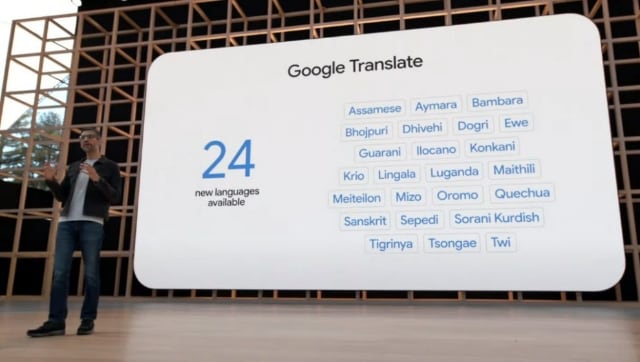
As real-time machine and app based translation becomes more commonly required, Google announced at their I/O developer’s conference that it has added 24 new languages to Google Translate. Of the new 24 additions, eight languages are from India.![Google Translate adds 24 new languages including 8 Indian languages like bhojpuri and sanskrit]() Apart from improving Google Assistant’s ability to communicate with users in a more natural way and making Google Assistant more compatible with dialects, Google announced that it has made several improvements to its Google Translate service. At their ongoing Google I/O developer’s conference, The Mountain View based tech giant announced that thanks to Machine Learning, Google Translate has now ‘learnt’ 24 new languages including 8 Indian languages. These include:
Apart from improving Google Assistant’s ability to communicate with users in a more natural way and making Google Assistant more compatible with dialects, Google announced that it has made several improvements to its Google Translate service. At their ongoing Google I/O developer’s conference, The Mountain View based tech giant announced that thanks to Machine Learning, Google Translate has now ‘learnt’ 24 new languages including 8 Indian languages. These include: ![Google Translate adds 24 new languages including 8 Indian languages like bhojpuri and sanskrit]() Google attributes the improvement in speed and accuracy in their ability to add new languages to the advances in Machine Learning that have taken place over the last couple of years. “Up until a couple of years ago, it simply was not technologically possible to add languages like these, which are what we call a low resource — meaning that there are not very many text resources out there for them,” he explained. But a new technology called Zero-Shot Machine Translation has made it easier.With the addition of these 24 new languages, Google Translate now supports over 133 different languages. Although the new languages will not reach users all across the world just yet, it has been made live and accessible to people in North America. In a few weeks, the services will be rolled out worldwide.
Google attributes the improvement in speed and accuracy in their ability to add new languages to the advances in Machine Learning that have taken place over the last couple of years. “Up until a couple of years ago, it simply was not technologically possible to add languages like these, which are what we call a low resource — meaning that there are not very many text resources out there for them,” he explained. But a new technology called Zero-Shot Machine Translation has made it easier.With the addition of these 24 new languages, Google Translate now supports over 133 different languages. Although the new languages will not reach users all across the world just yet, it has been made live and accessible to people in North America. In a few weeks, the services will be rolled out worldwide.
 Apart from improving Google Assistant’s ability to communicate with users in a more natural way and making Google Assistant more compatible with dialects, Google announced that it has made several improvements to its Google Translate service. At their ongoing Google I/O developer’s conference, The Mountain View based tech giant announced that thanks to Machine Learning, Google Translate has now ‘learnt’ 24 new languages including 8 Indian languages. These include:
 - Assamese, which is used by about 25 million people in Northeast India
- Bhojpuri, which is used by about 50 million people in northern India, Nepal and Fiji
- Dogri, which is used by about 3 million people in northern India
- Konkani, which is used by about 2 million people in Central India
- Maithili, which is used by about 34 million people in northern India
- Meiteilon or Manipuri, which is used by about 2 million people in Northeast India
- Mizo, which is used by about 830,000 people in Northeast India
- Sanskrit, which is used by about 20,000 people in India
- Aymara (used by about two million people across some Latin American countries)
- Bambara (used by about 14 million people in Mali)
- Dhivehi (used by about 300,000 people in the Maldives)
- Ewe (used by about seven million people in Ghana and Togo)
- Guarani (used by about seven million people in several South American countries)
- Ilocano (used by about 10 million people in the northern Philippines)
- Krio (used by about four million people in Sierra Leone)
- Kurdish or Sorani (used by about eight million people, mostly in Iraq & parts of Turkey)
- Lingala, (used by about 45 million people in central and eastern Africa)
- Luganda (used by about 20 million people in Uganda and Rwanda)
- Oromo (used by about 37 million people in Ethiopia and Kenya)
- Quechua (used by about 10 million people in Peru, Bolivia, Ecuador and surrounding countries)
- Sepedi (used by about 14 million people in South Africa)
- Tigrinya (used by about eight million people in Eritrea and Ethiopia)
- Tsonga (used by about seven million people in southern Africa)
- Twi (used by about 11 million people in Ghana)
 Google attributes the improvement in speed and accuracy in their ability to add new languages to the advances in Machine Learning that have taken place over the last couple of years. “Up until a couple of years ago, it simply was not technologically possible to add languages like these, which are what we call a low resource — meaning that there are not very many text resources out there for them,” he explained. But a new technology called Zero-Shot Machine Translation has made it easier.With the addition of these 24 new languages, Google Translate now supports over 133 different languages. Although the new languages will not reach users all across the world just yet, it has been made live and accessible to people in North America. In a few weeks, the services will be rolled out worldwide.
First Published:May 12, 2022, 13:39:06 IST
Advertisement
Advertisement

Why AI notetakers are raising serious privacy and security concerns
AI notetakers promise effortless meeting summaries, but experts warn they could expose confidential conversations, corporate secrets and personal voiceprints. As businesses increasingly adopt AI-powered meeting assistants, questions over data storage, privacy, consent and legal risks are becoming impossible to ignore
5 min read
China's low-cost AI models are changing the global AI race. Here's why Silicon Valley is worried
As Chinese firms continue to improve performance while keeping prices low, the AI race is no longer just about building the smartest model—it is increasingly becoming a battle over who can deliver the best value
2 min read
China's Kimi K3 challenges US AI leaders with frontier-level performance at lower cost
Chinese artificial intelligence startup Moonshot AI has unveiled its latest open-weight AI model, Kimi K3, with early results suggesting it could compete with some of the world's most advanced AI systems developed by leading US companies
2 min read
How did Instagram run ads promoting child abuse in India?
India has issued a notice to Meta after an investigation alleged that Instagram displayed paid advertisements promoting child sexual abuse material. MeitY ordered Meta to remove such Instagram ads and explain within seven days how they were approved
8 min read
Why has India halted WhatsApp’s username feature before launch?
India has halted WhatsApp’s planned username feature, citing concerns about cybercrime, impersonation, and law enforcement challenges. As Meta races to address security concerns, here’s why MeitY has paused the rollout, what the feature does, and how it could influence privacy and online safety in India
3 min read
Advertisement
Advertisement