
Advertisement


Sections
Google says all its products will be made of recycled materials by 2022
Google says that by 2020, 100% of its shipments going to or from customers will be carbon neutral.

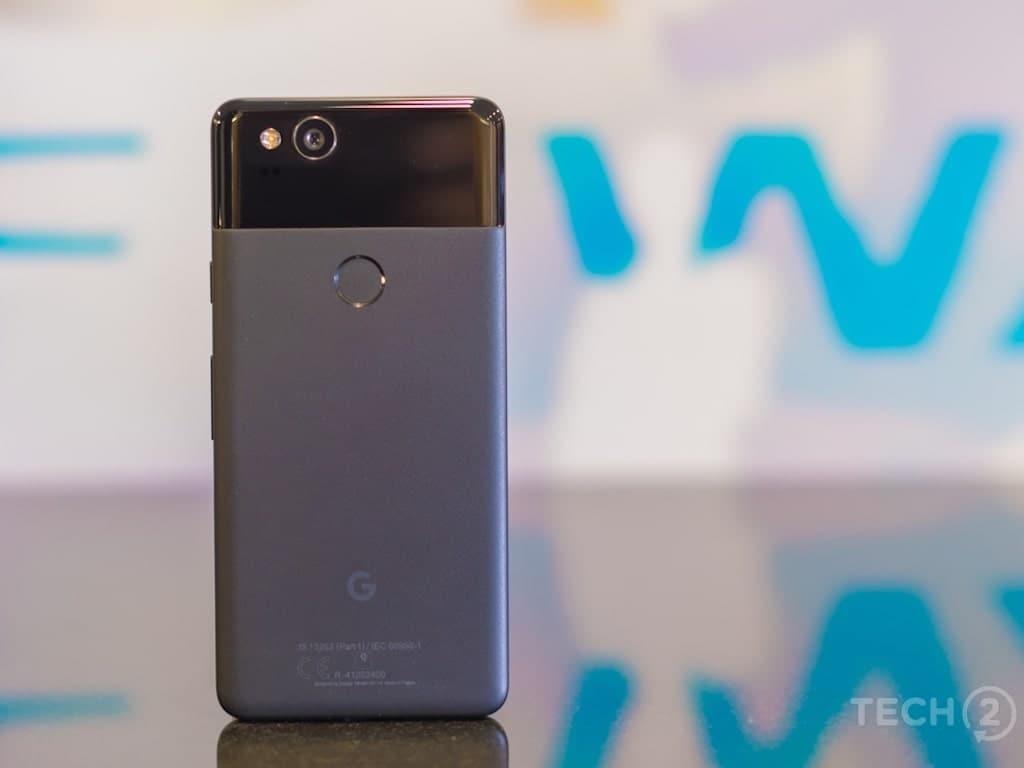
The Pixel phones and the Google Home speakers all fall under Google's 'Made by Google' brand. This unit was started some three years ago by the company, before which Google was dabbling in other hardware like Nexus. Now, Google is ready to make its products more sustainable.[caption id="attachment_5548191" align="alignnone" width="1024"]![Google Pixel 2]() Google Pixel 2[/caption]In a tweet shared by the company, Google says that starting 2022, 100 percent of its 'Made by Google' products will include recycled materials and will maximize recycled content whenever possible. Google's Anna Meegan, Head of Sustainability, Consumer Hardware further wrote in the blog that by 2020, 100 percent of all the company shipments going to or from customers will be carbon neutral.This announcement adds to Google's existing efforts to be sustainable. Google says that between 2017 to 2018, it cut its product shipment carbon emissions by 40 percent. Google also announced its Power Project, which will apparently provide "one million energy-saving Nest thermostats to families in need by 2023, and many Nest products are already made with post-consumer recycled plastic."But how is Google doing this? As per Fast Company, for the Pixel 4 series (all you need to know) and the new generation of Google Home speakers, Google has decided to swap industry-standard polyester fabric for fabric made from recycled bottles.Apparently, it took Google's product team two years to make sure that the new sustainable fabric met design and manufacturing requirements and that vendors could supply it at scale. Now, each unit of the material will reuse a third of a plastic bottle. That's the kind of thing we may see more frequently beginning in 2022.
Google Pixel 2[/caption]In a tweet shared by the company, Google says that starting 2022, 100 percent of its 'Made by Google' products will include recycled materials and will maximize recycled content whenever possible. Google's Anna Meegan, Head of Sustainability, Consumer Hardware further wrote in the blog that by 2020, 100 percent of all the company shipments going to or from customers will be carbon neutral.This announcement adds to Google's existing efforts to be sustainable. Google says that between 2017 to 2018, it cut its product shipment carbon emissions by 40 percent. Google also announced its Power Project, which will apparently provide "one million energy-saving Nest thermostats to families in need by 2023, and many Nest products are already made with post-consumer recycled plastic."But how is Google doing this? As per Fast Company, for the Pixel 4 series (all you need to know) and the new generation of Google Home speakers, Google has decided to swap industry-standard polyester fabric for fabric made from recycled bottles.Apparently, it took Google's product team two years to make sure that the new sustainable fabric met design and manufacturing requirements and that vendors could supply it at scale. Now, each unit of the material will reuse a third of a plastic bottle. That's the kind of thing we may see more frequently beginning in 2022.
 Google Pixel 2[/caption]In a tweet shared by the company, Google says that starting 2022, 100 percent of its 'Made by Google' products will include recycled materials and will maximize recycled content whenever possible. Google's Anna Meegan, Head of Sustainability, Consumer Hardware further wrote in the blog that by 2020, 100 percent of all the company shipments going to or from customers will be carbon neutral.This announcement adds to Google's existing efforts to be sustainable. Google says that between 2017 to 2018, it cut its product shipment carbon emissions by 40 percent. Google also announced its Power Project, which will apparently provide "one million energy-saving Nest thermostats to families in need by 2023, and many Nest products are already made with post-consumer recycled plastic."But how is Google doing this? As per Fast Company, for the Pixel 4 series (all you need to know) and the new generation of Google Home speakers, Google has decided to swap industry-standard polyester fabric for fabric made from recycled bottles.Apparently, it took Google's product team two years to make sure that the new sustainable fabric met design and manufacturing requirements and that vendors could supply it at scale. Now, each unit of the material will reuse a third of a plastic bottle. That's the kind of thing we may see more frequently beginning in 2022.
First Published:Aug 06, 2019, 09:38:42 IST
Advertisement
Advertisement

Why AI notetakers are raising serious privacy and security concerns
AI notetakers promise effortless meeting summaries, but experts warn they could expose confidential conversations, corporate secrets and personal voiceprints. As businesses increasingly adopt AI-powered meeting assistants, questions over data storage, privacy, consent and legal risks are becoming impossible to ignore
5 min read
China's low-cost AI models are changing the global AI race. Here's why Silicon Valley is worried
As Chinese firms continue to improve performance while keeping prices low, the AI race is no longer just about building the smartest model—it is increasingly becoming a battle over who can deliver the best value
2 min read
China's Kimi K3 challenges US AI leaders with frontier-level performance at lower cost
Chinese artificial intelligence startup Moonshot AI has unveiled its latest open-weight AI model, Kimi K3, with early results suggesting it could compete with some of the world's most advanced AI systems developed by leading US companies
2 min read
How did Instagram run ads promoting child abuse in India?
India has issued a notice to Meta after an investigation alleged that Instagram displayed paid advertisements promoting child sexual abuse material. MeitY ordered Meta to remove such Instagram ads and explain within seven days how they were approved
8 min read
Why has India halted WhatsApp’s username feature before launch?
India has halted WhatsApp’s planned username feature, citing concerns about cybercrime, impersonation, and law enforcement challenges. As Meta races to address security concerns, here’s why MeitY has paused the rollout, what the feature does, and how it could influence privacy and online safety in India
3 min read
Advertisement
Advertisement