
Advertisement


Sections
Google Home Mini was the best selling smart speaker with a 20% share in Q2 2018
Overall, however, Amazon Echo speakers still hold the lead in the market share.

Despite Google Home smart speakers launching much after the Amazon Echo line debut, the Google Assistant hardware has quickly caught up and is now acing the race.According to the latest report from Strategy Analytics, Google Home Mini turned out to be the number one selling smart speaker in the second quarter of this year.Reportedly, as on Q2 2018, the Google Home Mini accounted for 20 percent of the global smart speaker sales, which is 2.3 million units over the three-month period. On the other hand, the standard Google Home managed to capture a much lower seven percent of the market with about 800,000 units shipped. Which means, a total of 27 percent share for both the Google Home devices put together.[caption id="attachment_5222551" align="alignnone" width="1024"]![Google Home Mini.]() Google Home Mini.[/caption]On the other hand, Google Home’s biggest competitor, Amazon Echo speakers had a lower market share. But considering the overall volumes of Amazon Echo speakers sold, Amazon’s smart speaker’s had a 3 percent greater market share in the quarter.Amazon’s Echo had 12 percent of the market share, whereas the Echo Dot captured 18 percent of it, which is 1.4 million and 2.2 million units shipped, respectively. However, put together that makes 30 percent of the market share, three percent higher than what the Google Home speakers managed.Notably, while Google and Amazon compete over volume considering the Echo Dot and Google Home Mini have a combined 38 percent market share, customers looking for a second speaker are willing to try something more expensive. The Apple HomePod which only accounted for 6 percent of sales, has apparently managed a 70 percent hold on the $200+ market.“Early adopters of low-cost smart speakers such as the Echo Dot or Google Home Mini and who are now looking to buy a second device will be a key target demographic...Apple has established an early lead in the premium smart speaker market, benefiting from a fiercely loyal fan base and strong momentum behind its Apple Music service. However, we expect the higher end smart speaker market to grow and become much more competitive moving forwards as vendors such as Samsung with its Galaxy Home speaker look to capitalise on the growing acceptance of voice as an established control mechanism,” Strategy Analytics VP David Mercer said in a press release.
Google Home Mini.[/caption]On the other hand, Google Home’s biggest competitor, Amazon Echo speakers had a lower market share. But considering the overall volumes of Amazon Echo speakers sold, Amazon’s smart speaker’s had a 3 percent greater market share in the quarter.Amazon’s Echo had 12 percent of the market share, whereas the Echo Dot captured 18 percent of it, which is 1.4 million and 2.2 million units shipped, respectively. However, put together that makes 30 percent of the market share, three percent higher than what the Google Home speakers managed.Notably, while Google and Amazon compete over volume considering the Echo Dot and Google Home Mini have a combined 38 percent market share, customers looking for a second speaker are willing to try something more expensive. The Apple HomePod which only accounted for 6 percent of sales, has apparently managed a 70 percent hold on the $200+ market.“Early adopters of low-cost smart speakers such as the Echo Dot or Google Home Mini and who are now looking to buy a second device will be a key target demographic...Apple has established an early lead in the premium smart speaker market, benefiting from a fiercely loyal fan base and strong momentum behind its Apple Music service. However, we expect the higher end smart speaker market to grow and become much more competitive moving forwards as vendors such as Samsung with its Galaxy Home speaker look to capitalise on the growing acceptance of voice as an established control mechanism,” Strategy Analytics VP David Mercer said in a press release.
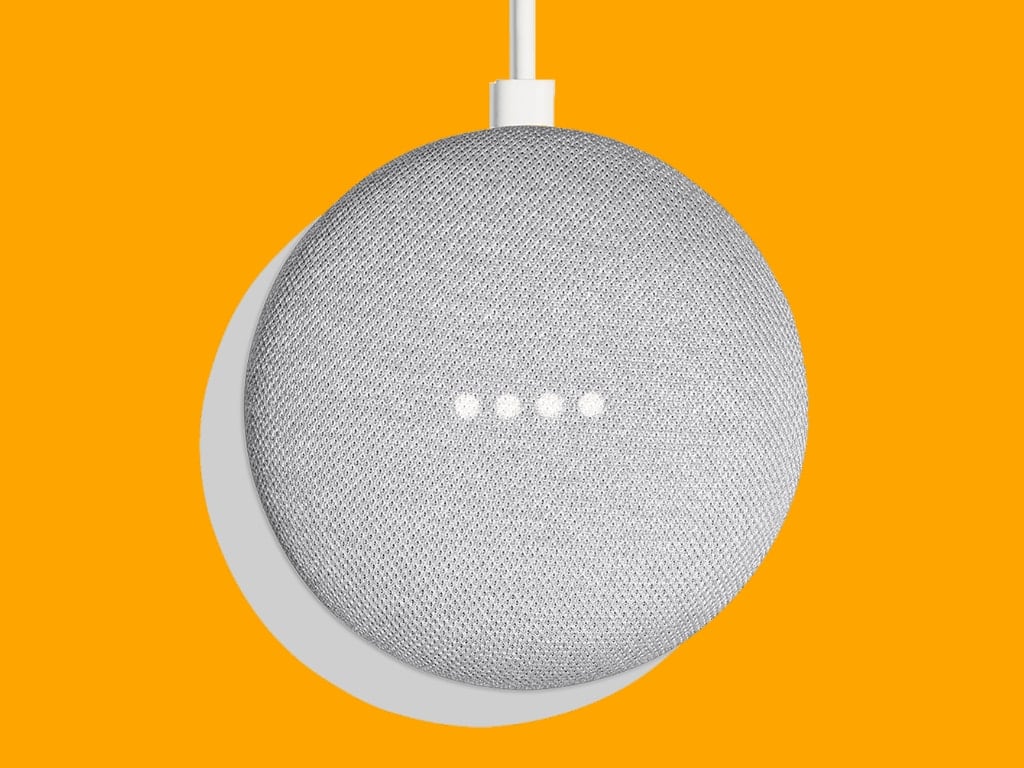 Google Home Mini.[/caption]On the other hand, Google Home’s biggest competitor, Amazon Echo speakers had a lower market share. But considering the overall volumes of Amazon Echo speakers sold, Amazon’s smart speaker’s had a 3 percent greater market share in the quarter.Amazon’s Echo had 12 percent of the market share, whereas the Echo Dot captured 18 percent of it, which is 1.4 million and 2.2 million units shipped, respectively. However, put together that makes 30 percent of the market share, three percent higher than what the Google Home speakers managed.
First Published:Sep 20, 2018, 11:52:42 IST
Advertisement
Advertisement

Why AI notetakers are raising serious privacy and security concerns
AI notetakers promise effortless meeting summaries, but experts warn they could expose confidential conversations, corporate secrets and personal voiceprints. As businesses increasingly adopt AI-powered meeting assistants, questions over data storage, privacy, consent and legal risks are becoming impossible to ignore
5 min read
China's low-cost AI models are changing the global AI race. Here's why Silicon Valley is worried
As Chinese firms continue to improve performance while keeping prices low, the AI race is no longer just about building the smartest model—it is increasingly becoming a battle over who can deliver the best value
2 min read
China's Kimi K3 challenges US AI leaders with frontier-level performance at lower cost
Chinese artificial intelligence startup Moonshot AI has unveiled its latest open-weight AI model, Kimi K3, with early results suggesting it could compete with some of the world's most advanced AI systems developed by leading US companies
2 min read
How did Instagram run ads promoting child abuse in India?
India has issued a notice to Meta after an investigation alleged that Instagram displayed paid advertisements promoting child sexual abuse material. MeitY ordered Meta to remove such Instagram ads and explain within seven days how they were approved
8 min read
Why has India halted WhatsApp’s username feature before launch?
India has halted WhatsApp’s planned username feature, citing concerns about cybercrime, impersonation, and law enforcement challenges. As Meta races to address security concerns, here’s why MeitY has paused the rollout, what the feature does, and how it could influence privacy and online safety in India
3 min read
Advertisement
Advertisement