


Google Glass resurfaces as a tool to help children with autism
The company said it is using the Google Glass platform because tablets or phones require looking down.

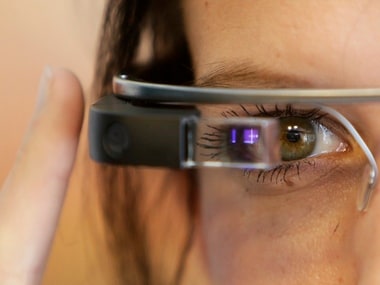
A woman wears Google glasses. Reuters[/caption]A Cambridge, Massachusetts-headquartered company has developed a system for autism that runs on Google Glass, including the newly released Glass Enterprise Edition.Brain Power, the developer of neuroscience-based augmented reality, launched the "Empower Me" system earlier this month. The Empower Me system is a digital coach that runs on smartglasses, to empower children and adults with autism to teach themselves social and cognitive skills.The company said it is using the Google Glass platform because tablets or phones require looking down. But the wearable platforms help people keep heads-up and hands-free during social interactions."Empowering people is my passion," Brain Power CEO, Ned Sahin, said in a statement. "Technology is often blamed for pulling people apart, but my goal was to use technology, and science, to bring people even closer than they ever might have been, and to unlock the immense power of their unique brains," Sahin added.Autism spectrum disorder is characterised by impaired social interaction, communication and sensory sensitivities. The system features a suite of apps. One such app, Emotion Charades, teaches the user to identify emotions, and understand them, which are common challenges for people on the spectrum.Users look through the private screen on their smartglasses and see emojis on either side of their partner's face. They select which one they think matches the facial expression with a spoken command or a subtle head tilt. A software detects emotions and voice commands using Artificial Intelligence (AI), and the head tilt via accelerometer data.This system can help children learn to improve their ability to correctly decode and understand the emotions of their parents, therapists, siblings, or friends. Besides aiding emotional understanding, Empower Me also features apps designed to target attention to social cues, including the ability to focus on face and eye regions when it is desirable to do so.

Why AI notetakers are raising serious privacy and security concerns
China's low-cost AI models are changing the global AI race. Here's why Silicon Valley is worried
China's Kimi K3 challenges US AI leaders with frontier-level performance at lower cost
How did Instagram run ads promoting child abuse in India?
Why has India halted WhatsApp’s username feature before launch?