


Former Uber backup drivers believe self-driving car crash was bound to happen, long working hours are to blame
And now the recent crash has unravelled the haste Uber is in to make sure that it is ahead of others like Waymo in the self-driving race.

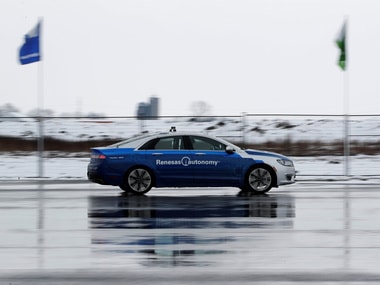
A self-driving car drives during a demonstration at Stratford, Ontario, Canada. Reuters[/caption]In a CityLab report, two former human backup drivers from Uber gave an account of their experiences. According to them, the job is extremely difficult since they are expected to work for 8 to 10 hours without human interaction. This includes a 30-minute break which often gets reduced to 10 to 15 minutes. They are expected to log longer miles. According to an Uber spokesperson, Uber has a zero-tolerance policy for backup drivers using digital devices while on duty.The drivers have admitted that the crash was bound to happen one day.Recently, Buzzfeed reported that the Uber’s self-driving cars need the backup drivers to intervene once at least for every mile driven. The problem regarding autonomous cars lies not only with the technology but also the backup drivers who are involved in testing the cars.According to investigations, the LiDAR technology was clearly the problem where the self-driving car failed to recognise the pedestrian before the collision occurred in Arizona.Uber already has been a part of a host of controversies which also includes self-driving technology where Uber's Anthony Levandowski was accused of stealing trade secrets from Waymo. And now the recent crash has unravelled the haste Uber is in to make sure that it is ahead of others like Waymo in the self-driving car race.

Why AI notetakers are raising serious privacy and security concerns
China's low-cost AI models are changing the global AI race. Here's why Silicon Valley is worried
China's Kimi K3 challenges US AI leaders with frontier-level performance at lower cost
How did Instagram run ads promoting child abuse in India?
Why has India halted WhatsApp’s username feature before launch?