


Five major trends at CES 2019: Gaming laptops, PCs, digital assistants, 5G and 8K TVs
From gaming machines to Apple's spiritual presence, CES 2019 seems to have covered it all.

The CES logo is shown at the Las Vegas Convention Center. Image: Reuters[/caption]
PCs are thriving
All in on Gaming
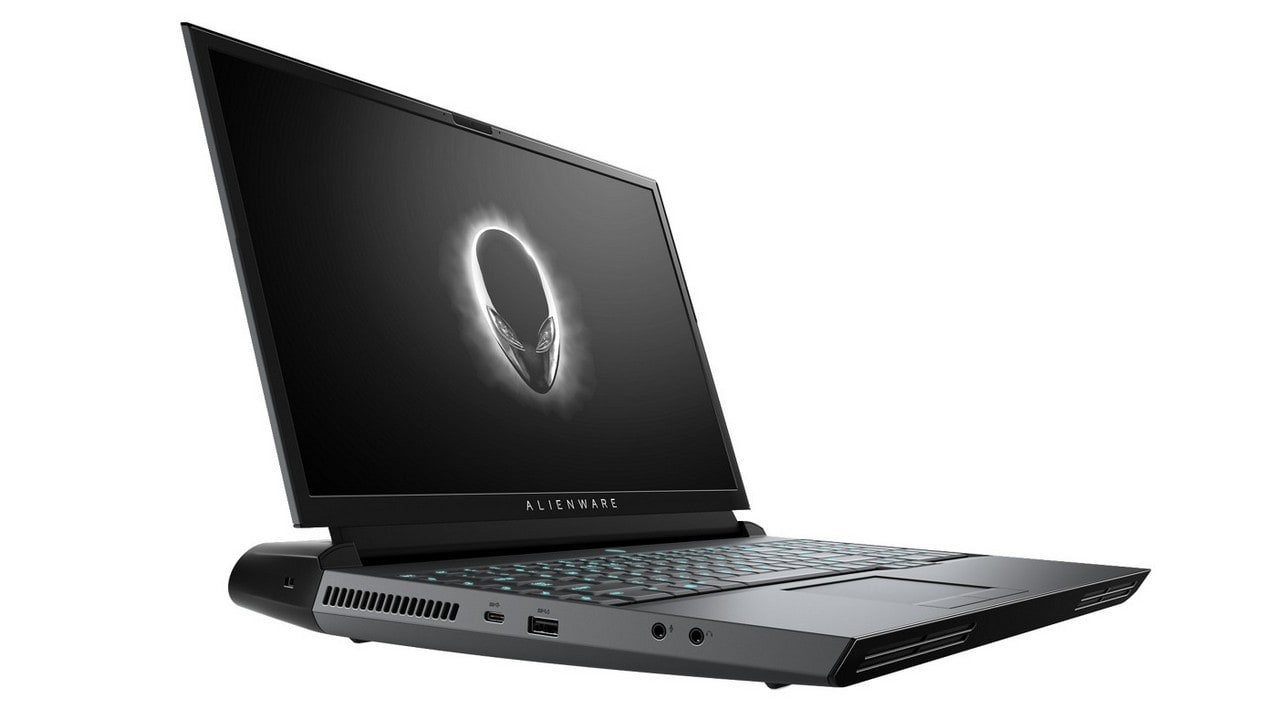 The Alienware 17 Area-51m. Image: Dell[/caption]Gaming PCs of note that were announced at CES 2019 included Alienware Area 51 which is expected to come with the AMD Radeon VII graphics whereas an Area 51m laptop from Alienware will be coming with a user replaceable CPU and Nvidia GPU which can be upgraded in the future. The laptop looks like it’s built atop a massive heat vent. This laptop sure has its sights set on replacing your gaming PC.[caption id="attachment_5849641" align="alignnone" width="1280"]
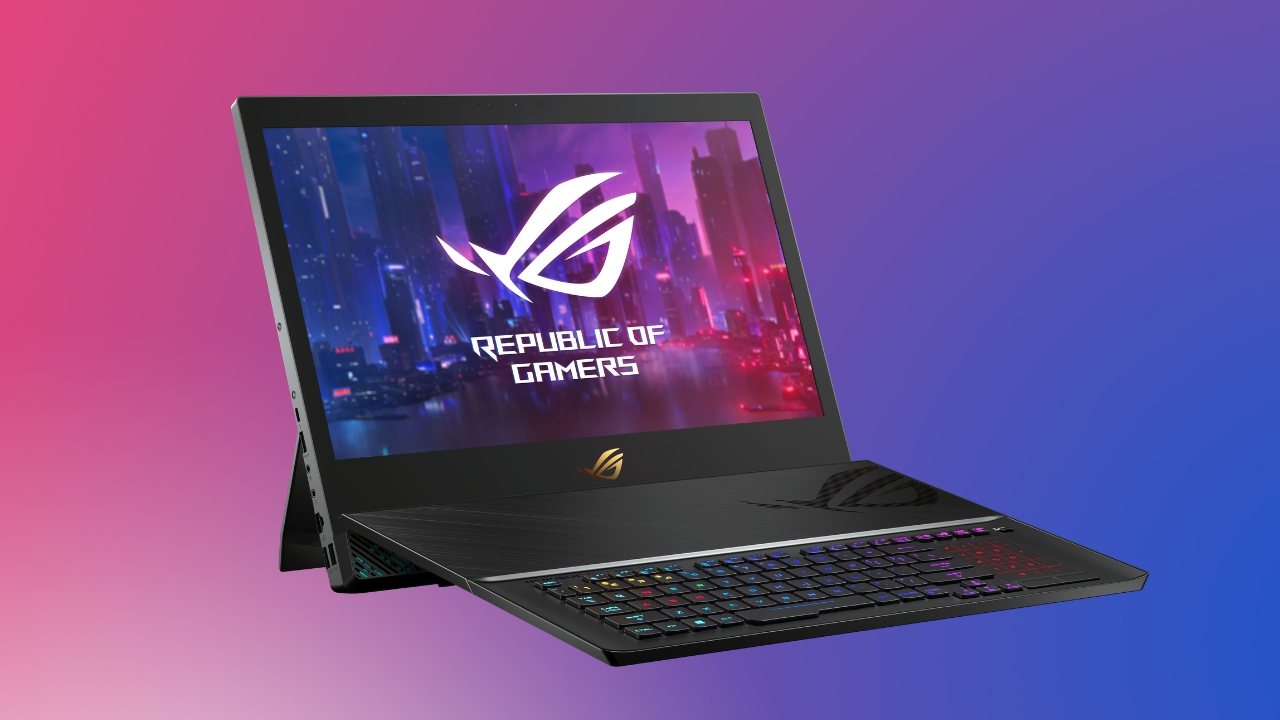 The Asus ROG Mothership.[/caption]The Asus ROG Mothership laptop comes with the RTX 2080 Max-Q graphics card inside and a radical design language which lets you detach the keyboard as well as have a support for aligning the display of the laptop Max-Q is Nvidia’s design solutions which lets top of the line Nvidia GPUs to be embedded in gaming laptops, keeping a slim form factor with optimal heat management. Out of the 40 models with RTX solutions expected this year, NVIDIA claims that around 17 models would be sporting the Max-Q design.
Who will win the battle of the Assistants?
Google had no in-house product launches, but if you were in Las Vegas during CES 2019, it would seem as if Google had some major launch coming up. With every possible large screen advertising billboard as well as the Las Vegas Monorail trains plastered with 'Hey Google' adverts. Google even had a massive booth right opposite the Las Vegas Convention Centre to showcase its vast ecosystem.Amazon in comparison hadn’t bombarded Vegas with advertisements, but it was as aggressively present on the show floor thanks to its multiple partners having some or the other Alexa related announcement.[caption id="attachment_5861331" align="alignnone" width="1280"]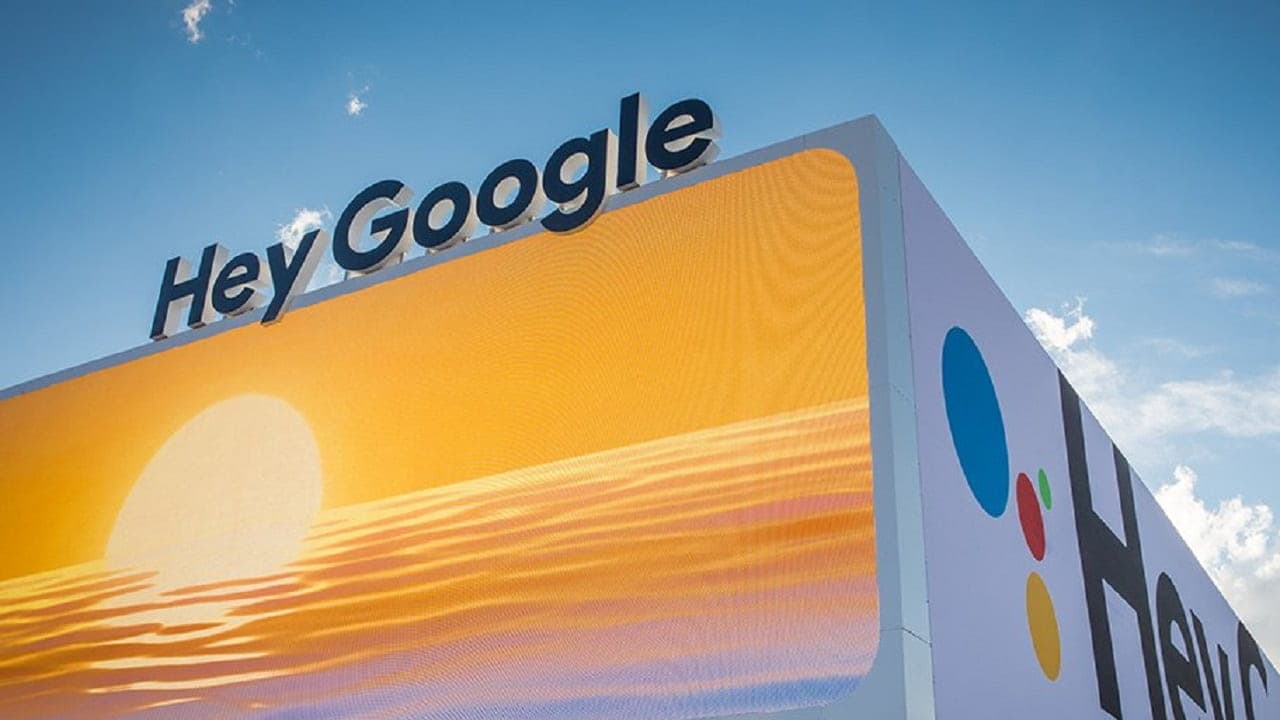 Google at CES 2019. Image: Google[/caption]While in terms of numbers, Amazon claims to have sold around 100 million Alexa enable devices, Google said that it has crossed a billion devices with ‘Hey Google’ support. Now you have to take into consideration the fact that every Android device sold nowadays comes with Assistant support built in, so unlike Alexa products, Google hasn’t necessarily sold 1 by Google Home or Home Mini or third-party devices supporting Assistant.In terms of product categories, Assistant and Alexa support was announced by multiple brands across TVs, headphones, speakers, smart home appliances smart locks, smart displays, smart lights to even smart bikes. Laptops with far field microphones on them were a common trend this year at CES as well. Google Assistant is now also supported on a product such as Anker Roav Bolt, a car charger. Assistant is now also baked into Google Maps and will also let you check into your flight, with just a voice command.[caption id="attachment_5859141" align="alignnone" width="1280"]
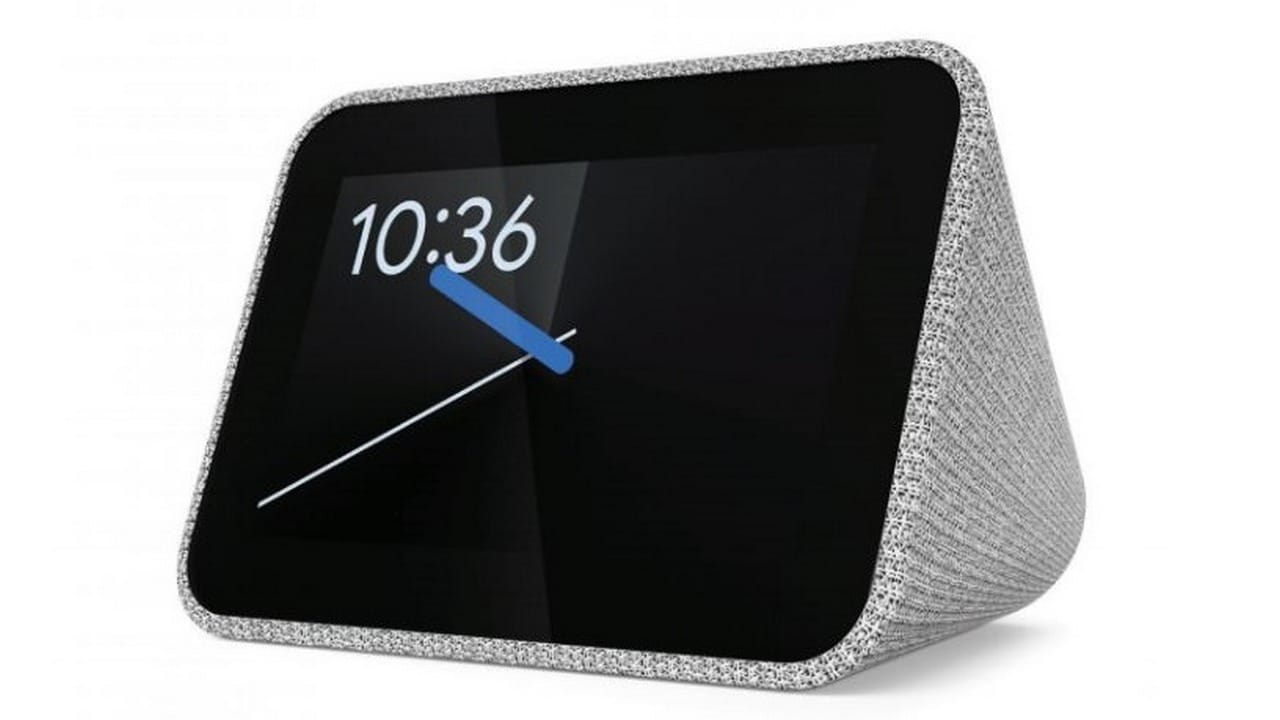 Lenovo Smart Clock[/caption]With both the companies have opened up their respective platforms to developers and third parties, this ecosystem is just going to expand. And brands don’t want to be exclusive or locked on to either platform. This was evident when I saw the head for Google Assistant speaking about Lenovo’s Smart Clock which supports Assistant, followed by Amazon Alexa executive talking about the Lenovo Smart Tab - one after the other. So both these companies aren’t shy to share space within the same third party brand’s ecosystem. This makes logical sense as that’s the only way these ecosystems can take off.Bottom line: While there was no clear winner (unless you are looking at sheer brand presence) it is evident that virtual assistants are on a massive growth trajectory.
5G is coming soon - as early as mid-2019
5G has been a constant presence at all the major technology conferences such as CES, MWC, IFA and so on. While in the past, we have been seeing high-level discussions and platform announcements pertaining to 5G, at CES 2019, a lot of the stakeholders had sessions demoing 5G speeds on mobile devices. Lot of brands such as Samsung, Intel, Qualcomm are already doing field tests with carrier partners such as Verizon, T-Mobile and AT&T in the US. Verizon has already promised to offer 5G mobile services on one device each from Samsung and Motorola within 2019. Intel demoed a live Skype call over T-Mobile’s 600 MHz 5G network.[caption id="attachment_5877141" align="alignnone" width="1280"]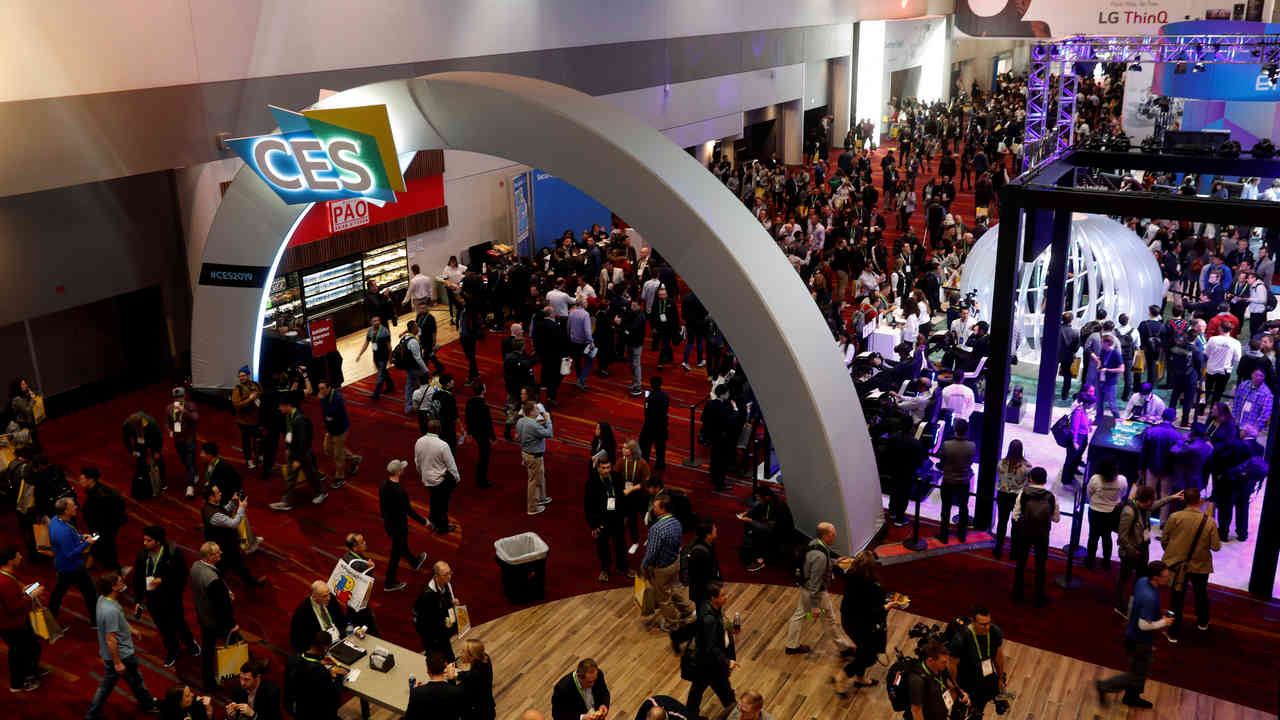
People make their way through the lobby of the Las Vegas Convention Center during the 2019 CES. Image: Reuters[/caption]5G wasn’t just limited to phone-related use cases. For instance, Samsung showcased its end to end 5G solutions which had use cases such as 5G connectivity in the home space, within a smart city construct, in stadiums and so on. Qualcomm had most of its booth dedicated to the Snapdragon 855 mobile platform and its 5G use cases as well, from mobile download speeds to use of 5G in smart cars an more.
Massive TVs
If there is one product category that keeps showing us ridiculous products which seem too good to be true at times, then it has to be the TV segment. 8K TVs were all the rage at CES 2019. Everyone from Samsung, LG, Sony, Sharp, TCL, HiSense had some or the other 8K TV on display at its booth. While we are yet to get mainstream when it comes to 4K content, 8K content is a distant dream. But the 8K TVs being exhibited promised a lot of upscaling features thanks to their proprietary processors which could upscale Full HD or 4K content to near 8K resolutions.[caption id="attachment_5854511" align="alignnone" width="1280"] LG rollable TV. Image: LG Newsroom[/caption]Barring this deluge of 8K promises, LG announced its rollable display TV which just kind of rises up from its soundbar and retracts back in when not in use. This was shown off as a concept at last CES, but LG now claims that it will have this device selling this year. The price point wasn’t announced.[caption id="attachment_5853741" align="alignnone" width="1280"]
 Samsung's The Wall 2019. Image: Samsung Newsroom[/caption]Not to be left behind, Samsung which has been impressing attendees with its ‘The Wall’ installations - this year’s being a 219-inch MicroLED display made using multiple 6x6 inch MicroLED blocks - announced a 75-inch 4K MicroLED TV. Samsung also didn’t announce any pricing details.
Apple was present, in spirit at least: Not a trend, but important development nonetheless
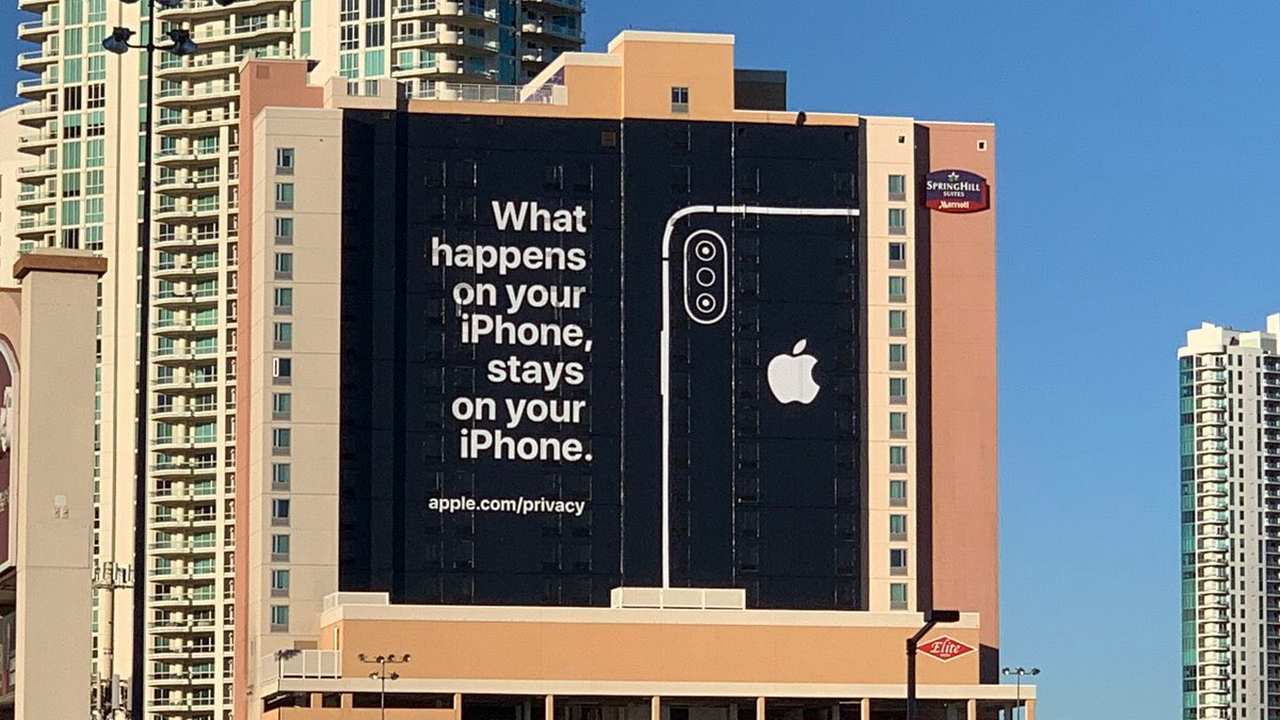
Apple advert opposite the LVCC. Image: Twitter/Aditya Daniel[/caption]Apple’s proprietary audio and video streaming feature, AirPlay, is now coming to Smart TVs from brands such as Sony, LG, Vizio and even Apple rival Samsung. This will let Apple users stream content from their iPhones, iPads, Macs to their big screen TVs letting them stream their iTunes libraries as well.This was easily the most surprising announcement at CES, especially the timing at which it is coming. Apple CEO Tim Cook had announced dire outlook in future quarters and Apple’s device sales aren’t the highest. But considering its services segment has been on a growth path, it just made sense for the Cupertino giant to expand its locked in AirPlay feature (which so far was only available on Apple TV) to other manufacturers.

Why AI notetakers are raising serious privacy and security concerns
China's low-cost AI models are changing the global AI race. Here's why Silicon Valley is worried
China's Kimi K3 challenges US AI leaders with frontier-level performance at lower cost
How did Instagram run ads promoting child abuse in India?
Why has India halted WhatsApp’s username feature before launch?