
Advertisement


Sections
Facebook Messenger Rooms: What is it, how does it work, and should you use it? All your questions, answered!
As of now, Facebook is testing the feature in a number of countries, so only a select number of users are able to see the feature.

Last week, Facebook announced a new video calling tool called Messenger Rooms. The tool is built on Facebooks's Messenger platform and is currently accessible via the Facebook and Messenger apps.As of now, Facebook is still testing the feature, so only a select number of users are able to access it. When rolled out, the tool will be available on both iOS and Android, and will be accessible via both mobile and desktop apps and browsers.
But why Messenger Rooms when WhatsApp, Instagram, Messenger already offer video calling?
Unlike WhatsApp, Messenger, and Instagram, which have a smaller limit to how many people can join a video call simultaneously, Messenger Rooms allows up to 50 people to participate in a call at one time. Also, to use Messenger Rooms, only the creator of the room requires a Facebook account, others can join the video call using a shared link even if they don't have an account on Facebook.[caption id="attachment_8313141" align="alignnone" width="1024"] Messenger Rooms. Image: Facebook[/caption]Additionally, unlike video calls on Instagram, WhatsApp, and Messenger, group video calls placed via Messenger Rooms offer a lot of control to the creator of the room, like choosing who all can join the call, removing someone from the call or locking the room so no one else can join it.Messenger Rooms can be joined via a shareable link or the invite for it can also be posted on Facebook's News Feed so anyone on your list can drop by and say hey. This may sound like a good idea right now because you are locked in and bored, but this can be a privacy nightmare, especially for younger users of the platform.
Is Messenger Rooms end-to-end encrypted?
As it is based on Messenger, which, unlike WhatsApp, isn't end-to-end encrypted by default, by extension that also makes Messenger Rooms not fully encrypted.However, Facebook did promise, at the time of the announcement, that it will not listen in on video calls and that these calls will be completely private. Given Facebook's loose definition of privacy, it's up to you whether you want to trust the platform. Additionally, Facebook also said "audio and video from Rooms won’t be used to inform ads. And, we don’t show ads in Rooms."[caption id="attachment_8313131" align="alignnone" width="952"]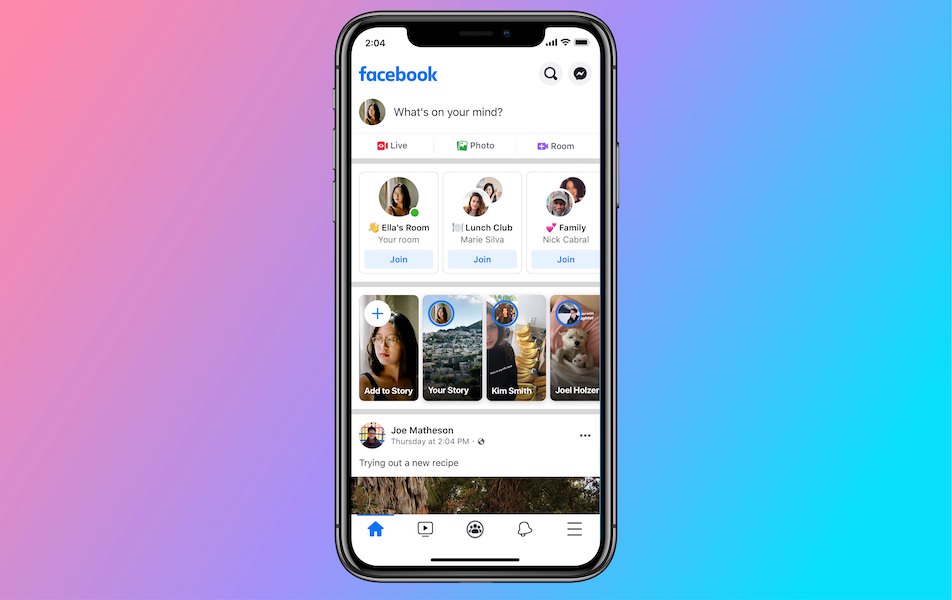 Messenger Rooms on Facebook mobile app. Image: Facebook[/caption]
Some of Messenger Rooms' Zoom and Houseparty-like features
Facebook’s no stranger to copying popular features and trends from rivals, and Messenger Rooms' timing of launch and features are proof of that. While Zoom still allows for the highest number of simultaneous participants – which is 100 – Facebook is a distant second with support for up to 50 people per room. However, Zoom put a limit of 40 minutes on these conference video calls, whereas, Messenger Rooms has no such limit.Besides that, people who join video calls via Messenger will also be able to use AR filters, change backgrounds and play games – some of these features are also offered by Zoom and Houseparty.How to use Messenger Rooms
If you have the Messenger app or if you are using Facebook via the browser, on either mobile or desktop, under the 'People tab', you will now see a new 'Create Room' option on the top left. Clicking on this, you will be asked if you want to continue with your profile name – you can change it if you like. Upon finishing that, a link will be generated, which you can share with whoever you want to add to the Room. At the time of creating the room, you will also have the option to manually pick contacts from your list of friends on Facebook and/or Messenger who can join call on that room.[caption id="attachment_8313121" align="alignnone" width="952"]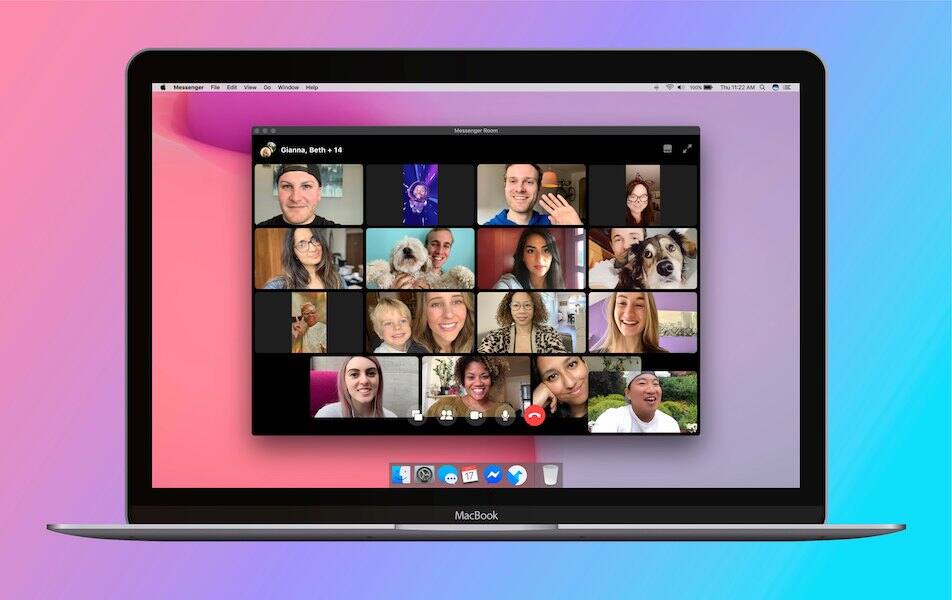 Messenger Rooms on desktop. Image: Facebook[/caption]
Is Messenger Rooms a gateway for Zuckerberg's dream cross-platform integration?
Last year, Facebook CEO Mark Zuckerberg announced plans to integrate WhatsApp, Instagram, and Messenger into one, cohesive platform, and Messenger Rooms may just be the first hint the company has dropped about that plan. To remind you, later last year, Zuckerberg had also said that this integration will take place sometime in 2020.As of now, you can only use Messenger Rooms via the Messenger and Facebook apps, however, during the launch of the tool, Facebook said that it was working on soon adding the ability to create rooms on Instagram and WhatsApp as well.Coincidentally, or not, hours later, WhatsApp beta tester WABetaInfo found that in the latest Android beta version of the platform, the company is testing adding a shortcut to Messenger Rooms, available in the chat or group share sheet that will allow users to create links to a room. The option to create a Messenger Rooms will apparently also be available in the calls tab and when you’re trying to call someone. You will be directed to Messenger to create it.With this beta, we can already see Facebook bringing Messenger and WhatsApp users in one place, and the same is expected to be done for Instagram users via Direct.Another recent change that points towards this being the beginning of a possible integration is WhatsApp's doubled limit for group video calls – from four, it now allows eight people to join a group call simultaneously. We're not sure why WhatsApp doesn't support 50-people video calling already.The idea behind this isn't perfect right now, neither is our understanding of it. But this seems like a small step towards something potentially big.The only thing we wait to see now is what shape this will take and how Facebook will convince us to use it.First Published:Apr 30, 2020, 05:56:08 IST
Advertisement
Advertisement

Why AI notetakers are raising serious privacy and security concerns
AI notetakers promise effortless meeting summaries, but experts warn they could expose confidential conversations, corporate secrets and personal voiceprints. As businesses increasingly adopt AI-powered meeting assistants, questions over data storage, privacy, consent and legal risks are becoming impossible to ignore
5 min read
China's low-cost AI models are changing the global AI race. Here's why Silicon Valley is worried
As Chinese firms continue to improve performance while keeping prices low, the AI race is no longer just about building the smartest model—it is increasingly becoming a battle over who can deliver the best value
2 min read
China's Kimi K3 challenges US AI leaders with frontier-level performance at lower cost
Chinese artificial intelligence startup Moonshot AI has unveiled its latest open-weight AI model, Kimi K3, with early results suggesting it could compete with some of the world's most advanced AI systems developed by leading US companies
2 min read
How did Instagram run ads promoting child abuse in India?
India has issued a notice to Meta after an investigation alleged that Instagram displayed paid advertisements promoting child sexual abuse material. MeitY ordered Meta to remove such Instagram ads and explain within seven days how they were approved
8 min read
Why has India halted WhatsApp’s username feature before launch?
India has halted WhatsApp’s planned username feature, citing concerns about cybercrime, impersonation, and law enforcement challenges. As Meta races to address security concerns, here’s why MeitY has paused the rollout, what the feature does, and how it could influence privacy and online safety in India
3 min read
Advertisement
Advertisement