


Facebook Libra: Here's how it could impact the Indian regulatory stance on cryptocurrencies
Libra has already caught the attention of international regulators, and one can expect changes to Facebook’s approach based feedback

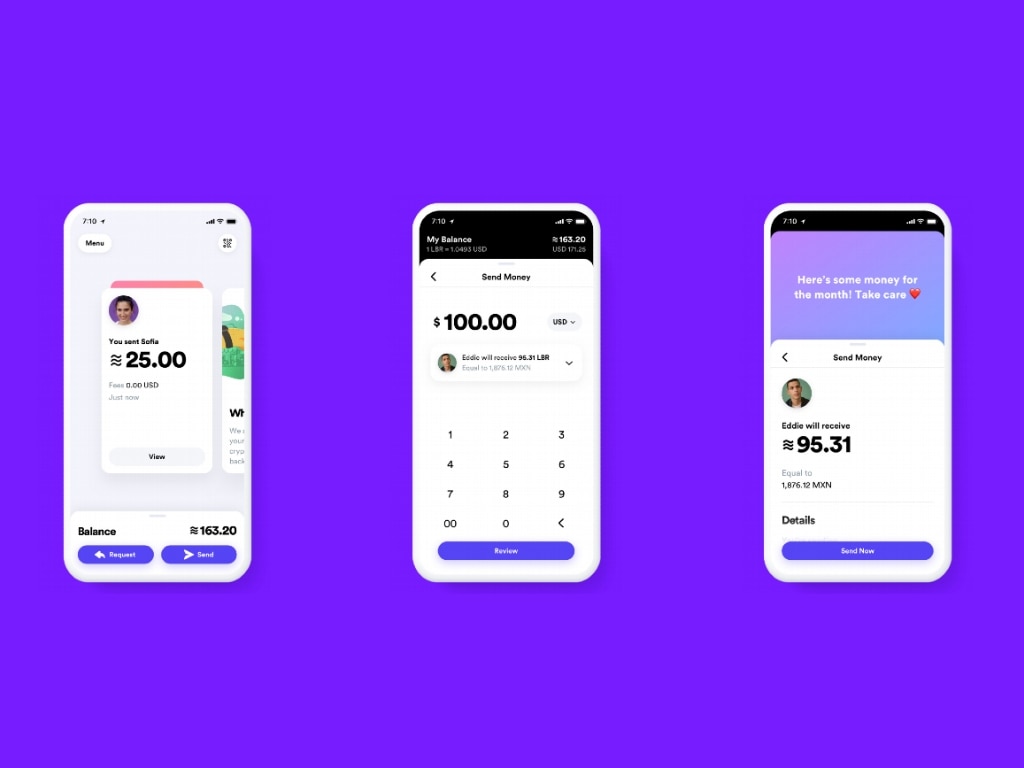
Facebook Calibra.[/caption]
Paying for an Uber ride with Libra
Payments via Indian currencies only?
Here, one can also recall an RBI notification issued in 2014, to deal with two-factor authentication for card payments via the Uber app not being in place. While dealing with the issue, the RBI had directed that where Indian bank-issued cards were used for payment for goods and services purchased in India (for example, paying via a card for a ride via Uber in India), then two conditions are to be met: The first is that the transaction must settle in Indian currency only and the second is that the transaction must be acquired through a bank in India. It was this notification that had driven Uber to adopt payments via the domestic mobile wallet Paytm, which is licensed as Payments Bank by the RBI, in order to ensure compliance with domestic payment laws.It is interesting to note that the RBI mandate, that online transactions must settle in Indian currency and be acquired through a bank in India, applied only to payments via an Indian bank-issued card, and not to online transactions in general. This point makes it tempting to wonder if it is possible to use Calibra in India, backed by a non-Indian bank (since this does not involve card payments), or independent of any bank altogether (given that it is a peer-to-peer payment system).Neither, however, is possible. To run a payment system (here Calibra) in India, or in other words, any system that enables payment between a payer (here an Uber customer) and a beneficiary (here Uber), authorisation from the RBI under the Payment and Settlement Systems Act, 2007 is required. Given the regulatory stance on virtual currencies, such authorisation for Calibra would not be possible.One can also recall the statement of the then Finance Minister, Arun Jaitley in his Budget speech in February 2018, where he stated that the cryptocurrencies are not legal tender and cannot be used ‘as a part of the payment system’. Payments using any cryptocurrency, be it the Bitcoin or Libra, via Uber’s mobile wallet, is thus out of question.[caption id="attachment_6845191" align="alignnone" width="1280"]
Libra Association[/caption]
A ten-year jail term for holding cryptocurrencies?
The RBI has taken this stance on cryptocurrencies starting from 2013, where it first warned against the use of cryptocurrencies, and then went onto reiterate these cautions in 2017.The 2018 notification, thereafter, led a group of petitioners to the Supreme Court against it. While the case is still pending, lending some hope, the Supreme Court refused to lift the prohibition via the RBI notification. Further, RBI’s recent draft rules for a regulatory sandbox came as a disappointment via its express exclusion of virtual currencies from its ambit.One saving grace with the Indian regulatory stance had been that apart from these specific restrictions, there was no stance taken on, say, merely holding cryptocurrencies, or trading on a global exchange. However, worrying reports of a draft ‘Banning of Cryptocurrency and Regulation of Official Digital Currency Bill 2019’ has emerged, which is said to propose a ten-year jail term for merely holding cryptocurrencies in India. If such a law is enacted, the mere holding of Libra or any other virtual currency will violate it. The law is said to punish mining, holding, generating, selling, transferring, disposing of, issuing or dealing with cryptocurrencies.
The impact of a mainstream cryptocurrency
Tackling volatility
The significant volatility of cryptocurrencies like the Bitcoin was another major factor which prejudiced regulators world over against these currencies. Traditionally, the value of fiat currencies is maintained by linking it to gold, but virtual currencies like Bitcoins have no intrinsic value. The value of the Bitcoin, in fact, is generated by the demand for it.Facebook aims to tackle this issue as well, by choosing to link the value of the Libra to a basket of bank deposits and short-term government securities for historically stable international currencies, including the US Dollar, UK Pound, Euro, Swiss Franc and Japanese Yen. This is another factor that may work in Libra’s favour from the perspective of regulators.
 More from News Analysis
Hope for crypto enthusiasts in India
Libra has already caught the attention of international regulators, and one can expect changes to Facebook’s approach based on changes in the international regulatory stance.In the meanwhile, if the Libra does lead to large-scale adoption of a cryptocurrency as planned by Facebook, this will certainly force the Indian regulators to observe and to consider cryptocurrencies, if not to embrace them at this point of time.The author is a lawyer specialising in technology, privacy and cyber lawsRead our complete coverage of the Libra cryptocurrencyFacebook announces Calibra, a digital wallet for its Libra cryptocurrencyCalibra: Hours after the launch, US politicians ask Facebook to halt its Libra cryptocurrency projectFacebook's cryptocurrency project raises privacy concerns, asked to halt the programBank of England governor keeping an open mind on Facebook's Libra

Why AI notetakers are raising serious privacy and security concerns
China's low-cost AI models are changing the global AI race. Here's why Silicon Valley is worried
China's Kimi K3 challenges US AI leaders with frontier-level performance at lower cost
How did Instagram run ads promoting child abuse in India?
Why has India halted WhatsApp’s username feature before launch?