
Advertisement


Sections
DxOMark will now evaluate speaker and microphone quality on smartphones
The DxOMark Audio score will indicate how a smartphone performs in audio recording and speaker playback.

Independent benchmarking site DxOMark has announced a new audio benchmark that will evaluate the quality of a phone’s speaker system and microphones. The generated score will try to quantify the audio experience on smartphones, just like it does for camera performance.[caption id="attachment_7479261" align="alignnone" width="1280"]![DxOMark Audio will test a smartphone's recording and playback quality. Image: DxOMark.]() DxOMark Audio will test a smartphone's recording and playback quality. Image: DxOMark.[/caption]DxOMark says that it had recruited experienced sound engineers to form a dedicated audio team that built the site’s audio testing protocol. It has also established an audio lab that includes an anechoic box and a listening room to test audio recording and speaker playback. An anechoic room or chamber will absorb most of the sound waves, essentially turning the room extremely quiet. To test the speaker quality, microphones are placed across the room to test the sound pressure levels and output distortion levels from the device placed inside the box.[caption id="attachment_7479241" align="alignnone" width="1024"]
DxOMark Audio will test a smartphone's recording and playback quality. Image: DxOMark.[/caption]DxOMark says that it had recruited experienced sound engineers to form a dedicated audio team that built the site’s audio testing protocol. It has also established an audio lab that includes an anechoic box and a listening room to test audio recording and speaker playback. An anechoic room or chamber will absorb most of the sound waves, essentially turning the room extremely quiet. To test the speaker quality, microphones are placed across the room to test the sound pressure levels and output distortion levels from the device placed inside the box.[caption id="attachment_7479241" align="alignnone" width="1024"]![DxOMark's anechoic box and listening room. Image: DxOMark.]() DxOMark's anechoic box and listening room. Image: DxOMark.[/caption]The listening room tests the device by placing it in the room and playing audio via an array of speakers around it. It plays audio samples recorded by the team from the real world such as a busy street. Other use-cases include selfie video where a user is holding the device in the portrait orientation while two subjects are speaking in front of it with some ambient noise. Another is live concerts to test whether the device is capable of recording good quality audio.In its initial batch of testing, DxOMark has evaluated seven devices including the Apple iPhone 11 Pro Max, iPhone XS Max, Honor 20 Pro, Huawei Mate 20 X, Samsung Galaxy Note 10+, Galaxy S10+, and the Sony Xperia 1. The final score is for overall audio quality evaluation and the scores are further divided to denote playback and recording quality. Out of the seven devices, the Huawei Mate 20 X came out as the winner. Here are the scores obtained from DxOMark’s audio benchmark.
DxOMark's anechoic box and listening room. Image: DxOMark.[/caption]The listening room tests the device by placing it in the room and playing audio via an array of speakers around it. It plays audio samples recorded by the team from the real world such as a busy street. Other use-cases include selfie video where a user is holding the device in the portrait orientation while two subjects are speaking in front of it with some ambient noise. Another is live concerts to test whether the device is capable of recording good quality audio.In its initial batch of testing, DxOMark has evaluated seven devices including the Apple iPhone 11 Pro Max, iPhone XS Max, Honor 20 Pro, Huawei Mate 20 X, Samsung Galaxy Note 10+, Galaxy S10+, and the Sony Xperia 1. The final score is for overall audio quality evaluation and the scores are further divided to denote playback and recording quality. Out of the seven devices, the Huawei Mate 20 X came out as the winner. Here are the scores obtained from DxOMark’s audio benchmark.![DxOMark's playback and recording quality scores. Image: DxOMark.]() DxOMark's playback and recording quality scores. Image: DxOMark.[/caption]DxOMark tests the device’s audio experience based on several parameters including timbre, spatial, dynamics, volume, artifacts, and background. The site will be relying on both subjective (perceptual) and objective measurements for the evaluation. Just like its camera scores, the audio scores will increase as audio technology and performance improves over time.
DxOMark's playback and recording quality scores. Image: DxOMark.[/caption]DxOMark tests the device’s audio experience based on several parameters including timbre, spatial, dynamics, volume, artifacts, and background. The site will be relying on both subjective (perceptual) and objective measurements for the evaluation. Just like its camera scores, the audio scores will increase as audio technology and performance improves over time.
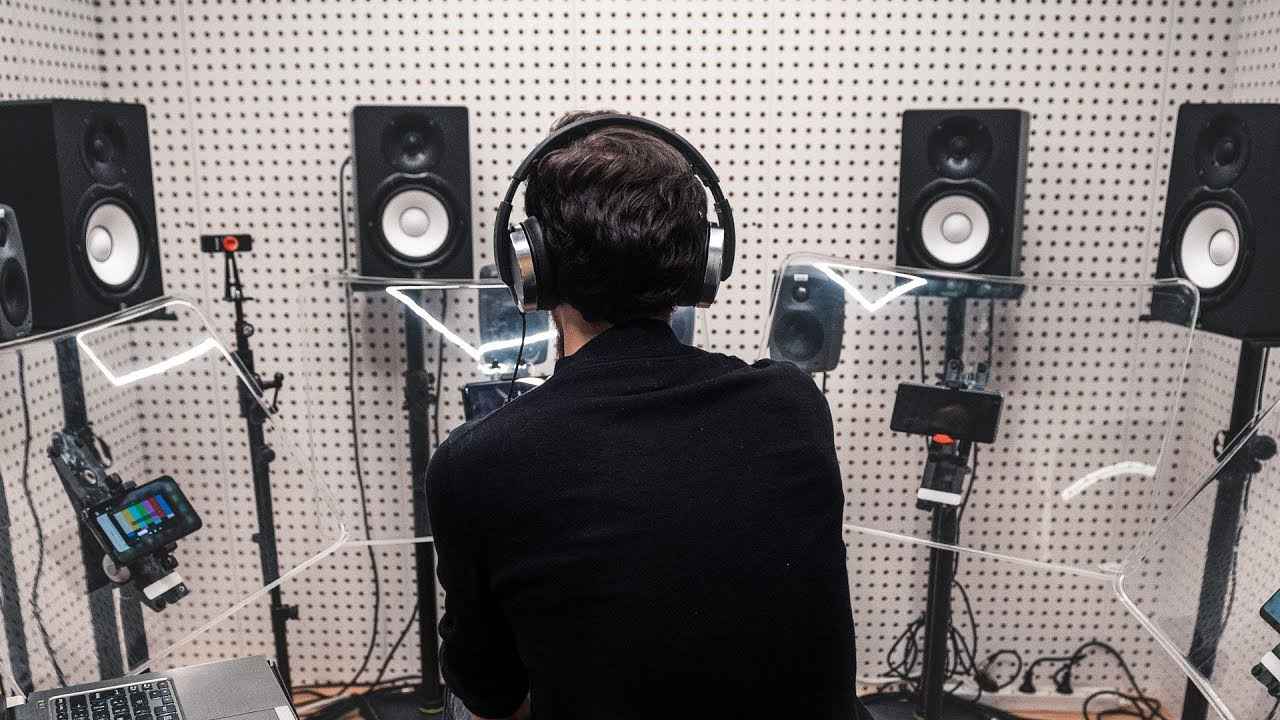 DxOMark Audio will test a smartphone's recording and playback quality. Image: DxOMark.[/caption]DxOMark says that it had recruited experienced sound engineers to form a dedicated audio team that built the site’s audio testing protocol. It has also established an audio lab that includes an anechoic box and a listening room to test audio recording and speaker playback. An anechoic room or chamber will absorb most of the sound waves, essentially turning the room extremely quiet. To test the speaker quality, microphones are placed across the room to test the sound pressure levels and output distortion levels from the device placed inside the box.[caption id="attachment_7479241" align="alignnone" width="1024"]
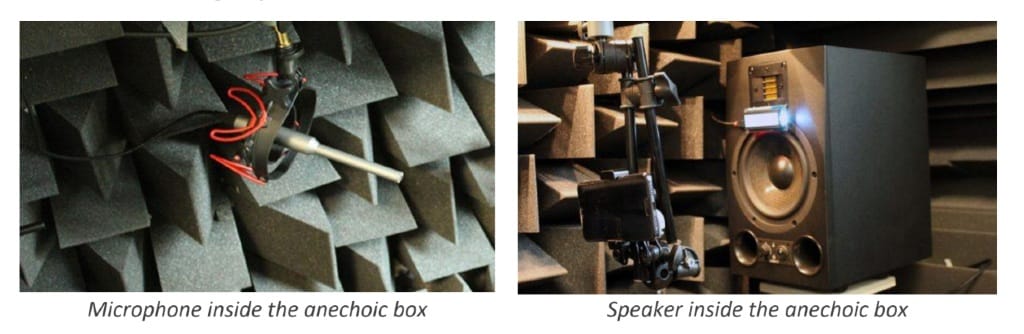 DxOMark's anechoic box and listening room. Image: DxOMark.[/caption]The listening room tests the device by placing it in the room and playing audio via an array of speakers around it. It plays audio samples recorded by the team from the real world such as a busy street. Other use-cases include selfie video where a user is holding the device in the portrait orientation while two subjects are speaking in front of it with some ambient noise. Another is live concerts to test whether the device is capable of recording good quality audio.
- Huawei Mate 20 X - 75
- Apple iPhone XS Max - 74
- Apple iPhone 11 Pro Max - 71
- Samsung Galaxy Note 10+ - 66
- Samsung Galaxy S10+ - 65
- Honor 20 Pro - 53
- Sony Xperia 1 - 45
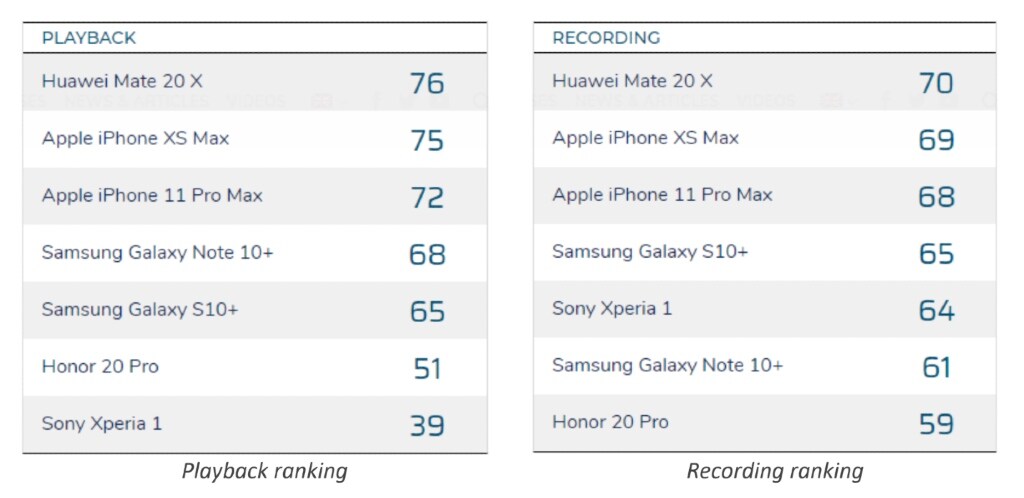 DxOMark's playback and recording quality scores. Image: DxOMark.[/caption]DxOMark tests the device’s audio experience based on several parameters including timbre, spatial, dynamics, volume, artifacts, and background. The site will be relying on both subjective (perceptual) and objective measurements for the evaluation. Just like its camera scores, the audio scores will increase as audio technology and performance improves over time.
Tags
First Published:Oct 10, 2019, 19:31:11 IST
Advertisement
Advertisement

Why AI notetakers are raising serious privacy and security concerns
AI notetakers promise effortless meeting summaries, but experts warn they could expose confidential conversations, corporate secrets and personal voiceprints. As businesses increasingly adopt AI-powered meeting assistants, questions over data storage, privacy, consent and legal risks are becoming impossible to ignore
5 min read
China's low-cost AI models are changing the global AI race. Here's why Silicon Valley is worried
As Chinese firms continue to improve performance while keeping prices low, the AI race is no longer just about building the smartest model—it is increasingly becoming a battle over who can deliver the best value
2 min read
China's Kimi K3 challenges US AI leaders with frontier-level performance at lower cost
Chinese artificial intelligence startup Moonshot AI has unveiled its latest open-weight AI model, Kimi K3, with early results suggesting it could compete with some of the world's most advanced AI systems developed by leading US companies
2 min read
How did Instagram run ads promoting child abuse in India?
India has issued a notice to Meta after an investigation alleged that Instagram displayed paid advertisements promoting child sexual abuse material. MeitY ordered Meta to remove such Instagram ads and explain within seven days how they were approved
8 min read
Why has India halted WhatsApp’s username feature before launch?
India has halted WhatsApp’s planned username feature, citing concerns about cybercrime, impersonation, and law enforcement challenges. As Meta races to address security concerns, here’s why MeitY has paused the rollout, what the feature does, and how it could influence privacy and online safety in India
3 min read
Advertisement
Advertisement