


Apple has launched a new web page that shows what data its own apps gather on you
Apple's privacy website now has a new 'Labels' section, which details how every in-house Apple application gathers user data.

In December 2020, Apple began requiring app developers to create a privacy label that lists all the data that their app gathers. Taking this move a step ahead, Apple has launched a searchable database of privacy labels of its own app. Apple's privacy website now has a new 'Labels' section, which details how every in-house Apple application gathers user data. "Our privacy labels are designed to help you understand how apps handle your data, including apps we develop at Apple," reads the web page with the privacy label database.[caption id="attachment_9410091" align="alignright" width="1280"]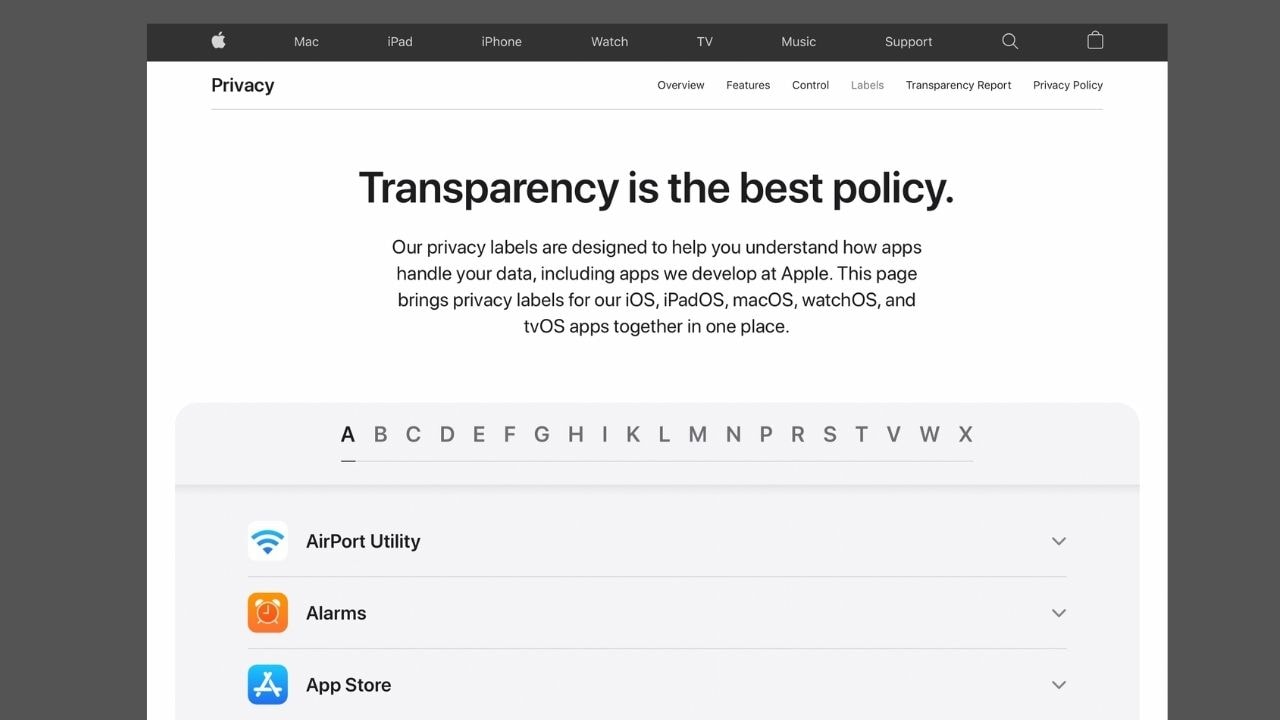 Apple has a new tab called Label on it privacy website.[/caption]The privacy label for Apple apps isn't exactly new. Earlier, the privacy labels for all these apps very available on their individual support pages, and now they are all curated together in one place.Privacy labels are available for all applications across iOS, macOS, watchOS, tvOS and iPadOS. Apple has also put in labels for developer tools like Xcode and the App Store itself. For instance, the App Store collects your location data, identifiers, purchase details, search history, etc, the Clock app collects identifiers that are not linked to you. Meanwhile, the Messages app collects your contact info, your search history, and other identifiers linked to who you are.[caption id="attachment_9410081" align="alignright" width="1280"]
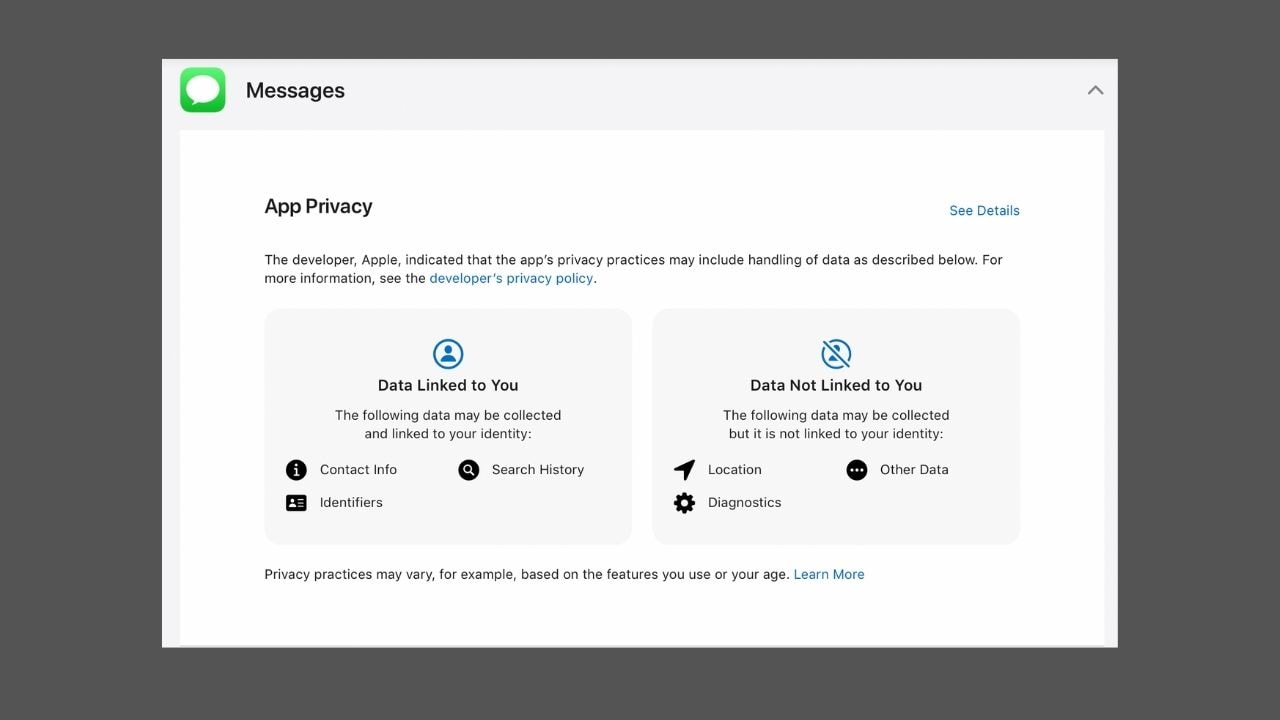 The privacy label of the Messages app by Apple.[/caption]With this, Apple emphasises that the privacy label of none of its app would have “Data Used to Track You”. Other developers are allowed to “track users” if they obtain permission from the user to do so. This is going to be mandatory under the App Tracking Transparency framework that will be enforced with iOS 14.5.

Why AI notetakers are raising serious privacy and security concerns
China's low-cost AI models are changing the global AI race. Here's why Silicon Valley is worried
China's Kimi K3 challenges US AI leaders with frontier-level performance at lower cost
How did Instagram run ads promoting child abuse in India?
Why has India halted WhatsApp’s username feature before launch?