


Nasa to spend $1.5 bn on next Mars mission which will look for microbial life
Nasa's next mission to Mars should look for past microbial life and collect samples to eventually bring back to Earth, a science advisory group said on Tuesday.

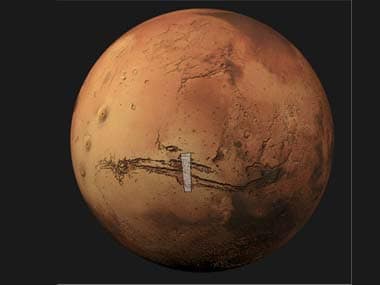
The planet Mars in this representative photo. AP[/caption]The United States, which has been the only country to successfully land and operate on Mars, did not return to the planet's surface for more than 20 years.Since then, an increasingly more sophisticated series of orbiters, landers and rovers have turned up evidence that the planet most like Earth in the solar system was once warmer and wetter than the cold, dry desert that exists today."To go and look for simple organisms, or not-so-simple organisms, that are living within that toxic, harsh environment, we just think is a foolish investment of the technology at this time," Mustard told reporters on a conference call."What you really want to get at is, 'Was there ever life elsewhere? Was there a second genesis that had the same characteristics as what we had on Earth?' To go after those questions, you want to approach it in a logical, systematic, stepwise fashion so that you can be confident about your results as you move forward," Mustard said.To that end, the advisory team proposes Nasa include a way to collect and store about 31 tubes of crushed rock and soil to be returned to Earth in the future. The panel did not address cost and timing for that part of the endeavour.The National Academy of Sciences last year ranked a Mars sample return mission as its top priority in planetary science for the next decade.If the rover found "a dinosaur-type bone, we probably wouldn't need to have to return that sample. We could recognise that from our current capabilities," Mustard said."Our understanding is that (life on Mars) is likely to be microbial and that's a darn hard measurement to make and a darn hard measurement to convince the skeptical science community that it is indeed the case," he said.[embedalsosee]Unlike Europe's planned ExoMars lander, a life-detection mission that is due to launch in 2018, Nasa's rover would not drill deeply into the planet's surface for samples to analyze. Some scientists believe that any organic materials on or near the planet's surface would have been obliterated by the planet's harsh radioactive environment. The advisory panel, however, points out in its report that landing in a relatively recent crater could mitigate those concerns.The United States had planned to partner with Europe on ExoMars, but backed out of the project last year, citing budget concerns. Since then, Russia has stepped in to fill the gap left by Nasa's withdrawal.Nasa had no immediate comment about how the cost of the Mars 2020 mission compares with what it had expected to spend on ExoMars.In addition to searching for past life, the new rover, which would launch in 2020, also could include tests that would help pave the way for eventual human missions to Mars, a long-term goal of space exploration initiatives.Nasa officials said they will be studying the team's report before issuing a solicitation for science instruments for the new rover.Reuters

Google burns cash for first time as AI spending pushes 2026 capex to $205 billion
Tesla sells more cars but makes less money: Why Musk’s AI pivot is squeezing profits
OpenAI launches Presence to bring AI agents into customer support and enterprise workflows
Samsung Galaxy Fold 8 Ultra, Fold 8, Flip 8 launched: Here is how much it costs in India with discounts
Florida pastor sues OpenAI, says ChatGPT's medical advice delayed emergency treatment: Report