


Google-backed Apptronik opens 'Robot Park' to train humanoids for real-world jobs
Apptronik has unveiled a dedicated training facility in Texas where its Apollo humanoid robots repeatedly practise everyday industrial tasks to improve their AI. The company believes real-world experience, rather than simulations alone, will accelerate the path towards commercially viable humanoid robots capable of working alongside people across multiple industries.

The race to build practical humanoid robots is increasingly centred on one key challenge: teaching machines how to operate reliably in the real world. Apptronik, the Texas-based robotics company backed by Google and Mercedes, believes it has found an answer with a new large-scale training facility where robots spend their days learning through repetition before being deployed to customers.
According to a Business Insider report, the company has opened a nearly 90,000-square-foot "Robot Park" in Austin, designed specifically to help its Apollo humanoid robots gain hands-on experience carrying out routine tasks. Rather than manufacturing hardware, the site is intended to generate something the company considers even more valuable: high-quality training data that improves the intelligence controlling its machines.
 More from Tech
A factory built to produce data, not robots
Inside the facility, Apollo robots repeatedly perform warehouse-style jobs such as placing boxes onto conveyor belts and sorting toys into designated containers. Human operators remain nearby and remotely guide many of these activities, ensuring the robots complete tasks safely while capturing detailed information from every movement.
That information is fed back into the company's artificial intelligence models, allowing the robots to steadily improve their performance with each training session.
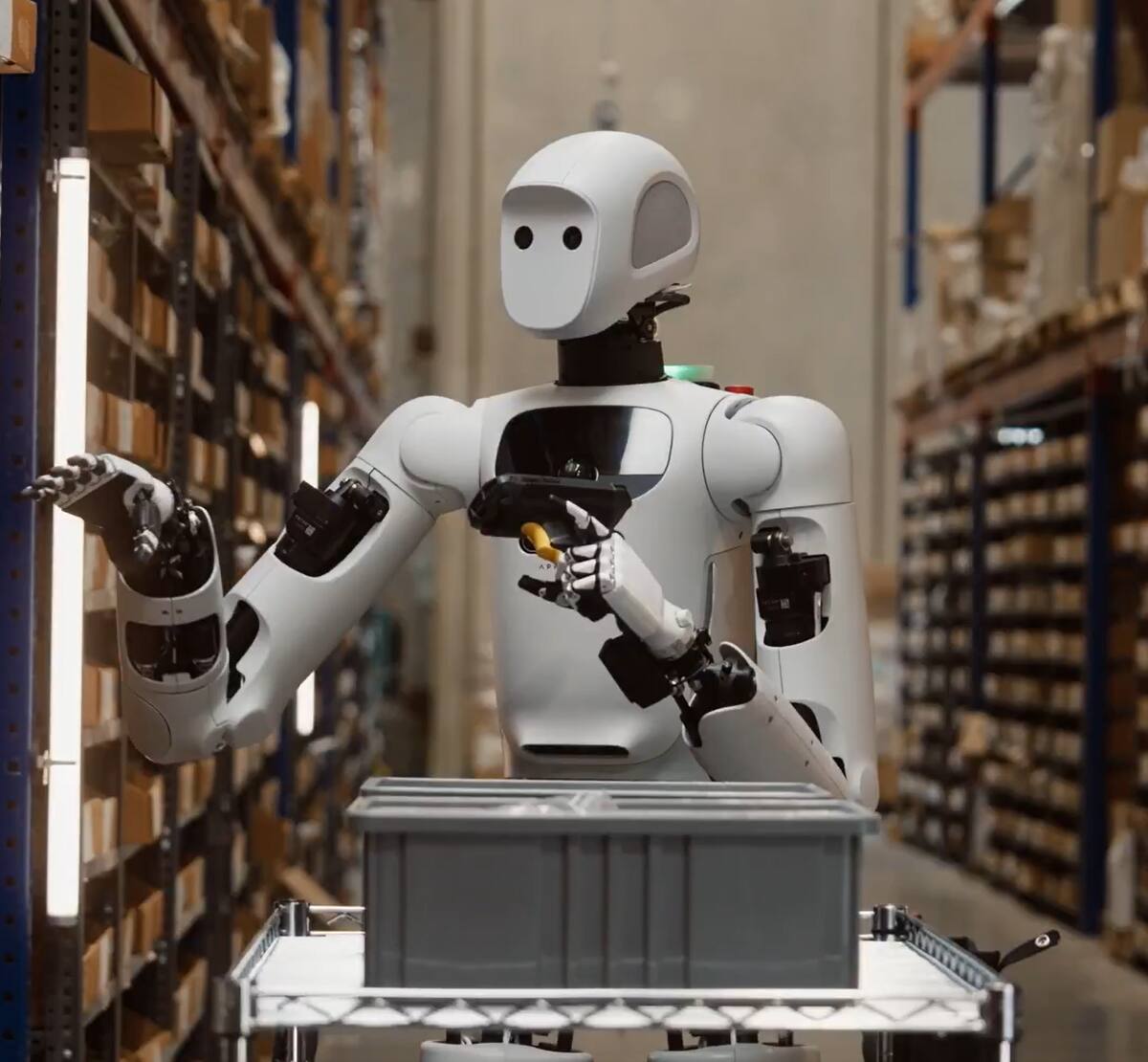
Chief executive and co-founder Jeff Cardenas likened the Austin site to a manufacturing plant, although its output is knowledge rather than physical products. Describing it as a "data factory", he said the environment functions as a playground where robots accumulate practical experience that can later be applied in real workplaces.
The strategy echoes a broader trend across the robotics industry. Tesla chief Elon Musk has previously outlined plans for an "Optimus Academy", where the company's humanoid robots would similarly gather large volumes of real-world training data before wider deployment.
Founded in 2016 after emerging from the University of Texas robotics laboratory, Apptronik initially focused on supplying robotic components before shifting towards developing a general-purpose humanoid. The company traces its origins to research supported by a US military programme focused on disaster-response robotics.
Commercial race gathers pace
Apptronik has attracted approximately $1 billion in funding and is now valued at more than $5.5 billion, according to the report. Its technology has already found commercial applications, with Mercedes deploying Apollo robots for basic manufacturing work on factory floors. Meanwhile, Google's DeepMind division uses the robots to advance its own artificial intelligence research for robotics.
The original Apollo robot debuted in 2023, but development has continued rapidly. The latest Apollo 2 features upgraded motors, sensors and battery technology. Standing roughly six feet tall, it can operate for around four hours on a single charge and lift loads weighing up to 55 pounds. A commercial successor, Apollo 3, is currently under development, although Cardenas declined to reveal when it might be introduced.
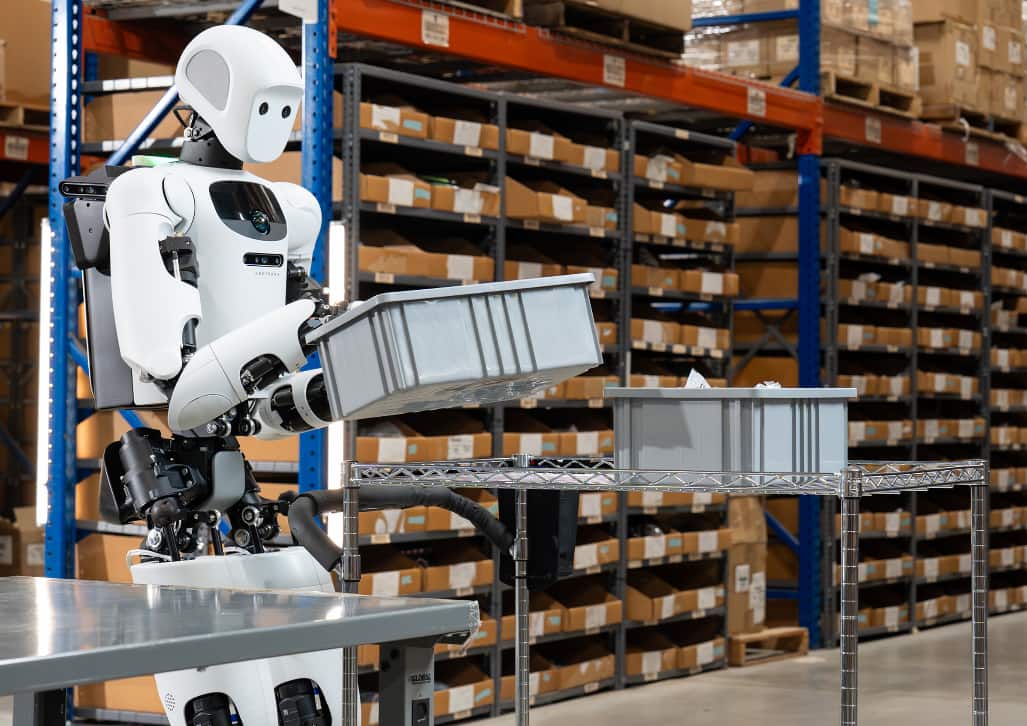
Cardenas believes the humanoid robotics industry is transitioning from demonstrating technical capability to proving customers are willing to invest in the technology before eventually achieving large-scale commercial growth. He compared today's market to the personal computer industry during the early 1980s, suggesting humanoid robots are approaching a similar turning point.
Competition, however, is intensifying. Figure AI, valued at $39 billion, has begun deploying robots in logistics operations, while 1X plans to place more than 10,000 humanoids inside homes this year. Agility Robotics has already expanded its Digit robot across nine customer sites, including Amazon, Toyota and GXO, and is preparing for a stock market debut.
Unlike several competitors, Apptronik is pursuing both wheeled and legged robots. Cardenas believes robots capable of walking will ultimately offer greater flexibility by matching human mobility, but expects wheeled versions to reach workplaces first because they consume less energy and present fewer operational risks.
The company has already established additional Robot Parks at customer locations around the world and intends to expand the concept further. Looking ahead, Cardenas said he hopes future facilities will eventually welcome members of the public, allowing people to observe firsthand how humanoid robots learn and evolve.

Google burns cash for first time as AI spending pushes 2026 capex to $205 billion
Tesla sells more cars but makes less money: Why Musk’s AI pivot is squeezing profits
OpenAI launches Presence to bring AI agents into customer support and enterprise workflows
Samsung Galaxy Fold 8 Ultra, Fold 8, Flip 8 launched: Here is how much it costs in India with discounts
Florida pastor sues OpenAI, says ChatGPT's medical advice delayed emergency treatment: Report