


Engineers working on ways to make oxygen out of Moon's crust, extract other valuable materials
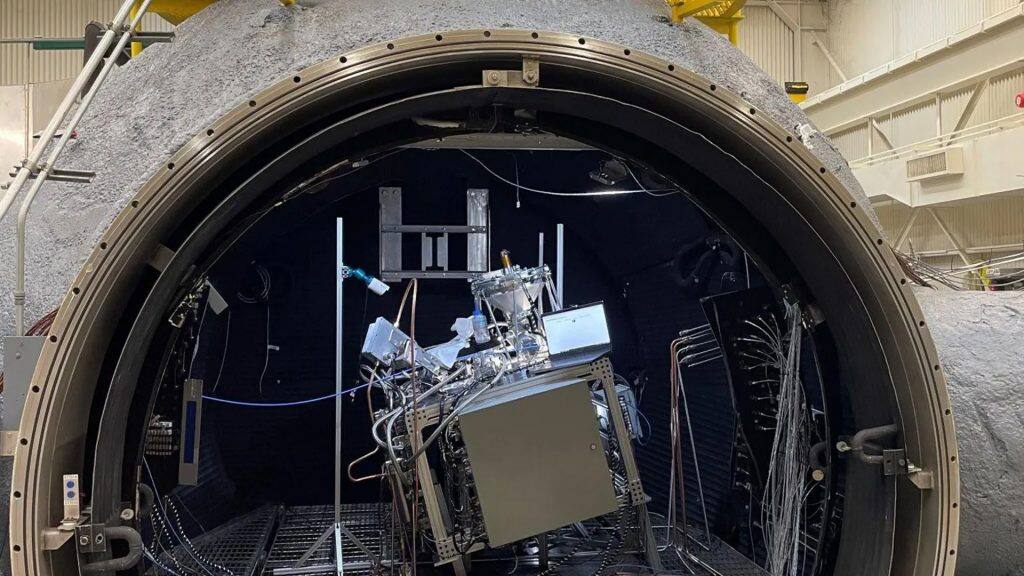
Engineers from Sierra Space, a private company, have developed a machine designed to extract oxygen from lunar soil, also known as regolith. The machine heats up the regolith to extreme temperatures, causing oxygen molecules to bubble out

A group of engineers is working on an innovative way to produce oxygen on the Moon, aiming to make life easier for future astronauts. Engineers from Sierra Space, a private company, have developed a machine designed to extract oxygen from lunar soil, also known as regolith.
The machine, which looks like a metal box surrounded by colourful wires, heats up the regolith to extreme temperatures, causing oxygen molecules to bubble out, as per a BBC report.
The experiment, conducted at NASA's Johnson Space Center this summer, marks a significant step forward. The engineers are optimistic that they can replicate this process on the Moon, where the need for oxygen will be essential not only for astronauts to breathe but also to produce rocket fuel for missions further into space, such as Mars.
 More from Tech
The need for oxygen on the moon
The idea of extracting oxygen from the Moon’s regolith is crucial for sustaining life on a lunar base. Since transporting large quantities of oxygen from Earth would be prohibitively expensive, creating a system that generates oxygen from local resources could save billions of dollars in mission costs. Fortunately, regolith is rich in metal oxides, making it a promising source of oxygen. However, the challenge is to adapt the technology to the Moon's harsh conditions, particularly its low gravity.
Sierra Space’s technology uses a process called carbothermal reduction, where oxygen-containing molecules form naturally as the regolith is heated. The bubbles of oxygen rise freely, making it easier for them to detach from the regolith. This approach has the advantage of working better in low gravity compared to other methods, such as molten regolith electrolysis, which faces challenges in the Moon’s weak gravity.
Overcoming the challenges of low gravity
One of the biggest hurdles engineers face is the Moon's gravity, which is only about one-sixth of Earth’s. This affects processes like molten regolith electrolysis, which relies on oxygen bubbles forming on electrodes. In low gravity, these bubbles don't rise as quickly, which can delay the process. To overcome this, engineers like Paul Burke from Johns Hopkins University are experimenting with solutions like vibrating the oxygen-producing devices or using smoother electrodes to help the bubbles detach more easily.
Sierra Space’s system, however, bypasses this issue by letting the oxygen bubbles form freely in the regolith without sticking to electrodes. This makes it a potentially more effective solution for lunar applications, even in the Moon’s low-gravity environment.
Lunar resources for space exploration
In addition to oxygen, the Moon’s regolith is a treasure trove of valuable materials. Scientists like Palak Patel from MIT are exploring ways to extract not only oxygen but also metals such as iron, titanium, and lithium from the regolith. These materials could be used to create essential tools, parts, and even building materials for lunar bases. Patel’s team is also investigating how to turn the regolith into sturdy, glass-like bricks that could be used for construction on the Moon.
The ultimate goal is to reduce the need for resupply missions from Earth, making long-term lunar habitation more feasible. As space exploration continues to evolve, the ability to use the Moon’s natural resources will play a critical role in supporting human missions beyond Earth's orbit, with Mars being the next frontier.
While these technologies are still in the early stages, the experiments offer a glimpse into the future of space exploration, where astronauts could one day live off the land — on the Moon itself.

Google burns cash for first time as AI spending pushes 2026 capex to $205 billion
Tesla sells more cars but makes less money: Why Musk’s AI pivot is squeezing profits
OpenAI launches Presence to bring AI agents into customer support and enterprise workflows
Samsung Galaxy Fold 8 Ultra, Fold 8, Flip 8 launched: Here is how much it costs in India with discounts
Florida pastor sues OpenAI, says ChatGPT's medical advice delayed emergency treatment: Report