
Advertisement


Sections
Electric cars are expensive right now but you won't regret buying one
By 2023 all 3 wheelers, by 2025 all 2 wheelers and by 2030 30 percent of all 4 wheelers plying on our streets would have to be electric.

When the Finance Minister, was making her maiden budget speech it was difficult to miss the focus on electric vehicles. By 2023 all 3 wheelers, by 2025 all 2 wheelers and by 2030 30 percent of all 4 wheelers plying on our streets would have to be electric. I tried to find out more about electric cars, took test drives, read more about them and evaluated them. Currently there are 3 cars in the market — The Hyundai Kona, the Mahindra E-Verito and the Tata Tigor. There is also the Mahindra E2O (a redesigned Reva) but it’s too small to be a family car. MG’s ZS EV is around the corner now and so is Tata Nexon’s EV this week. This is in sharp contrast to almost 400 cars and variants available currently with IC engine. But this set to change, more on that later.[caption id="attachment_7806671" align="alignnone" width="1024"]![Image: Pixabay]()
1. Running Cost taken at Rs 80/ltr of petrol and 12kmpl2. Maintenance cost of an EV is much lesser - not accounted. That’s additional savings3. This example is with Tata Tigor.. But is valid for all cars as the price gap is almost 25-30 percent between a similar ICE car and EV4. Tigor Automatic model is taken… as the EV is also automatic
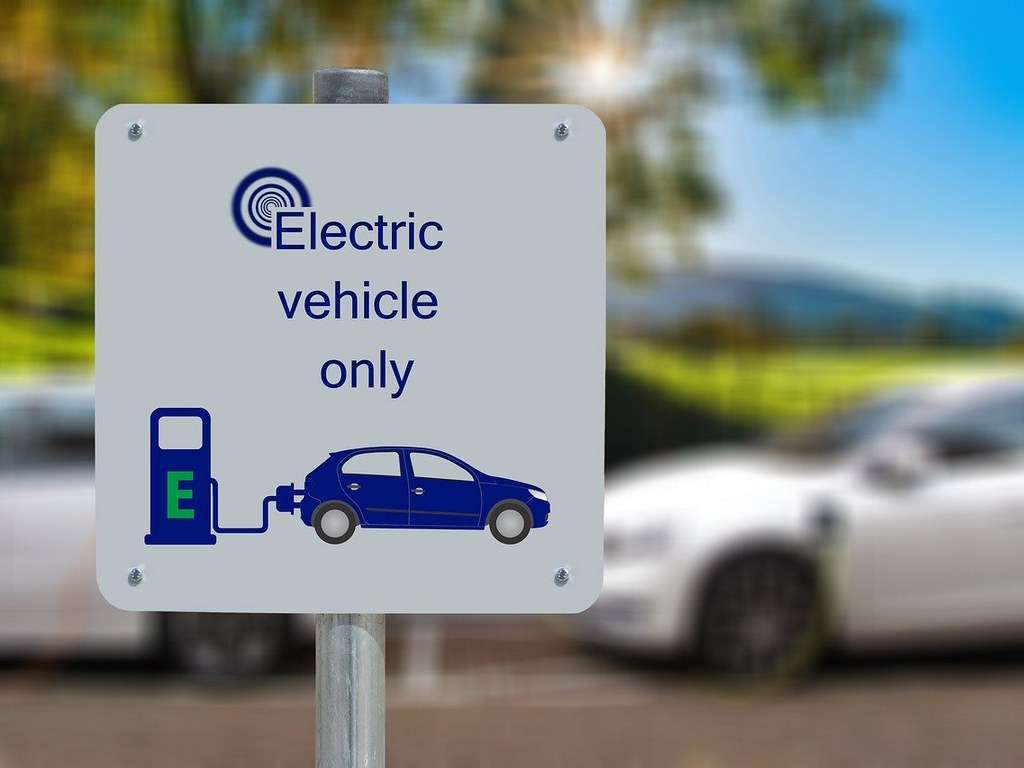
The design of an electric car enables manufacturers to place batteries such as to achieve a relatively low center of gravity. Image: Pixabay[/caption]Let’s look at my 3 key pillars for evaluating a car – drivability, peace of mind and cost.
Drivability
Electric cars so much fun to drive. The design of an electric car enables manufacturers to place batteries such as to achieve a relatively low center of gravity. This means that the car handles well and is stable at high speeds so you can throw it around the corners and it will stay firmly planted. The motor characteristically offers an almost instantaneous torque response which is linear – unlike ICE cars where peak torque is available only at a specified RPM range. The ‘pick-up’ is superb, acceleration is excellent, no gears to juggle and all this while being cocooned in total silence. Driving bliss!
- Peace of Mind: Range is the new dimension that has come into play. Today electric cars have a range of 120 to 400kms on every charge. For city commutes of say 50-100 km odd you should be sorted if you have basic charging infrastructure at home. You use the car during the day and charge at night… just like you would charge your smartphone. You need a dedicated parking place in which you can charge your car. An almost full charge takes between an hour to 15 hours to achieve - depending upon the type of charger.However, you have to carefully plan those one-off weekend road trips to ensure your car doesn’t run out of juice. Today you take a refueling stop at the petrol pump and can be back on the road in minutes. But even the fastest charging set-up takes about an hour to get to an almost full charge. This means you may have to time the car charging with your own breaks so that you have a relaxed lunch at a restaurant nearby or maybe take a nap while your car is charging up on a long road trip. It may be a tad faster if cars come with modular batteries with someone offering the service of simply replacing your batteries with the fully charged ones (as in Delhi for the e-rickshaws). How this pans out remains to be seen but ‘refueling’ your car may never be the same again.
- Reliability: The drive train in an ICE car has over 2000 moving parts which includes engine and transmission components - whereas the drive train in an electric car has less than 100. So intuitively, electric cars are significantly more reliable than the ICE cars.
- Safety: With electric cars, not having a combustible fuel in the car itself seems like a big relief on safety. However electric cars have an array of large batteries on them and if not well isolated or protected, may have a tendency to explode. The matter of Samsung S6 Li-ON batteries exploding is fresh in our minds. There is also a recent episode of a Hyundai Kona catching fire due to unknown reasons. The electric auto industry has to do much more to quell that fear in the minds of consumers.
Cost of ownership
- Running Costs: This is where electric cars score truly over the regular ICE cars. At the current rate/ unit of electricity every KM of running an electric car is less than a rupee, whereas even the most fuel-efficient diesel car costs at least 4 times more.
- Maintenance: While new generation IC engines and transmission are extremely reliable, it gets even better with electric cars. The motor is largely maintenance-free with no messy oil and filter regimen. We still have Brakes, suspension, air conditioner, tires and everything to be maintained albeit at a much lower cost.
- Resale Value: In India where even decades-old vehicles prance about on the streets resale value is an important metric in evaluating the cost of ownership. While little is known of the resale value of electric cars (given they are relatively new on the scene), this parameter is not likely to bode well in their favor. The more reliable batteries last for 8 years odd before they lose their capacity or the ability to hold ‘power’ before needing replacement. And since batteries constitute a large part of the cost of the car, the resale value will get calibrated accordingly. But keep in mind that if India pushes ahead with its stated agenda of moving to electric cars in a big way, your current car won’t have any takers either.
- Overall cost: Currently the electric cars are clearly an expensive option for initial outlay. However, if you were to take a loan on the initial cost of the car, the EMIs you would pay + the running cost I suspect could be in the same range as an ICE car. The higher upfront cost (depending upon the car) may get evened out by the significantly lower running cost.
| Tigor ICE | Tigor EV | |
| Car Cost On road | 800,000 | 1,000,000 |
| Car EMI@ Rs 2000p.m for 5 yrs | 16,000 | 20,000 |
| Running Costs p.m (@1000kms) | 6,500 | 1,000 |
| Monthly cost | 22,500 | 21,000 |
EVs are Green after all
But if you are one of those for whom, concern for the environment outweighs normal objective propositions, then the arguments of cost etc. are superfluous. There are two things however you need to know:
- Over 70 percent of the power generated in India is through thermal sources – coal, diesel, gas etc. Only around 30 percent is through clean & renewable sources like hydro, nuclear, solar, wind or biogas etc. So with EVs, we are just shifting the emissions from the cities to the power stations. (This is a not such a bad proposition, since the polluted air doesn’t get dissipated in dense concrete urban clusters when compared to power stations which are located in remote areas). We will increasingly get more energy from clean sources but till that happens electric cars are not necessarily as green as they are made out to be.
- Each car has about half a ton of batteries (mainly LiON or NiMH) which are hardly recycled currently. These batteries are a serious challenge to dispose and upon damage give off toxic gases. Even the core ingredients of batteries — Nickel and Cobalt are finite resources and if not extracted responsibly can lead to reckless depletion and water pollution amongst other environmental consequences.
First Published:Dec 20, 2019, 10:51:59 IST
Advertisement
Advertisement

Mercedes-Benz India at Rising Bharat Summit: 'China market is very different...'
At Rising Bharat Summit 2026, Mercedes-Benz India outlined its value-led growth strategy, record 2025 revenue, localisation push, and views on the India-EU FTA. CEO Santosh Iyer also compared India and China’s auto markets, highlighting why India is emerging as a key global pillar for Mercedes
7 min read
Tesla will no longer user the term ‘autopilot’ to market its EVs
Tesla avoided a potential 30-day suspension of its dealer and manufacturer licences in California after agreeing to remove the term “Autopilot” from its vehicle advertisements.
1 min read
Indians punishing Turkey over Operation Sindoor stance? Travel falls 25%
Indian visitors to Turkey were down 25 per cent in 2025, according to data released by the Turkish tourism ministry. This comes as an aftermath of Operation Sindoor.
2 min read
Tesla to retire its flagship models to make room for Optimus robot production
Tesla is discontinuing two flagship EVs, the Model S and Model X. CEO Elon Musk wants to focus on its humanoid robot, Optimus.
3 min read
Europe buys more electric vehicles than petrol cars for first time — despite Trump’s ‘drill, baby, drill’ push
Europe’s car market has hit a turning point as fully electric vehicles edge past petrol cars for the first time — even as Tesla struggles for momentum and Donald Trump pushes a return to fossil fuels in the US
2 min read
Advertisement
Advertisement