


Legend-Speak: ‘Tennis is a long journey,’ Rohan Bopanna on patience, doubles mastery and the road ahead for Indian tennis
In the first edition of Legend-Speak, Indian tennis great Rohan Bopanna reflects on the challenges of succeeding in one of the toughest sports in the world. The two-time Grand Slam champion speaks about the gaps that still exist in Indian tennis.

Edit note: Legend-Speak is a special Firstpost series featuring conversations with some of the greatest sportspersons. The series focuses on their respective sports as well as the broader sporting ecosystem. It aims to inspire young and budding athletes while also giving readers a deeper understanding of what it takes to succeed at the highest level of sport.
“The toughest sport”, “an unforgiving sport," "the loneliest sport”. If you are an avid sports fan, you will know exactly which sport has been described in these words over the years.
Tennis is neither an easy sport to pick up nor is it easy to master. The sport demands a punishing combination of athleticism, endurance, skill, technical know-how and of course, mental strength. Survival of the fittest – in every which way – applies in every letter to this sport. As someone who played school-level tennis, I cannot stress enough just how tough it is to reach and maintain a certain standard of play. Anyone who has played some bit of tennis regularly and interacted with coaches will always look up to those who have and are currently playing at the highest levels and on the biggest of stages, as demi-gods.
 More from Tennis News
Which is why, if one were to ask for advice about a few simple things that young tennis players, who harbour dreams of playing at the highest level someday, should focus on, there can be no one better than an international professional player to turn to.
In this first edition of Legend-Speak, Indian tennis legend Rohan Bopanna, who had a stellar 22-year career highlighted by two Grand Slam titles, two Asian Games gold medals and 33 Davis Cup ties, amongst other accolades, talks about what young tennis players should target, the technical aspects of the doubles game, the current health of Indian tennis, the Indian players we should watch out for in the future and what needs to be done to further strengthen Indian tennis.
Bopanna: 'Tennis is a long journey, be patient'
Let’s start at the very beginning. Tennis is a sport that is offered by many schools in India, which have their own tennis courts, and it is at this level that most serious players pick up the sport. Many schools which have tennis courts, though, don’t have a designated tennis coach, which means for training and practice, one has to look at either an academy or some other paid sports facility. Tennis courts in schools and those which don’t host recognised tournaments typically don’t have to be registered. As of today, an approximate figure for the total number of registered tennis courts in India stands at about 3300. According to reports, Maharashtra, Uttar Pradesh, and Haryana have the highest concentration of tennis courts in the country. For a quick comparison, the USA has the maximum number of tennis courts in the world (25%). There are roughly 250,000-270,000 tennis courts in the USA, including public and private facilities.
While athletes from smaller Indian towns and villages usually find it difficult to access courts, even if they do find a way to move to an urban setting to pursue a sport that carries the tag of “expensive”, there are multiple other challenges that lie in store. The biggest stumbling block for most budding athletes, including tennis players, is navigating the right path once they have decided to pursue the sport seriously. Sometimes, wanting things to happen quickly is a big pitfall. And Bopanna warns against exactly that.
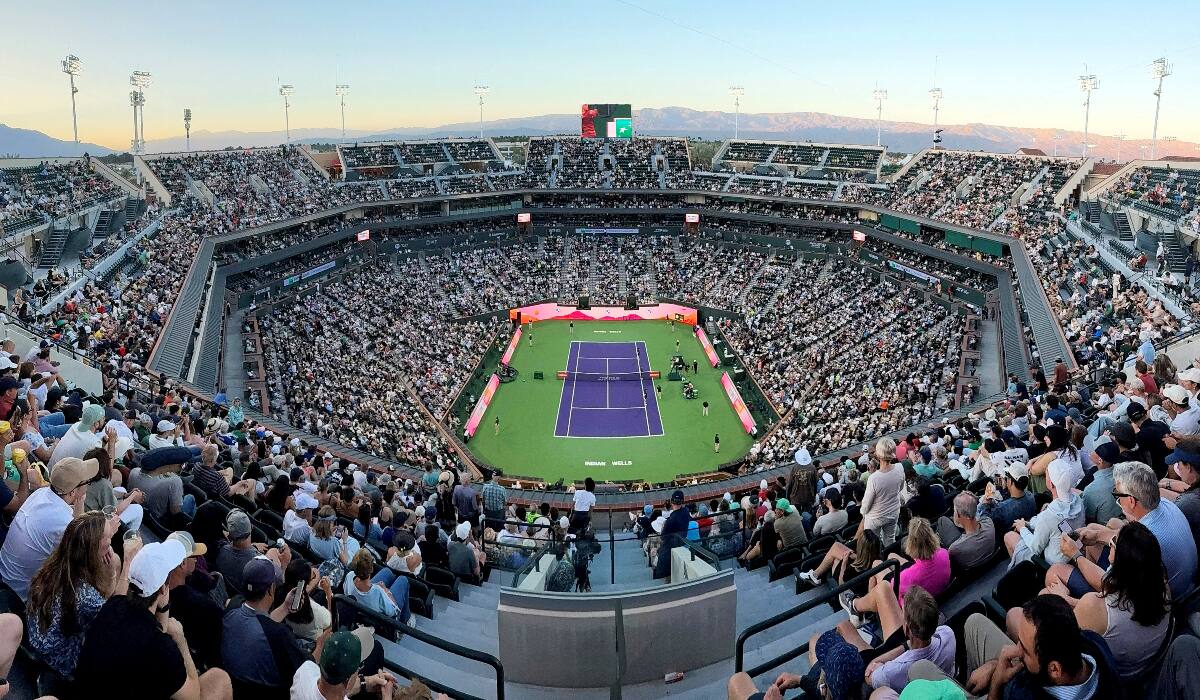
“Focus on the right basics and remain patient, as tennis is a long journey. Most importantly, build a team around you; at the highest level, it is not an individual sport,” Rohan Bopanna told Firstpost in an exclusive interview.
Like in any other sport, once talent is spotted, the system is ideally supposed to provide the support and encouragement needed so that no talented player slips through the cracks. Unfortunately, no system is perfect. In Indian tennis, too, over the decades, there have been myriad problems, especially at the grassroots and developmental stages. Critics have often pointed out the lack of a clear path that tennis players can follow from the grassroots level to the national team. The governing body of tennis in India, the All-India Tennis Association, has often been criticised for their lack of foresight, infighting etc.
Many extremely talented junior players opt to drop out of the sport around the ages of 14-17 because of the lack of a proper support system. The country also needs more domestic tournaments to help with the development of athletes, especially in the women’s game. More ATP and ITF tournaments will allow players to gain crucial ranking points without having to necessarily travel abroad. It cuts out expensive foreign travel to a certain extent and also gives domestic travel rising athletes have the chance to compete with foreign players.
'Less international exposure for Indian tennis players
When asked about where the Indian tennis system stands currently and what it needs, Bopanna, a former world number one doubles player, said, “While there is more structure and better fitness awareness now, gaps remain in consistent international exposure and a strong support ecosystem. We need to evolve our coaching education and scheduling support to produce more top-level players.”
Alright, now one of the biggest conundrums that many racquet players face is whether to go down the singles path or pick doubles. A vast majority of tennis players around the world start off as singles players, focusing on individual skill development. Research shows that doubles specialisation usually happens at a later age for most elite tennis players. A look at the average age of top ATP doubles players over the years shows a significant hike. Now, top doubles team players are often in their mid-to-late 30s. The current world number one men’s doubles player, Neal Skupski from Great Britain, who won the Australian Open men’s doubles title earlier this year with Christian Harrison, is 36. Belgian professional Elise Mertens, who is on top of the women’s doubles rankings, is 30.
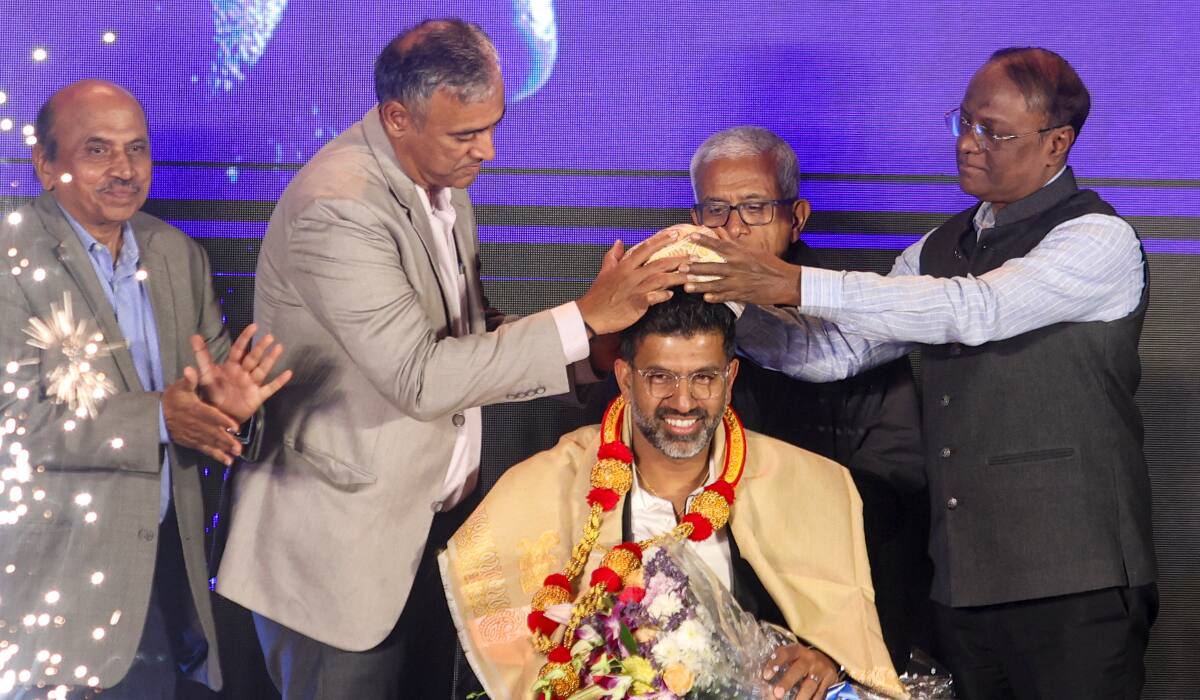
The demands of the doubles game, which are physically different from those of the singles game, also make it a more viable option for many professionals in their mid to late 20s and early 30s. This is why you will see many tennis players branching off from the singles to the doubles game around that age. But then the technical aspect of the doubles game is very different. Bopanna also started off as a singles player who also played doubles and only decided to focus entirely on the doubles game after he reached the final of the 2010 US Open men’s doubles, with Aisam-ul-Haq Qureshi. He finished his career with 26 ATP doubles titles. And here he talks about what it takes to switch from the singles to the doubles game and focus on that exclusively.
“While building a solid technical base is essential, the biggest shift was realising that doubles is a different sport entirely. It requires sharper net positioning, quicker reflex volleys, and more efficient decision-making. For young players, adaptability is what ultimately leads to the top,” Bopanna told Firstpost.
The next thing I wanted to discuss with Rohan was the health of Indian tennis currently and who the players are that we should watch out for in the years to come. While there is no Indian player in the ATP singles rankings currently, the doubles rankings feature three Indians – Yuki Bhambri (26th), N. Sriram Balaji (71st) and Rohan Bopanna (75th), with Bopanna having retired in November last year. In the WTA rankings, meanwhile, there is no Indian player in the Top 100 in either the singles or doubles, with Vaishnavi Adkar the highest-ranked Indian singles player at number 385 and Rutuja Bhosale the highest-ranked Indian doubles player at number 123.
“The pipeline is encouraging. On the women’s side, Vaishnavi Adkar and Shristi Kiran show great promise. For the men, Dhakshineswar Suresh, Manas Dhamne, and Karan Singh are talents to watch. The key for them is building a support system to help their transition to the global stage,” Bopanna further said.
With Bopanna deciding to bring the curtain down on his professional career last year, we witnessed the end of an era in Indian tennis, which produced multiple senior Grand Slam champions like Bopanna himself, Sania Mirza, Mahesh Bhupathi and Leander Paes. While we keep our fingers crossed and hope the future of Indian tennis is a bright one, one thing we can be sure of is that legendary athletes like Rohan will continue to give back to the sport.
The Rohan Bopanna tennis academy in Bengaluru is doing great work and boasts world-class facilities. Post-retirement, the academy work is Rohan’s big focus.
“My focus is now on building a high-performance pathway for Indian tennis. We are creating a sustainable ecosystem—covering coaching, fitness, recovery, and mental health—to support talent from the grassroots to the elite level,” Bopanna told Firstpost.
Akaash is a former Sports Editor and primetime sports news anchor. He is also a features writer, a VO artist and a stage actor

Jannik Sinner retains Wimbledon title after beating Alexander Zverev
Noskova outlasts Muchova to claim maiden Wimbledon title in thrilling all-Czech final
Novak Djokovic's record title bid ends as Jannik Sinner storms into Wimbledon final
Muchova outlasts Gauff to set up all-Czech Wimbledon final
Taylor Fritz’s Wimbledon run cut short by knee tendinitis in quarterfinal defeat to Alexander Zverev