


From the 'dying Slam' to the truly 'Happy Slam': How the Australian Open aced the game
Once dismissed as the ‘dying Slam’, the Australian Open has reinvented itself into tennis’ most fan-friendly major. Through bold innovation, community-first thinking and relentless focus on experience, Melbourne Park has become the venue for a global sporting carnival that players adore and fans keep coming back to.

There is something very fresh about the Australian Open – year after year. True, that it’s the year’s first Grand Slam and the players are mostly rejuvenated after the off-season, free from the burden of having to constantly think of racking up ranking points, and the fans are eagerly waiting to catch the best of the best in action, but it’s so much more than just that.
I have been to Melbourne Park twice so far, been given a guided tour of the Australian Open grounds, including the areas that are reserved just for the players and their staff, like the dining area, and also watched a men’s singles final live, inside Rod Laver Arena. Based on first-hand experience, I can tell you that the experience is nothing short of magical. There is just something about the Australian Open, in the way it’s organised and run, that makes it both a fan and player favourite.
 More from Tennis News
That despite the fact that many fans, with ground passes, don’t get seats to sit on to watch the matches.
Kid-friendly Australian Open sees record crowd
At the time of writing this article, the 2026 edition had already recorded the five most-attended days in Australian Open history. On Day 5 of the main draw action (Thursday, Jan 22) a record number of fans found their way to the year’s first Slam. As many as 103,596 spectators were recorded as having entered Melbourne Park to catch the live tennis action that day. The opening week this year recorded 217,999 fan entries – that’s more than double what the 2025 edition saw in its opening week.
Ground passes at the Australian Open are divided into three categories – 1. Opening Week Ground Pass (for the qualifiers and practice) – which started from a nominal 10 Australian dollars or about Rs. 643 this year for adults and 5 Australian dollars or about Rs. 322 for children, 2. Single Day Main Draw Ground Pass – which starts from 49 Australian dollars or approximately Rs. 3148 and 3. The seven-day Ground Pass – which (for the week of Jan 26 to Feb 1 as per the official AO website) starts from 99 Australian dollars or about Rs. 6359. There are other discounted rates for kids too, like Day One of the opening week being made free for all children etc. The main draw Ground Passes are not match tickets. They allow you access to the grounds and matches, where seats are available, along with select entertainment fare on offer, but they don’t give you access to the three main arenas - the Rod Laver arena, the Margaret Court arena and the John Cain arena.
The Opening Week Ground Pass allows you to “Watch players practice up close in Rod Laver Arena (unreserved seating)” (as per the official AO website). Tournament officials are constantly monitoring the grounds to ensure that the crowds don’t reach a number whereby people start feeling suffocated. In fact, for the first time ever, there were multiple pauses on Ground Pass sales this year, to ensure even distribution of crowds. Despite that, fans have often had to wait for hours to enter the grounds and at food stalls. What you must bear in mind is that having a Ground Pass does not guarantee you seating inside an open-air tennis venue, like say the Kia arena. It’s very possible that you might have to catch the tennis action on one of the giant screens outside the arenas.
The organisers are very careful in making sure that this message is communicated to the fans. Only people who have bought match tickets and have reserved their seats are guaranteed entry into the main arenas. The official AO website also carries this disclaimer – “Please note access to outdoor courts and unreserved seating is subject to availability and capacity limits. All timings and inclusions are subject to change.’
But that in no way takes away from the fan experience. This year, according to reports, the organisers also gave free grounds access to kids under 12 years of age for the first time. Now, no child that young is going to go watch tennis action by himself/herself. What that meant was that more and more families made their way to Melbourne Park, pushing up overall attendance figures and of course tournament revenue. Last season (2025), saw a record in-person attendance at Melbourne Park, with 1.28 million fans walking through the turnstiles. This year, the organisers are expecting a new record.
The aim is simple – turn the Grand Slam into a family-friendly, community festival, which also, of course, embraces tourists. There are events like the ‘Kids’ Tennis Day’, which was held on January 17 this year, opportunities for the fans ‘to interact with players in the Practice Village and on Grand Slam Oval (sporting venue inside Melbourne Park in the Melbourne Sports and Entertainment Precinct.) where top players handed out 5000 free tennis racquets over the course of Opening Week’ (according to the official AO website), along with live music every night through the course of the opening week.
Not many people know that the main stadiums inside Melbourne Park - Rod Laver Arena, John Cain Arena, and Margaret Court Arena – are all multi-purpose stadiums. When there is no tennis happening, these double up as concert venues, basketball and netball playing grounds, and more. In fact, American singer, songwriter, Pink, once had as many as 18 sold-out concerts inside Rod Laver Arena during her ‘Truth About Love’ Tour in 2013, breaking her own previous record (17). Gate number 18 at the Rod Laver Arena is painted pink, with details of all the sold-out shows from that Tour. Now live music is very much a part of the Australian Open ‘festival’ experience.
Another big fan attraction at the AO, which has been taken to new heights this year, is the ‘1-point Slam’. This is a unique event that sees amateur tennis players take on the professionals in contests that last exactly one-point. It began in 2025, when 16 amateur Victorian tennis players took on 16 professionals, with a prize money of Aus $60,000 up for grabs. This year those figures went up to 48 players (including amateurs, professionals and celebrities) and 1 million Australian dollars.
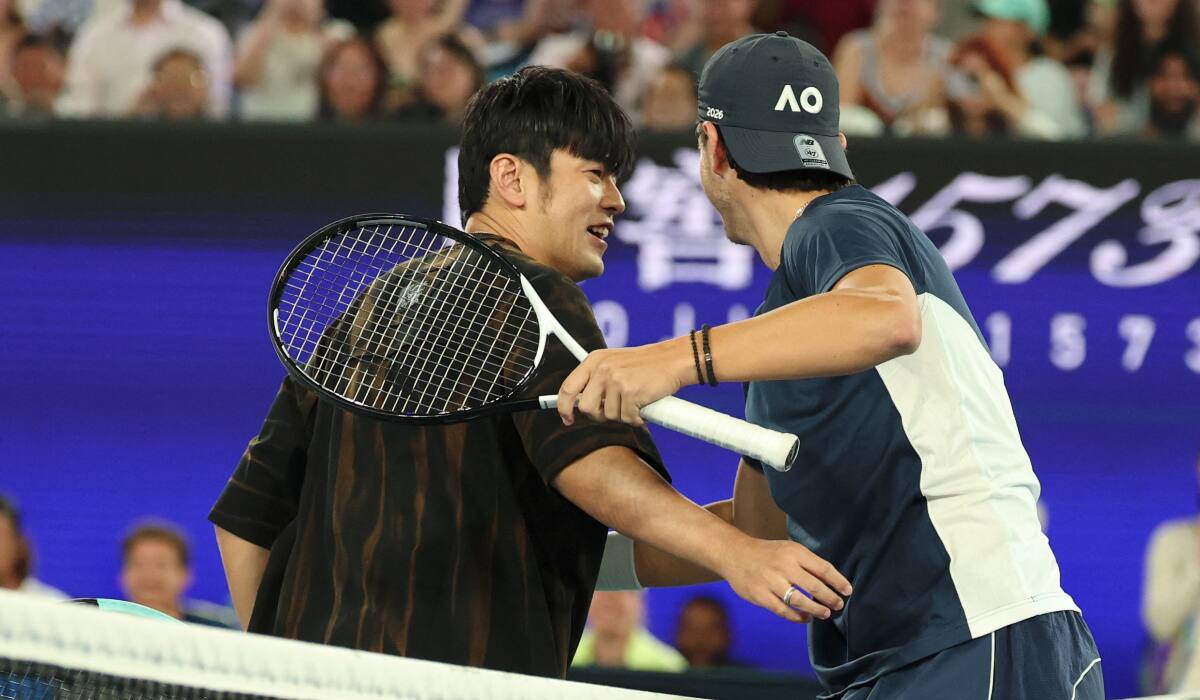
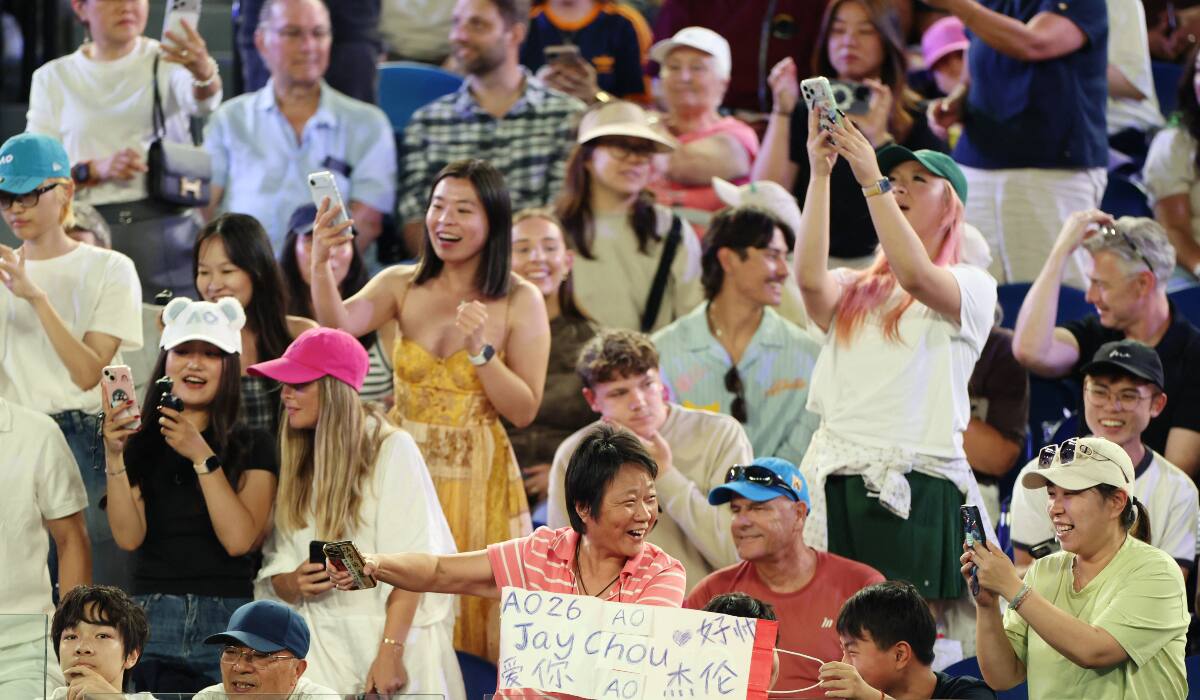
Amateur tennis player Jordan Smith, who plays for the Castle Hill Tennis Club in New South Wales, managed to beat everyone he faced, including two-time Australian Open defending champion Jannik Sinner, to claim the million-dollar pay cheque. The event, which is the brainchild of Tennis Australia CEO and Australian Open Tournament Director Criag Tiley (who was inspired by similar one-point tournaments that he saw while he was a college tennis coach in the USA), began with a full-house at the Rod Laver Arena this year and went a long way in further cementing AO’s status as a fan favourite.
'I love the one-point Slam': Somdev Devvarman
Former India professional tennis player and Padma Shri awardee, Somdev Devvarman, knows what it’s like to be out playing on an Australian Open court. I spoke to Som about the overall appeal of the Australian Open, including the innovative 1-point Slam competition, and he didn’t mince his words in praise of the tournament which is tagged ‘The Happy Slam’.
“I love the one-point Slam. I think it’s super exciting. How can the fans get closer to the stars and actually beat them? Jordan Smith won this year. It’s so cool. You see nerves, you see the best players in the world making a bad decision on one point – anything can happen.
"You see Jannik Sinner missing a serve or Carlos Alcaraz missing a drop shot. You see professionals making mistakes they usually never make. It’s one point and yet there’s so much that can happen. I loved it. I absolutely loved it. I think it’s great. It’s a half-day event, before you know it’s done. I think it’s fantastic,” Somdev said.
This year, fans in Australia were in for another very special treat. 20-time Grand Slam singles champion Roger Federer, who is retired from competitive tennis, was in action for the first time since the 2022 Laver Cup in an exhibition match against the World Number 13, Casper Ruud. Federer rolled back the years and treated the crowd to some of his signature shots, including the single-handed backhand down the line winner, as he won the exhibition tie-break 7-2.
Remember, it was Federer who had first called the AO ‘the Happy Slam’.
Year after year, we see top players wax eloquent about their experiences at the year’s first Grand Slam. Andre Agassi, who won four of his eight Grand Slam titles in Australia had this to say after his 2003 title win, which was also his last Slam title - "I'll never forget being here, I'll never forget playing for you and I'll never forget the support and the love I've always felt coming down here. I feel like I'm half-Australian".
Federer, who won six Australian Open singles titles recently said – “It feels like a lifetime ago that I coined the phrase the 'Happy Slam' for the Australian Open, and it still makes me smile when I think about all the moments I've had here.”
For Novak Djokovic – this is his second home of sorts - having won a record 10 singles titles at the Australian Open.
Ask any professional on the ATP or WTA Tours and chances are they will only have good things to say about the year’s first Slam.
“From a player’s perspective this (the Australian Open) is ‘the Happy Slam’. There is no question about it. Everything, in terms of the way things are handled, the hospitality. Everything. This is probably a hard one to beat,” Somdev said.
Also, very crucially, for the top players – the Australian Open is the perfect launchpad to send a strong message to the rest of the Tour. A title win or even semi-final appearance at the year’s first Grand Slam shows the rest of the field just who the main competitors for the rest of the year are going to be.
Looking at just how popular the AO is, it’s hard to imagine that there was a time when the Australian Open was last in the pecking order of Grand Slams. In the early 1990s, it was in fact tagged ‘the dying Slam’ and ‘the other Slam’.
At that time, the Australian Open was a Grand Slam – but only in name. Many top players didn’t want to play the Australian Open till about 1993-1995, simply because the ATP didn’t allow the Slam to give as many ranking points as the other three Slams. What made matters worse was the low prize money on offer. Till 1988, the Slam was held at the Kooyong Lawn Tennis Club and according to ESPN, the Slam saw participation from as few as five of the Top 20 players at that time.
How AO became the 'Happy Slam'
In 1993, the then Tennis Australia chief, Jeff Pollard, appointed Paul McNamee – a former doubles world No. 1 tennis player and five-time Grand Slam doubles champion, who had recently retired, to come and shake things up. McNamee joined as CEO and Tournament Director and began the tough job of transforming the Australian Open from a dying Slam to what is today, hands down one of the biggest sporting carnivals in the Southern hemisphere.
In 2019, Pollard told ESPN, “We had to find a way to change it from 'Ford Australian Open' to the Australian Open sponsored by Ford…We had to start looking like a Slam, not sound like every other weekly tournament.”
Various innovative marketing strategies were put in place, including branding the AO as ‘the Grand Slam of Asia Pacific’ in the early 2000s, which allowed it to appeal to a brand new and much larger fan base, in turn increasing viewership, sponsorship and prize money. The 2026 edition of the AO has a whopping AUD 111.5 million prize pool, which is a 16% increase from the AUD 96.5 million in 2025. The singles’ champions this year will walk away with AUD $4.15 million.
Also, very crucially, McNamee was instrumental in convincing the ATP to give the AO the same status as the other Slams, in terms of ranking points. After Agassi beat Pete Sampras in the 1995 men’s singles final to win his first Australian Open crown, McNamee approached the ATP. He was quoted as saying, “We went to the ATP and said it was about time we had the same ranking points as the other Slams. Ticking that box was important."
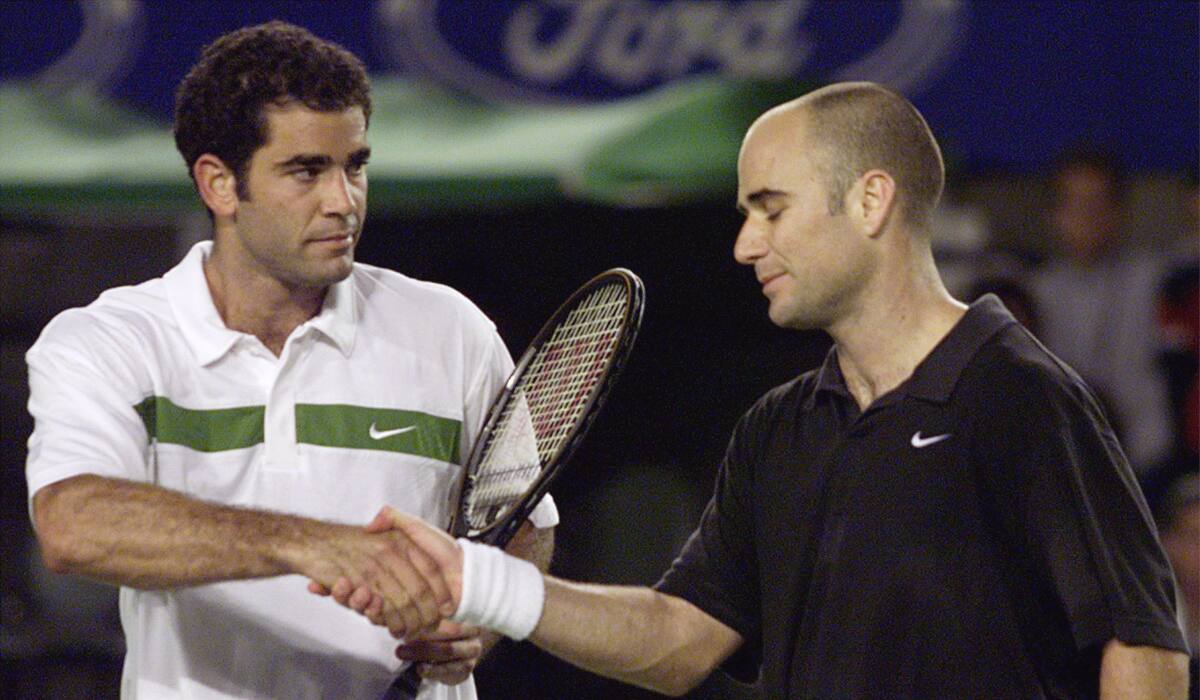
According to ESPN, the ATP agreed, but only if the Slam organisers agreed to give double the prize money that was being given in the Super 9s or what are now called the Masters 1000s events. Till then, the AO had given equal prize money to the men and women, but for the next five years, to give the ATP what they wanted, they had to cut the women’s prize money – something that was finally rectified in 2001.
McNamee, along with Pollard, also oversaw the construction of the world’s first tennis stadium with a retractable roof – the Rod Laver Arena – which they insisted had to be named after a local tennis icon and not a sponsor. The Australian Open is the only Slam in the world which boasts three stadiums with retractable roofs – a must-have in a way, keeping the infamous Melbourne weather in mind, which can change at the drop of a hat. Locals call it experiencing “four seasons in one day”.
Another significant contributor that healed the AO and turned it into a real fan and player favourite was the steadfast support that the tournament has received from the state of Victoria, of which Melbourne is the capital, as well as its administrative, cultural and economic centre. For the longest time, the Victorian government has projected Melbourne as the sports capital of the world. Sports Tourism is a vital facet of the Victorian government’s overall vision for Melbourne. One of my trips to Australia was in 2022, for the men’s T20 World Cup. On that trip, I saw firsthand how seamlessly Melbourne and Victoria managed to deliver a world class event even in the post-pandemic world.
I met with and recorded a podcast with the CEO of Visit Victoria, the tourism board for the state of Victoria, Brendan McClements, who talked about how Melbourne is used to hosting events of that magnitude and that they also know exactly how important it is to put their best foot forward, regardless of the scale of a sporting event. And it was with exactly that vision in mind that the Victorian government began supporting the Australian Open.
In 2010, a contract was signed according to which the state of Victoria pledged almost 1 billion Australian dollars to upgrade and modernise infrastructure at Melbourne Park. And returns have been fantastic. Last year, the AO, which recorded 1.9 billion global fans and 2.3 billion social impressions, generated as much as AUD 565.8 million or over Rs. 36 billion for the economy of Victoria. In fact, in a 10-year period till 2025, the tournament had generated AUD 3.46 billion or Rs. 222.51 billion for Victoria. Now that is what you call a great investment.
Over the years, the AO has not just changed its own image, but that of Melbourne and Victoria too, while going from last in the pecking order to arguably the top spot, across various parameters. In fact, one of the most interesting things to observe is the competition between the four Slams, or more specifically, between the first and last Slams of the year and also the two hard-court Slams – the Australian Open and the US Open. Both tournaments have expanded to proper three-week events to elevate both attendance and revenue.
While the US Open plays the “Fan week” card, the AO has its “Opening week”. The US Open also has its kids’ initiatives and the first week (qualifying and practice) passes are free. The two Slams are played on different kinds of hard courts (Plexicushion for AO and Deco Turf for the US Open), but the aim is the same – to keep working on providing better, more fan and player-friendly experiences.
“I like the fact that the majors are competing because that means a better product is going to be out there for people who love tennis. Again, purely as a tennis lover, I absolutely love it…. but who is winning (competition among the four Grand Slams)? God knows. Every time, at the start of the season, the Australians take it up a notch and then you go to New York and you see something new,” Somdev said.
Sponsors flock to Australian Open
However, whenever a product becomes too popular, there will always be potential pitfalls that one should be wary of. It’s the same with the Australian Open. Tennis Australia chief Craig Tiley was recently quoted as saying, "Cricket's in December. Our objective is we want to own January."
The success that has come with that vision has of course seen multiple brands jumping onto the AO bandwagon, with the tournament being turned into quite a brands’ haven. According to reports, the 2025 edition of the tournament saw as many as 50 sponsors joining the bandwagon – a 35% increase from 2024. Some of the bigger names include the likes of Ralph Lauren, Louis Viton, Rolex, New Balance, Shake Shack, Jacobs Creek and Grey Goose.
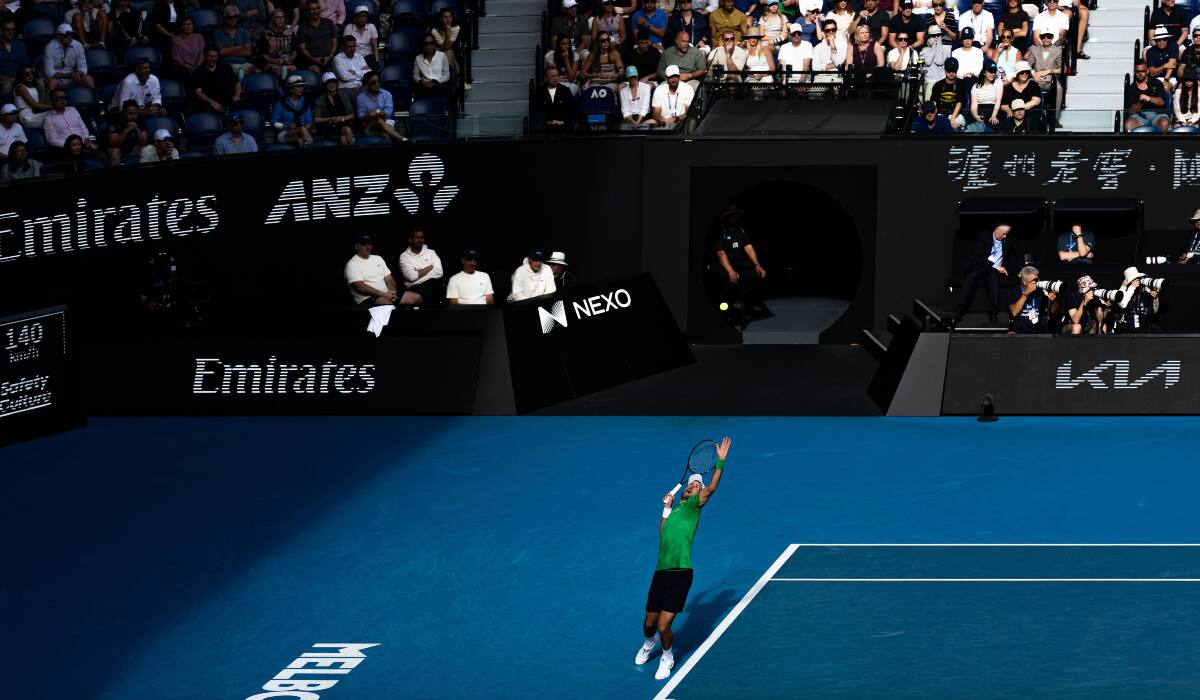
What some brands have also done this year is invite an army of influencers, who have been given access to the grounds as content creators. According to news reports there were about 200 influencers at the tournament during opening week to create substantial buzz. Some might still be there. The influencers are often given premium, courtside seats, backstage tours, and, sometimes, full-tournament accreditation. The perks are often based on the volume of content created and engagement received. Many fans have complained about this because they feel genuine tennis fans are being denied space inside the stadiums to accommodate the influencers. Others feel the overall authentic and easy-going feel of the Australian Open is changing, including the clothes people are wearing to watch the matches – with country colours to support players giving way to fashionable and chic attire (as promoted by the influencers) and that overall, the tournament is becoming more commercial.
The influx of influencers and the surging popularity of the tournament are also adding to the larger problem of overcrowding at the Slam. People have been complaining about the longer queues, fewer available seats at the stadiums, more expensive food, amongst other problems that the regular fans are facing. Former American tennis player and 21-time Grand Slam doubles champion, Pam Shriver, who has been at Melbourne Park this year put up this post on social media, as a potential solution to the long queues - “After a week of seeing forever lines onto courts and eateries, all four majors need to develop an app for spectators and ticket holders to know how long arena lines are. Theme parks have been doing this for years. I feel for people expecting to watch tennis only to queue for hours.”
There have also been reports of unlicensed offshore gambling sites using the Australian Open to lure consumers who are not protected by Australian consumer law on these sites. Consumers could end up losing their money on such websites. The Australian Communications and Media Authority (ACMA), in fact, warned influencers in June last year against promoting any illegal/unlicensed site.
While Wimbledon chose the largely ‘be exclusive’ route, the Australian Open decided to go in the other direction and make the Slam accessible for everyone. And the women and men who have and are still working tirelessly behind the scenes have managed to deliver a supremely successful tennis product, with the year’s first Grand Slam exorcising its past ghosts to ace the tennis marketing and sales game.
Akaash is a former Sports Editor and primetime sports news anchor. He is also a features writer, a VO artist and a stage actor
Tags

Jannik Sinner retains Wimbledon title after beating Alexander Zverev
Noskova outlasts Muchova to claim maiden Wimbledon title in thrilling all-Czech final
Novak Djokovic's record title bid ends as Jannik Sinner storms into Wimbledon final
Muchova outlasts Gauff to set up all-Czech Wimbledon final
Taylor Fritz’s Wimbledon run cut short by knee tendinitis in quarterfinal defeat to Alexander Zverev