


Viswanathan Anand to new-gen chess stars: Growth, glory and the Rs 2 crore question
From not having a single Grandmaster until 1988 to producing 95 of them in less than four decades, India has come a long way in the sport of chess. But how expensive is it to become a Grandmaster in India and how much can you recoup? GM Srinath Narayanan and National Chess Instructor Onkar Jadhav explain...

Chess had witnessed a steady growth in popularity in India ever since Viswanathan Anand, the country’s first Grandmaster, rose to prominence at the global level in the 1990s and became a world champion in the year 2000.
That popularity, however, has exploded in recent years, especially since the COVID pandemic, with the cricket-mad nation suddenly overflowing with world-class chess talent. Anand – widely seen as the individual responsible for popularising modern chess in India – was also a major influence behind this new generation of stars.
Until 1988, India did not have a single Grandmaster. Less than four decades later, that number has quadrupled with Kolkata’s Aronyak Ghosh having become the country’s 95th GM earlier this month. India’s rapid growth as a chess-playing nation can also be gauged from the fact that it ranks in the second spot in both the ‘Open’ and ‘Women’ categories in official Fide rankings for top federations in the world.
 More from Chess
With India suddenly producing so many Grandmasters, one can’t help but wonder about the costs associated with it. Economics, after all, play a big role in a country’s ability to produce top-class sporting talent, whether it be the funds coming in from the Sports Ministry or through sponsors or the costs associated with playing a sport.
Chess, at a glance, might not appear as expensive as golf and shooting, where procuring the requisite equipment tends to burn a hole in the pocket of a middle-class parent. Chess, after all, simply requires a board and a set of pieces. And with the rapid growth of the internet, computers and smartphones, one doesn’t even need a physical board anymore to play the game.
Chess just as expensive as any other sport
And yet the journey towards becoming a Grandmaster isn’t exactly cheap. In an exclusive conversation with Firstpost, Srinath Narayanan – who became India’s 47th GM in 2017 – explains the cost associated with reaching the highest level chess has to offer.
“For getting started, chess is maybe one of the most inexpensive sports out there. You don't need as much equipment and infrastructure. But once you get into the professional fold, I think chess is pretty much as expensive as any other sport out there,” says Srinath.
“And here we can make a distinction between team sports and individual sports. In a team sport, you generally have a system where it takes care of you to a certain extent. Let's say you get selected to a state Under-15 team or the India Under-19 team or the zone teams. You get access to infrastructure, you get access to coaching, your expenses, playing expenses are taken care of etc.
“But chess on the other hand is more comparable with individual games like tennis where mostly you have to take care of yourself on your own in terms of expenses. And it gets super expensive and it is getting more and more expensive as time goes on,” he adds.
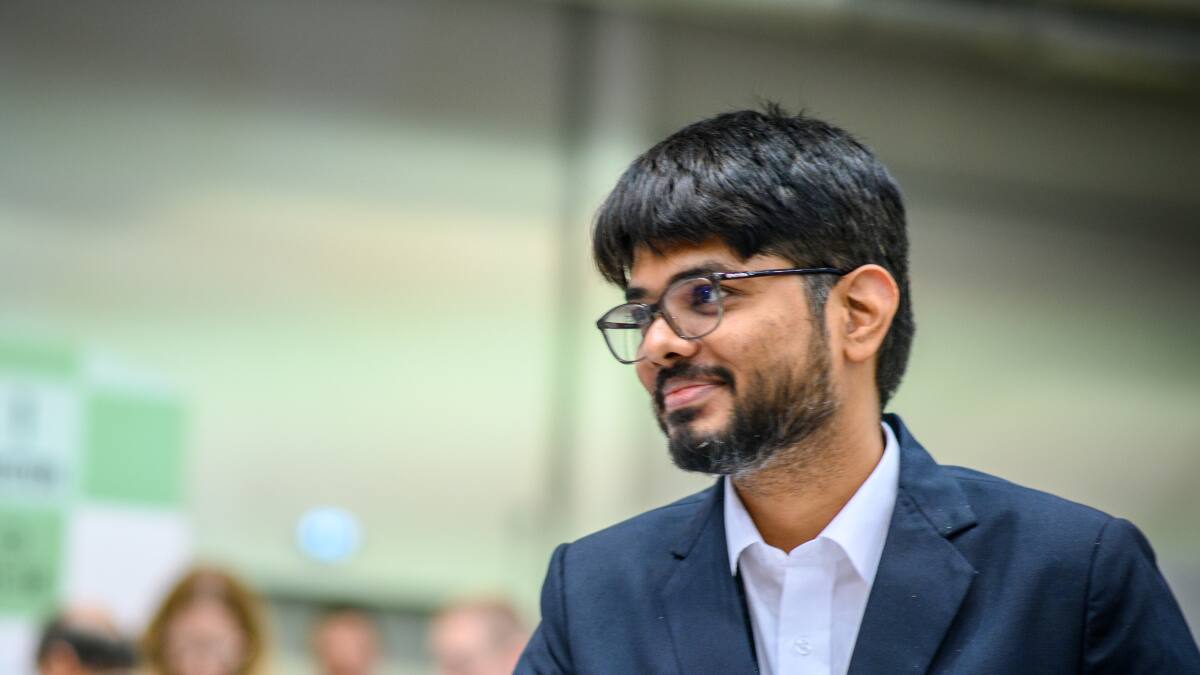
So what exactly makes chess expensive? Srinath, who was the non-playing captain of the Indian ‘Open’ team that won gold at the 2024 Chess Olympiad, points to the travel one has to undertake to compete in overseas events, a crucial step towards boosting one’s rating and achieving the norms needed towards becoming an International Master or a GM. That and the money spent on training.
“Travel and training. These are the two main heads. And travel is almost pretty much an essential thing. There are limited tournaments happening in India. And the tournaments outside in Europe are the most conducive for increasing your rating, earning norms and all these things.
“But travel to Europe has always been expensive. But it has become more and more expensive especially post-COVID. In general, travel, air tickets and hotels have become much more expensive. And I guess now with the West Asia war, it's said to be more expensive. So, the travel part was always an expensive aspect. But it is becoming more and more expensive as time goes on.
“And it has become more and more essential to be able to go out and play tournaments abroad. Because rating is generally calculated based on the pool in which you play. And if you play exclusively Indians, Indians playing Indians, it's an underrated pool. And everyone tends to stay at a lower rating. So, you need to go outside that rating pool in order to better your chances of increasing that rating,” the 32-year-old goes on.
Also Read | Want to become a chess grandmaster? 'Keep Rs 70 lakhs ready'
Onkar Jadhav, a National Chess Instructor who runs the Genius Chess Academy in Nashik, Maharashtra, has an approximate number for that cost that he shares in an exclusive chat with this website – anywhere between Rs 1.5 to 2 crore.
“Chess is very expensive. Firstly because of chess coaching. From what I have read about grandmasters so far, they have to spend a minimum of 1.5 to 2 crore rupees to become a grandmaster,” says Jadhav, who counts rising star Aarit Kapil among his former pupils.
“It’s not that expensive for a beginner. But if you want to make your player to 2000-rated, then you have to hire a coach who is rated 2000, 2100 or 2200. And such coaches charge a minimum of 1,500 to 2,000 rupees per hour.
“Secondly, we have to play different tournaments to increase the rating. In India, there are different tournaments in different states. A Classical tournament takes place over the course of six days at the very least. You have tournament entry fees as well as other expenses such as travel, accommodation, food. Parents are also required to stay with players at times.
“And it’s not as if your rating will automatically increase simply by participating in a tournament. Sometimes you gain valuable experience. So on an average, one ends up playing 15-20 tournaments just to reach the 2000-rating,” he continues.
‘It's not always about hard work’
Jadhav also reveals a harsh reality about chess in India – that talent alone doesn’t guarantee a player a place at the top. Money, and sometimes luck, also play a huge part in deciding which chess talent gets to become a Grandmaster.
“Some players manage if their parents are rich. Otherwise, it becomes very challenging. I have been coaching since November 2011, and my experience tells me that talent isn’t the only factor. Money matters a lot as well. And if a child is talented, sponsors should step forward to support him or her. There should be a scenario where a national champion or a medallist at a global event gets direct sponsorship, which is not the case at the moment. Yes, they are talented students but if they have a little money problem, they automatically fall behind.
“It depends on luck. Actually, it's not always about hard work. I won't take names, but there are a lot of players whose rating is low, but they have a sponsorship.
“And the problem is the correct approach. There is no such team in India that has reached out to different sponsors and reached out to these talented children. I mean, if a team does this kind of work. There are sponsors and there are talented kids. But there is a lack of mediators who are able to connect a sponsor with the talented children,” Jadhav further reveals.
How much do players earn in chess?
But what of recovering the amount spent on becoming a chess player? Does chess offer a decent income to those who decide to turn professional and decide to earn a livelihood through playing the sport? Srinath and Jadhav offer answers, both of which are true but at the same time are contrasting.
Srinath, who has coached top stars such as Arjun Erigaisi, Nihal Sarin and 2025 Women’s World Cup Divya Deshmukh, reveals that the rise in the number of Grandmasters has made it difficult for an exceptional player to stand out in India, which in turn affects one’s ability to attract a sponsor and get a decent income.
“There are more and more promising talents out there. It was easier to stand out, especially in the era that I was playing. There was a handful of promising talents who you felt like they could challenge the world-class players out there. But now, the talent surplus is insanely high in India right now. Even for a very special prodigy, it's very hard to stand out. And since it's hard to stand out, it's also for the limited inflow of money flowing into chess through sponsors for it to reach sufficiently for one particular talent,” Srinath reveals.
“For grandmasters, the sources of income are very limited from playing. Because the number of grandmasters has increased substantially again. This was a limited and manageable number in the 90s. Already by 2000, the number of grandmasters started increasing. But they were limited in India. So, you could make a thriving career out of just playing chess.
“But with the amount of grandmasters having increased enormously, there is very limited earning that you can make just from playing post-expenses exclusively. But teaching chess in general is a way that a lot of players support themselves to have that guaranteed cash flow while they support their playing careers. And teaching chess goes into a profession on its own as well, if a player becomes semi-active or completely detached from playing.
“And teaching can be either through group classes or individual classes. Or you can make courses which is also another form of teaching where you record content and you put it out there, you sell it. And people buy it. So, these are some of the top ways,” he adds.
Streaming on websites such as YouTube and Twitch has also become a career option for chess talents and top players such as world No 2 Hikaru Nakamura and American GM Hans Niemann have a massive following online. Srinath, however, reveals that while streaming certainly has taken off in recent years, especially post-pandemic, the success rate remains relatively low.
“Especially post-pandemic, streaming and content creation became a new channel. But this also remains very limited in terms of success rate. I think even more limited than playing chess. The number of successful people from streaming and content creation is maybe 1 in 100 or 1 in 1000.
“A lot of people try it, but the content creation platforms like Instagram and YouTube are oversaturated with creators. There is so much competition out there. The number of people who go on to become successful is very limited.”
‘The invested amount is recovered quickly’
Jadhav, on the other hand, reveals that one can quickly recover the money spent into becoming a GM primarily through coaching, with factors such as participating in overseas tournaments with a bigger prize pool and even getting appearance money for events helping fill one’s coffers even more quickly. He adds that GMs are also offered public sector jobs in departments such as railways, for further stability.
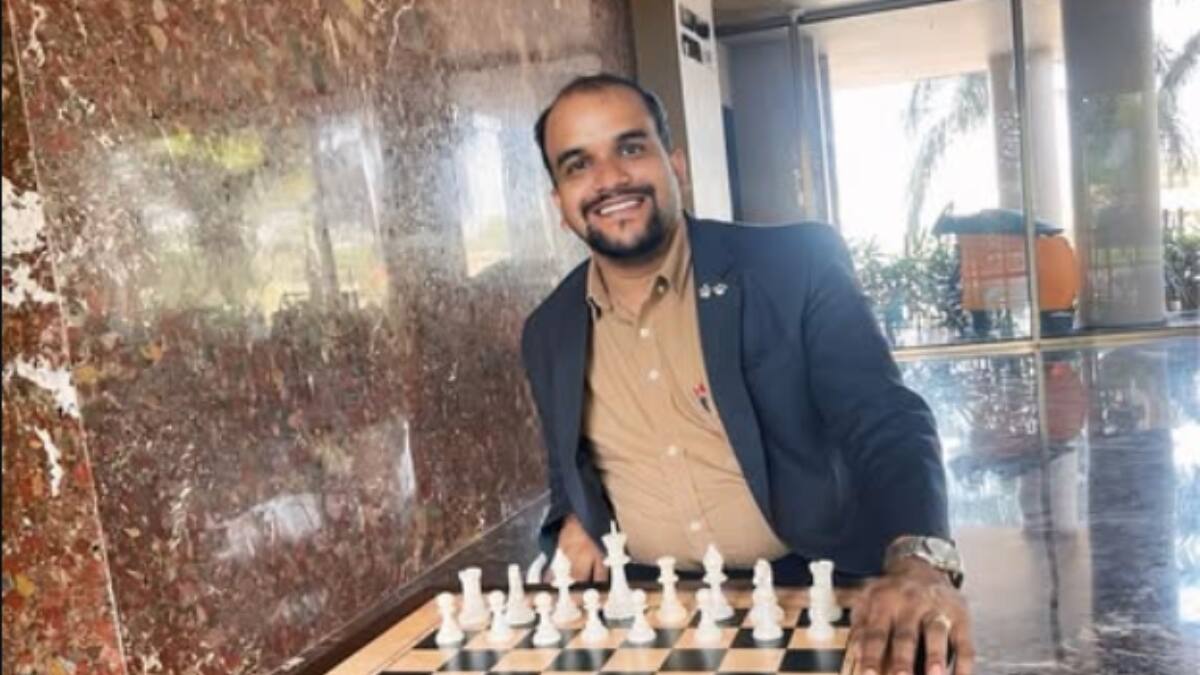
“Coaching is a consistent source for all these players. Because of this, now if you look at it, in India, in a country of 140 crore population, there are only 95 Grandmasters. Gukesh is a world champion. Vaishali is a world championship challenger. Because of this, they are representing every coach to publicise chess. They are representing every GM,” Jadhav reveals.
“Because of this, chess is booming a lot in India, which has resulted in parents believing that they should introduce their children to chess and do well in the sport. And because we have only 95 GMs, the demand for chess coaching has automatically increased. Maharashtra is such a big state, but there are only two-three Grandmasters actively coaching in a state with a population of 13-14 crore people, among whom lakhs of people play chess.
“So I feel that if a player reaches the level of a Grandmaster, or even an IM or an FM, and if he or she makes optimal use of that level, then 1.5-2 crores is a very small amount, when comparing the investment with the outcome. The invested amount is recovered quickly. Because no matter how strong a player you are, in India you get a minimum of Rs.5,000-7,000 per hour for coaching at the Grandmaster level,” adds Jadhav.
So while Indian chess certainly has benefited from the post-2020 boom in terms of its stature at the global level, it has certainly become a lot more competitive for those who intend to pursue it as a career option. Then again, that's exactly how one would describe cricket and its explosion in India.
A Bombay Bong with an identity crisis. Passionately follow cricket. Hardcore fan of Team India, the Proteas and junk food. Self-proclaimed shutterbug.
Tags

V S Rathanvel becomes India’s 99th grandmaster, fulfils long-awaited dream after crossing 2500 Elo rating
Aswath S becomes India's 98th Grandmaster, 17-year-old secures third GM norm with win over FM Vaidyanathan
R Praggnanandhaa finishes joint third; Gukesh sixth at Zagreb Grand Chess Tour; Alireza prevails
R Praggnanandhaa falls back, Firouzja rockets ahead in blitz at Zagreb Grand Chess Tour
Gukesh explains Super Rapid & Blitz Croatia participation even as classical world title defence looms: 'I thought...'