


Violence in Bengal is undergirded by history: Power struggles in state have always been marked by bloodshed
Violence has engulfed Bengal over the past fortnight and more as an ascendant BJP takes on the ruling Trinamool Congress in a fight for very, very valuable and very, very contested political turf

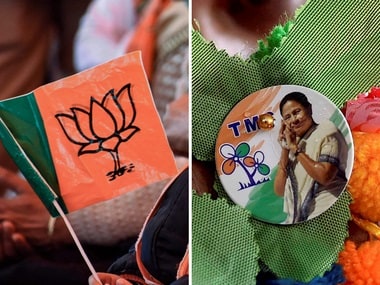
Representational image. News18[/caption]If we were to create a typology of this kind of violence, we would have two categories: The 'normal' and the 'extraordinary'. Normal political violence happens when there is a stable regime and extraordinary violence flares up at times of regime change or when there is a possibility of regime change.Normal political violence is usually directed at the Opposition by those in power. Siddhartha Shankar Roy's Congress government unleashed a relentless campaign of violence against all opponents of his regime from 1972 to 1977; thereafter, the Left Front government did the same, though, perhaps, a touch less ruthlessly; and the TMC has done the same in its chaotic, indiscriminate fashion.Extraordinary violence was witnessed in 1977, when the Congress government, reading the signs, sought to hold on to power. In the years between 2008, when the Left Front suffered significant losses in panchayat elections, and 2011, when the TMC finally came to power, there were years of orgiastic violence. That is what we are probably seeing now, all over again.With 18 parliamentary seats out of 42, just over 40 percent of the vote and a government in Delhi with a huge mandate, the BJP, not unreasonably, senses that it could force regime change in Bengal and come to power in the state for the first time. Who would have thought it? Led by Chief Minister Mamata Banerjee, a street-fighting and streetwise politician, a huge majority in the Legislative Assembly and an enhanced share of the vote in the just-concluded elections, the TMC is determined to protect its redoubt. And why not?In this conjuncture, then, the violence that is raging through Bengal is structural and undergirded by history. The BJP's cards are out in the open: It is raising the stakes. The party has made its intentions clear by having the Union Ministry of Home Affairs (MHA) issue an advisory to the state government seeking details about measures taken by it to maintain law and order and tranquility. The TMC's riposte was swift. Party leader Partha Chatterjee called it a 'plot by the BJP leadership to disturb peace in the state. This is simply a conspiracy for disturbing the state government'. He added, ominously, "We will respond accordingly."On a more sober note, Bengal chief secretary Malay De replied that the situation was under control and that the government had taken the best possible steps to instil confidence in the people in violence-torn areas.West Bengal governor Kesharinath Tripathi left for Delhi on Sunday and will meet the prime minister on Monday. There can be little doubt that Bengal will feature in the discussions. There is even lesser doubt that what Tripathi will have to say about the state government will be less than flattering. The paranoid might think that the ground is being prepared to execute some kind of a plan to corner the TMC government.But all of this is part of the official process. Tripathi's visit to Delhi, his appeal for peace and the MHA advisory are not going to cut much ice. The TMC has built up over the past eight years a formidable army. On the ground, it is certainly more formidable than that of the BJP, despite its electoral gains. As the BJP keeps raising the stakes, seeing its prize so close to its grasp, Mamata's army will fight back with all the violence of which it is capable.We don't know when the next Assembly elections will be held in Bengal. It could be 2021, as scheduled, or it could be earlier. Many believe it could be held as early as this year, if a sufficient number of TMC MLAs jump ship. The problem is that whoever next comes to power in Bengal won't have an easy ride. The reason for this is that if you are waiting for peace and tranquillity to return to Bengal, you'll have to hold your breath for a very long time.

Rahul Gandhi, Kharge lead protest near PM residence; Centre says Parliament discussion was offered
Parliament's Monsoon Session from July 20: Key bills, numbers game to dominate agenda
Major blow to Uddhav Thackeray as six Lok Sabha MPs join Shinde camp
12 years and counting: NDA leaders felicitate PM Modi as he trumps Nehru's tenure record
‘Trust, progress and welfare’: PM Modi celebrates 12 years in office, highlights big policy moves