


Satya Pal Malik's decision to dissolve Jammu and Kashmir Assembly does great disservice to democratic traditions
It is Satya Pal Malik's job to ensure that justice is not only done but is also seen to be done in Jammu and Kashmir. He has failed on this count.

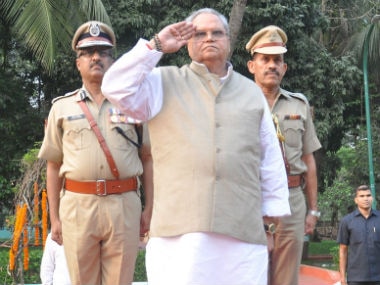
Governor of Jammu and Kashmir Satya Pal Malik. PTI[/caption]Thirdly, a democratic instinct would have dictated that if a new coalition of political parties is trying to form a government, the governor should give it an opportunity, ask it to prove its majority by way of letters pledging such support or even physical demonstration of the numbers before being called to form a government and go through the floor test. If there were two competing claims – Sajjad Gani Lone of the People’s Conference claiming support of the BJP and 18 legislators from other political parties to form a government – the governor should have asked both to prove their bona fides. If preventing horse-trading is the noble cause for dissolving the Assembly, then that would have been equally valid if the BJP had succeeded in breaking away a faction of the PDP to form a government, or Lone gathering 18 legislators of other parties for the same purpose. How is it a concern only when a coalition does not involve the BJP?It is clear that the governor made no attempt to verify any of the claims. He did not give time or acknowledge the PDP-led new alliance’s claims. Instead, he ordered dissolution of the Assembly as if he was in a hurry to prevent it from coming to power. Whether that is what actually motivated him is of no consequence. It is his job to ensure that not only justice is done in such a situation – which is to act impartially and fairly to uphold the dignity of the office and democratic processes – but also is seen to be done. He has failed on this count.It is precisely these kind of actions in the past that gave rise to the demand for abolition of the office of the governor. In living memory, such demands began from the time of the Sarkaria Commission on Inter-State Relations in the 1980s. More recently, Nitish Kumar made such a demand at the Inter-State Council meeting in New Delhi in 2016 following the Supreme Court’s criticism of the Arunachal Pradesh Governor over dismissal of the Congress government there and in some Opposition-ruled states. In all these cases, governors were accused of acting politically at behest of the Centre. The role of governors in installation of governments in Goa, Manipur, Meghalaya, or such attempts in Karnataka and Uttarakhand are too recent to warrant detailing.Abolition of the governor’s office may not be the right way to go about improving the functioning of this constitutional office, as it forms an essential part of the constitutional framework, but a revisit to the process of appointment and choice of candidates is certainly warranted. Since the days of the Sarkaria Commission, recommendations have been made from time to time by many, including the Administrative Reforms Commission, about how to ensure political neutrality of the office of the governor by adopting a transparent and consultative process of appointments and making the right choice of individuals for such appointments. There is nothing new in this formulation but as someone rightly said, “Everything has been said before, but since nobody listens we have to keep going back and beginning all over again”.

Rahul Gandhi, Kharge lead protest near PM residence; Centre says Parliament discussion was offered
Parliament's Monsoon Session from July 20: Key bills, numbers game to dominate agenda
Major blow to Uddhav Thackeray as six Lok Sabha MPs join Shinde camp
12 years and counting: NDA leaders felicitate PM Modi as he trumps Nehru's tenure record
‘Trust, progress and welfare’: PM Modi celebrates 12 years in office, highlights big policy moves