


Khajuraho and beyond: Exploring Bundelkhand’s hidden heritage
This spring, go beyond Khajuraho’s famed temples to uncover the forts, shrines and forgotten legacies that quietly shape Bundelkhand’s enduring heritage

The spring sun is most pleasant, and the weather is near-perfect for travelling to heritage destinations across the country. With the famed Khajuraho Dance Festival taking place between February 20 and 26, the temple town will witness hordes of visitors to watch a showcase of Bharat’s living heritage in the backdrop of rich architecture.
While those visitors will have various ‘erotic’ elements pointed out to them in Khajuraho’s temples, they would do well to spend some time travelling the countryside around and explore heritage nuggets hidden away. Here is a set of places they could add to their itinerary:
Kalinjar Fort (Banda district, UP; 95 km northeast of Khajuraho): This mighty fort sits on a Vindhyan hill and is a repository of history across eras. Its rich history ranges from the Guptas and Chandellas to the Sultanate period rulers of Delhi to the Marathas. Coveted and fought over, it bears the scars of many a battle. One of the most notable casualties beneath its walls was Sher Shah Suri. It is more than a fort and contains the remains of a sizeable city within, from palaces to shrines to bathing tanks and more. A focal point is the Neelkanth Temple, originally a cave shrine but with elaborate carvings made across the hill on which it stands. Most striking is a Shiva depiction in the Nataraja form, carved into the hill wall.
 More from Opinion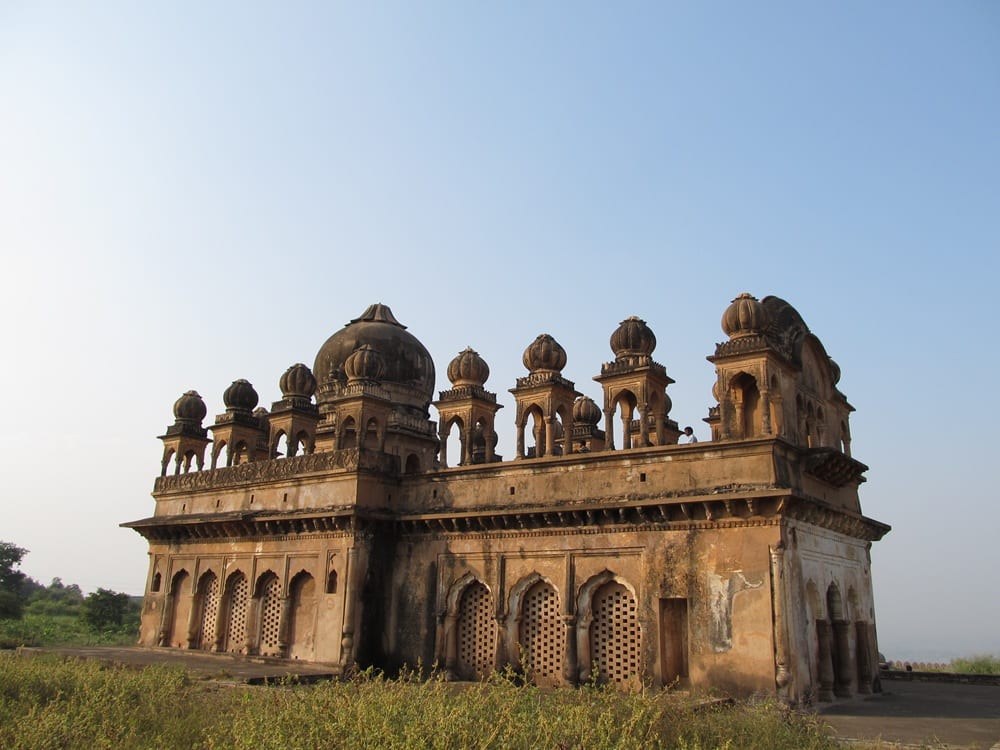
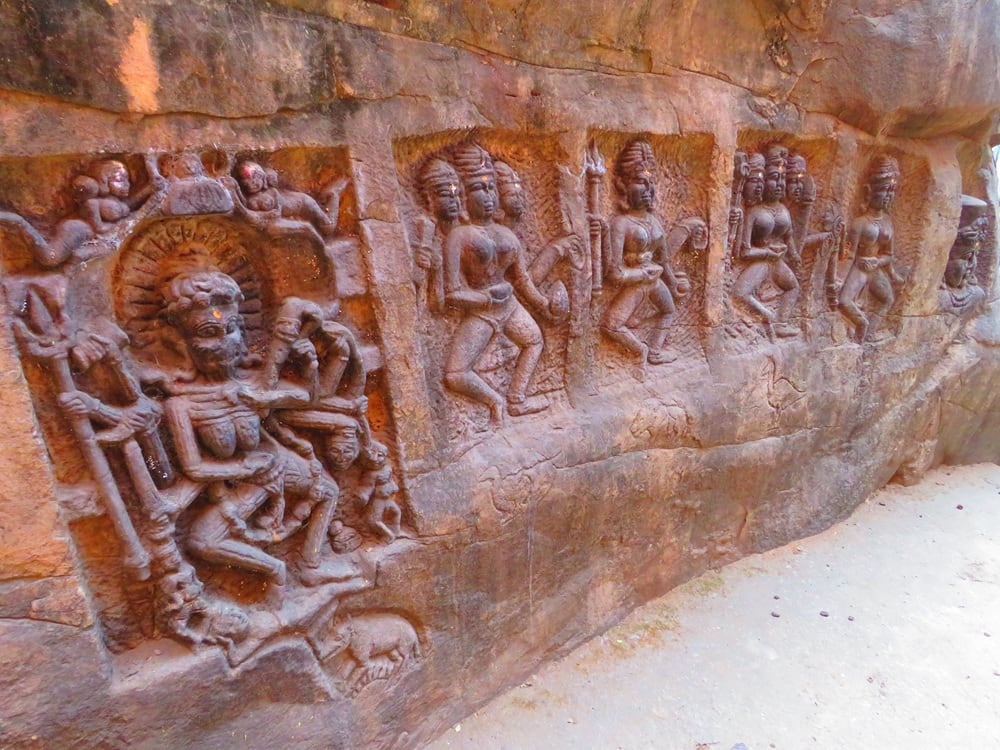
Yogini Shila, Chitrakoot (Satna district, MP; 157 km northeast of Khajuraho): Located in a quiet spot just beyond the crowds that throng Sati Anusuya Temple at Chitrakoot, this site essentially comprises a huge boulder with carvings around it. Overlooking a river, it is in a little-visited spot. Possibly dated to the 10th century CE or earlier, the carvings depict a number of Yoginis, complete with their weapons and celestial vehicles. There are also depictions of Shiva, with Nandi, and Ganesha. Like most Yogini sites, this too is associated with Tantric practices and is locally referred to as ‘Pret Mochani Shila’ – implying that the place was once used for exorcism.
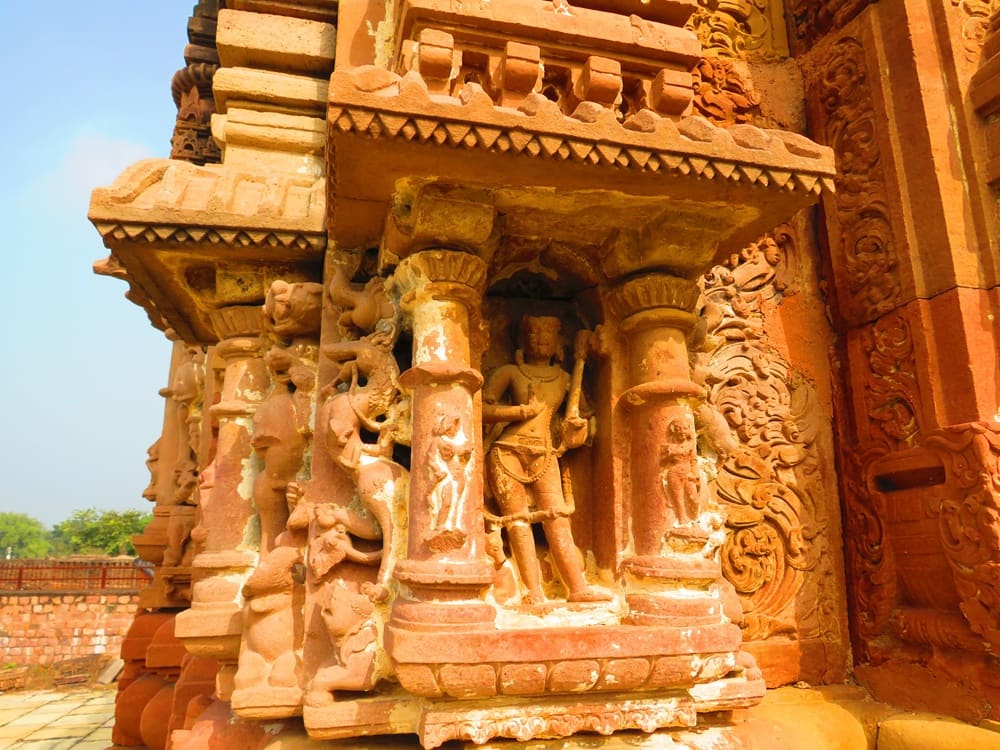
Surya Temple, Banjari (Chattarpur district, MP; 55 kms northeast of Khajuraho): Standing at the edge of Banjari village, this 12th-13th century CE shrine dedicated to the Sun God was built by the Chandellas. Elaborately carved on its exterior, it has Surya on a chariot drawn by seven horses above its lintel, giving the temple its identity. The current presiding deity is Shiva. While the temple has seen limited restoration, there is ample evidence of having been severely damaged at some point in its history – the shikara is ruined and has been put together again during restoration, and the mandapa is entirely lost, and only the bases of pillars remain along with a Nandi. There is a Torana which stands separated from the main shrine due to the loss of the mandapa which connected the two. Hearteningly, it remains a place of worship for the people of the village.
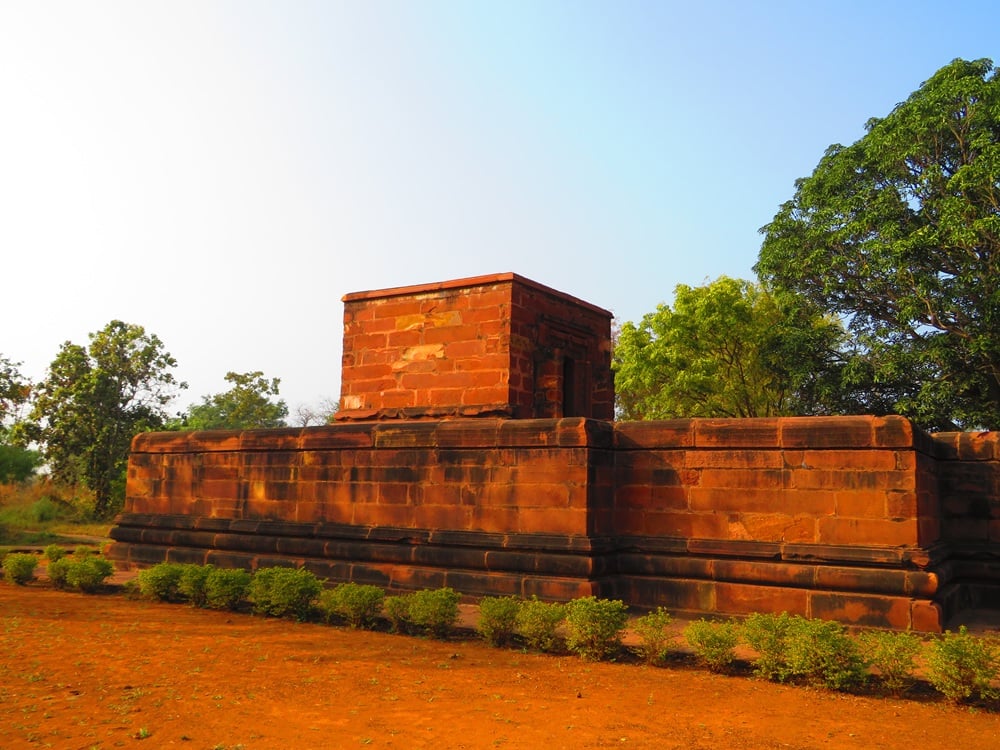
Bhumara Shiva Temple (Satna district, MP; 126 km east): Located on what appears to be a plateau-shaped part of the Vindhyan range, the temple stands on a high platform and is incredibly simple in its design. Perhaps the oldest temple in all of central and north India, it has been dated to the 5th century CE Gupta period. It was built at a time when temple construction was still nascent, with the shikhara still an idea whose time was to come – hence, the simple design. The doorjamb reveals the first signs of iconography, and inside the shrine is an Ekamukha Shiva Linga, complete with a third eye. This idol is considered one of the greatest examples of Gupta period art. There seems to have been more to the site than this temple, given the number of artefacts from here housed in museums in places such as Prayagraj.
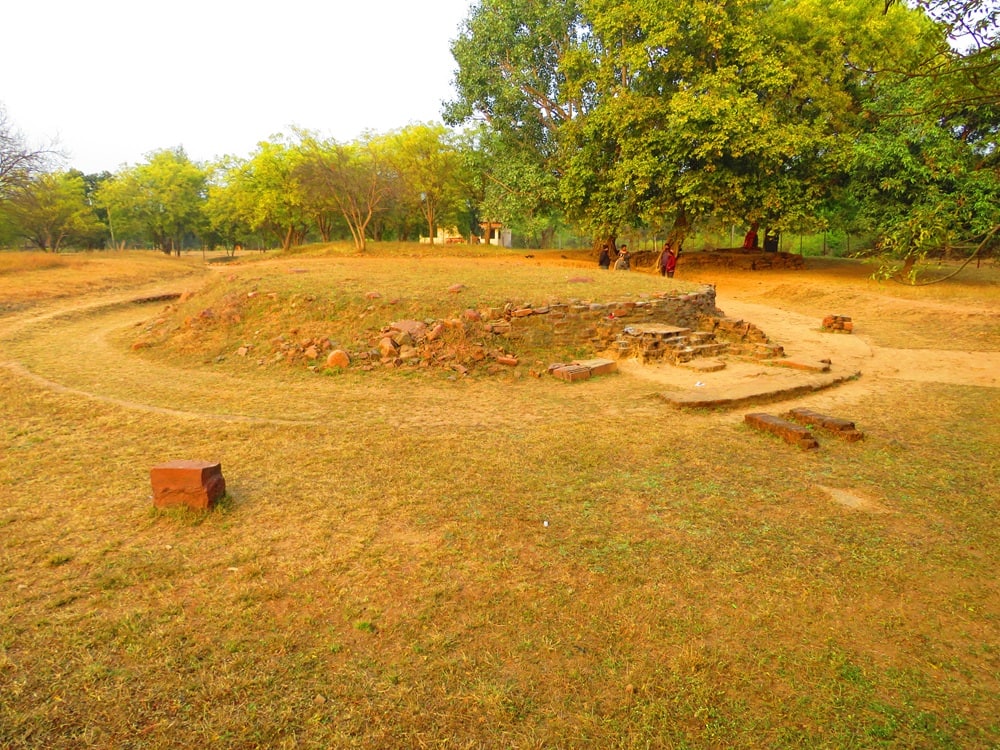
Bharhut Stupa site (Satna district, MP; 125 km east): One of the saddest historical sites in the region is at Bharhut. Once home to a spectacular stupa, whose core was built by Ashoka and added to later by the Sunga dynasty, it is largely bare now. The stupa had been damaged over time, and material from it had been stolen, with several pieces being used in buildings of nearby villages. Today, parts of its elaborately carved railings and iconography are seen in the Indian Museum, Kolkata. The hills behind look full of promise for heritage exploration and are said to contain more remains.
Art Ichol (Satna district, MP; 127 km east): For art lovers who may have had a surfeit of history and heritage, Art Ichol is the place to head for. Located on the Satna-Maihar road, Art Ichol is a commune for artists, photographers and craft enthusiasts to come together and collaborate on ideas and concepts. In its tranquil grounds, visitors get the opportunity to see several incredible art installations and interact with resident artists.
This is only a brief list – a longer one would include sites from the district of Panna, which has more thousand-year-old temples in places such as Nachna Kuthara, not to forget the massive Ajaigarh Fort and the Panna National Park and Tiger Reserve. For nature lovers, there are boat safaris on the Ken River and views of the Raneh Falls. And if you are the sort who just wants to relax and unwind, try out MP Tourism’s new property on Kutni Island for a laidback time.
(The author is a heritage explorer with a penchant for seeking obscure sites. A brand consultant by profession, he tweets @HiddenHeritage. Views expressed in the above piece are personal and solely those of the author. They do not necessarily reflect Firstpost’s views.)

The Russia-Ukraine war: Why peace remains so elusive
Head-on | Why President Trump is targeting India
When Manila and Tokyo draw a line, Beijing draws a red line
Bangladesh gets a new envoy to reset its India ties
Escalation trap to an exit strategy: How can the Iran war end?