
Advertisement


Sections
Category Error: Of a community's small pleasures, Biblical plagues, and lives lived on a fault line
In 'Category Error', writer-painter Amruta Patil marries news-triggered observation with fiction, history, philosophy, against the backdrop of an Indian high rise.

In a new column, 'Category Error', Amruta Patil marries news-triggered observation with fiction, history, philosophy, against the backdrop of an Indian high rise.Read more from the series here.***1 | Plague of LocustsUnprecedentedly large swarms of desert locusts were flying into India, having made their way across Iran and Pakistan — the three nations were sullenly forced to collaborate on strategies to address the plague.Thread-worn from the battering, breaking news, it was hard for people not to take this terrifying new development personally. Every time I think this year cannot get any worse, it finds new ways to attack us. Was it not enough that no one could leave home because anything at all — a sneeze, a contaminated doorknob — could kill them?The writer in apartment B603 of Atlantis Co Operative Housing Society did not take the terrifying new development personally. Earmarked in her copy of the Bible was the section about 10 plagues leveling Egypt and its hard-hearted Pharaoh: 1) bloody ‘red tide’ of algae 2) inundation of frogs 3) infestation of lice 4) rampage of wild beasts 5) disease upon domesticated cattle 6) boils 7) fiery hail 8) plague of locusts 9) plague of darkness 10) the death of firstborns. Locked into mythology, observed the writer, these events are a record of natural history! The boils were likely caused by Staphylococcus aureus bacteria. The fiery hail by a volcanic eruption on Santorini Island. The darkness by eclipse or volcanic ash. And the locusts, not unlike those carpeting Jaipur and demolishing fields in Punjab.[imgcenter]![locusts]() [/imgcenter]The writer’s libertine beloved, also a writer, was interested in the pathology of locusts. Under specific climatic conditions, these solitary creatures did a behavioural about-turn and transformed into a highly gregarious phenotype. They grew stronger muscles. They changed from harmless dowdy brown into toxic yellow-black. Gathering into massive groups, reproducing furiously, they stormed across lands laying waste to all field and vegetation, eating almost everything human beings ate.The transformation of locusts, the libertine noted, was no different than that of humans in a marauding communal mob.
[/imgcenter]The writer’s libertine beloved, also a writer, was interested in the pathology of locusts. Under specific climatic conditions, these solitary creatures did a behavioural about-turn and transformed into a highly gregarious phenotype. They grew stronger muscles. They changed from harmless dowdy brown into toxic yellow-black. Gathering into massive groups, reproducing furiously, they stormed across lands laying waste to all field and vegetation, eating almost everything human beings ate.The transformation of locusts, the libertine noted, was no different than that of humans in a marauding communal mob.![cyclone]() [/imgcenter]One of the watchmen housed gratis in apartment E101 of Atlantis Co Operative Housing Society was awaiting word from his family. Their home was hit by the Grade 5 tropical cyclone in East India — the compound wall had collapsed, there was no electricity, water or mobile network. In the flooded room, a dhurrie bobbed like an out-of-steam magic carpet.Another watchman had a biradri brother in the North West, armed with pesticide, waiting for locusts to ravage the crop standing on the depleted soils of the fields he laboured in. The third watchman knew the Hanuman Chalisa by heart, and he quietly recited it for the benefit of them all.Unbeknownst to them, all the watchmen (and all the buildings they guarded) were precariously perched atop a tectonic plate prone to shivering like a cow upon whose flanks flies had descended.3 | An Eid Without RoohafzaThe shopkeeper supplying provisions in the area had received half a dozen queries about the availability of Roohafza Sharbat from the sweet-voiced woman in B402 Atlantis. He was intrigued by her persistence. Was she young? Was she old? Was she seduced by the odd selection of fruits, roses and vegetables (carrots! spinach!), on that Garden of Eden-like label? Who drank Roohafza anymore? His own children only drank Sprite.The shopkeeper’s godown had no Roohafza bottles.Look somewhere, the woman pleaded. If nothing else, Dabur Sharbat-e-Azam will do. It escalated to a dire request, Send Mala’s Rose Syrup at least?[imgcenter]
[/imgcenter]One of the watchmen housed gratis in apartment E101 of Atlantis Co Operative Housing Society was awaiting word from his family. Their home was hit by the Grade 5 tropical cyclone in East India — the compound wall had collapsed, there was no electricity, water or mobile network. In the flooded room, a dhurrie bobbed like an out-of-steam magic carpet.Another watchman had a biradri brother in the North West, armed with pesticide, waiting for locusts to ravage the crop standing on the depleted soils of the fields he laboured in. The third watchman knew the Hanuman Chalisa by heart, and he quietly recited it for the benefit of them all.Unbeknownst to them, all the watchmen (and all the buildings they guarded) were precariously perched atop a tectonic plate prone to shivering like a cow upon whose flanks flies had descended.3 | An Eid Without RoohafzaThe shopkeeper supplying provisions in the area had received half a dozen queries about the availability of Roohafza Sharbat from the sweet-voiced woman in B402 Atlantis. He was intrigued by her persistence. Was she young? Was she old? Was she seduced by the odd selection of fruits, roses and vegetables (carrots! spinach!), on that Garden of Eden-like label? Who drank Roohafza anymore? His own children only drank Sprite.The shopkeeper’s godown had no Roohafza bottles.Look somewhere, the woman pleaded. If nothing else, Dabur Sharbat-e-Azam will do. It escalated to a dire request, Send Mala’s Rose Syrup at least?[imgcenter]![eid]() [/imgcenter]Oddly moved, the shopkeeper took it upon himself to score some Roohafza from a distant relative in another part of town, for the voice at the other end of the telephone. There hadn’t been much for her community to celebrate this year, he thought, little in the way of small pleasures and victories…***Writer-painter Amruta Patil is the author of graphic novels Kari, Adi Parva: Churning of the Ocean, Sauptik: Blood and Flowers, and Aranyaka: Book of the Forest. On Instagram: @amruta_gauri
[/imgcenter]Oddly moved, the shopkeeper took it upon himself to score some Roohafza from a distant relative in another part of town, for the voice at the other end of the telephone. There hadn’t been much for her community to celebrate this year, he thought, little in the way of small pleasures and victories…***Writer-painter Amruta Patil is the author of graphic novels Kari, Adi Parva: Churning of the Ocean, Sauptik: Blood and Flowers, and Aranyaka: Book of the Forest. On Instagram: @amruta_gauri
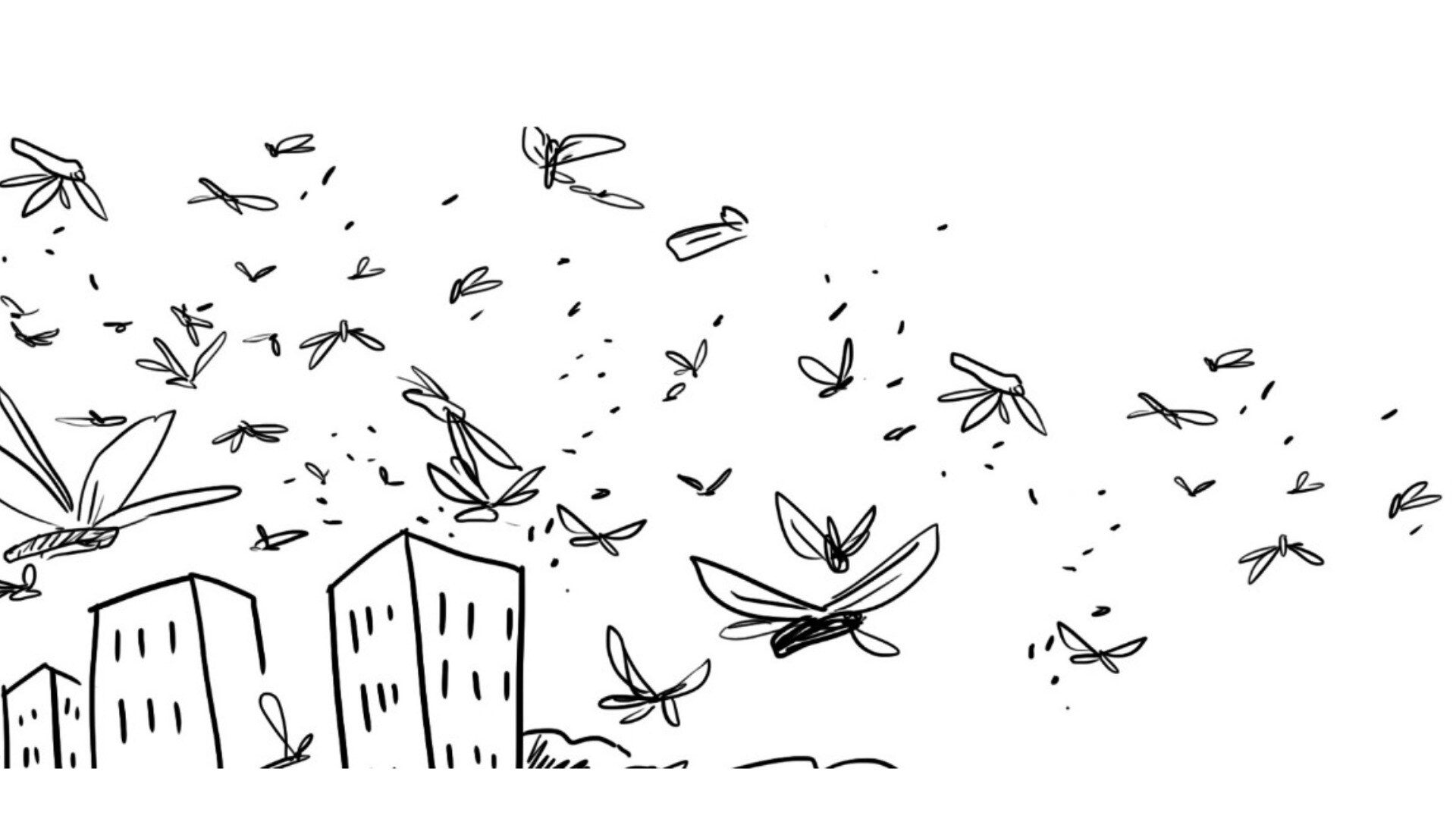 [/imgcenter]The writer’s libertine beloved, also a writer, was interested in the pathology of locusts. Under specific climatic conditions, these solitary creatures did a behavioural about-turn and transformed into a highly gregarious phenotype. They grew stronger muscles. They changed from harmless dowdy brown into toxic yellow-black. Gathering into massive groups, reproducing furiously, they stormed across lands laying waste to all field and vegetation, eating almost everything human beings ate.The transformation of locusts, the libertine noted, was no different than that of humans in a marauding communal mob.
The swarm was not a sum total of its components. It was a beast, a force in itself.2 | News from Family[imgcenter]
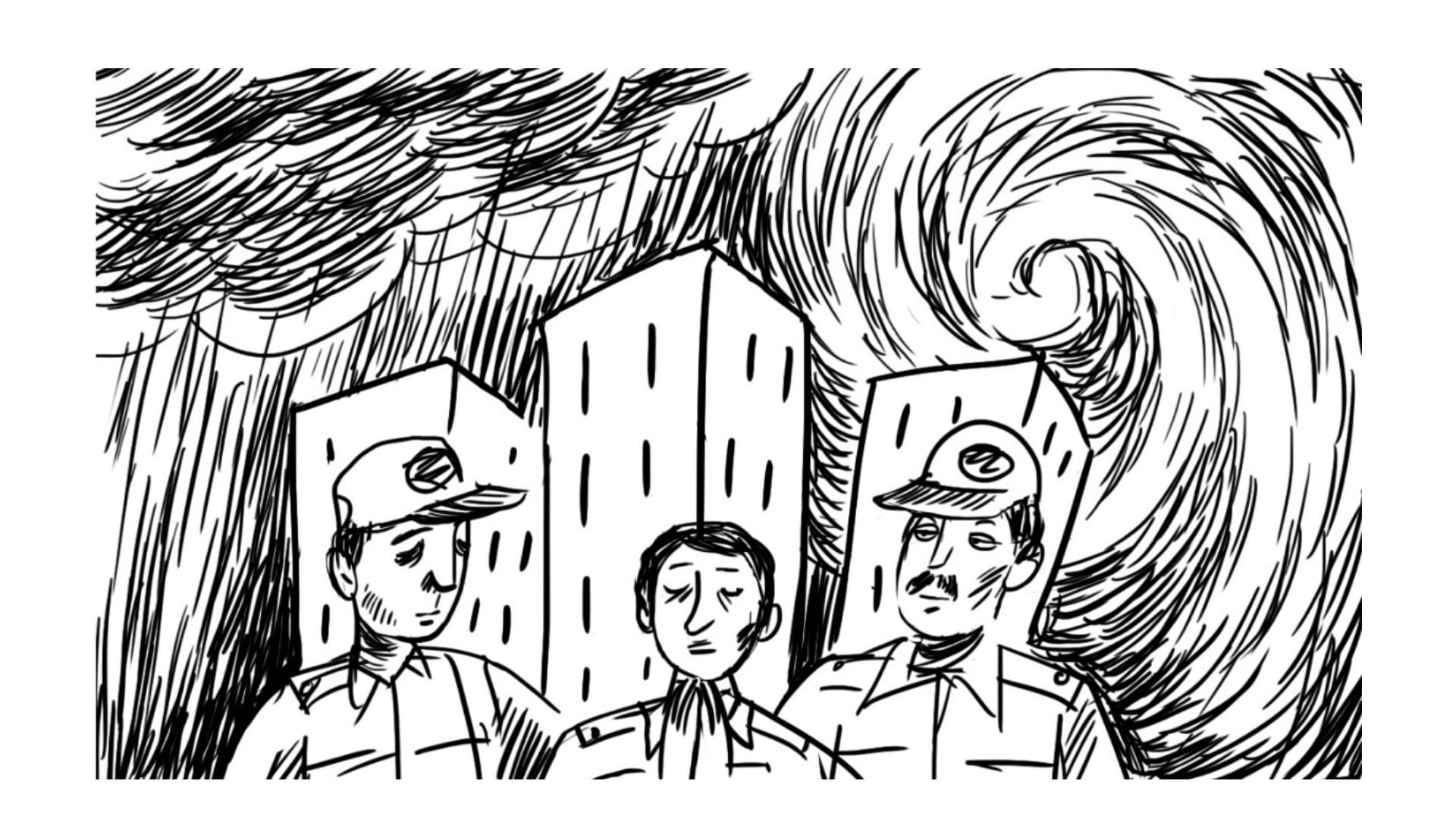 [/imgcenter]One of the watchmen housed gratis in apartment E101 of Atlantis Co Operative Housing Society was awaiting word from his family. Their home was hit by the Grade 5 tropical cyclone in East India — the compound wall had collapsed, there was no electricity, water or mobile network. In the flooded room, a dhurrie bobbed like an out-of-steam magic carpet.Another watchman had a biradri brother in the North West, armed with pesticide, waiting for locusts to ravage the crop standing on the depleted soils of the fields he laboured in. The third watchman knew the Hanuman Chalisa by heart, and he quietly recited it for the benefit of them all.Unbeknownst to them, all the watchmen (and all the buildings they guarded) were precariously perched atop a tectonic plate prone to shivering like a cow upon whose flanks flies had descended.3 | An Eid Without RoohafzaThe shopkeeper supplying provisions in the area had received half a dozen queries about the availability of Roohafza Sharbat from the sweet-voiced woman in B402 Atlantis. He was intrigued by her persistence. Was she young? Was she old? Was she seduced by the odd selection of fruits, roses and vegetables (carrots! spinach!), on that Garden of Eden-like label? Who drank Roohafza anymore? His own children only drank Sprite.The shopkeeper’s godown had no Roohafza bottles.Look somewhere, the woman pleaded. If nothing else, Dabur Sharbat-e-Azam will do. It escalated to a dire request, Send Mala’s Rose Syrup at least?[imgcenter]
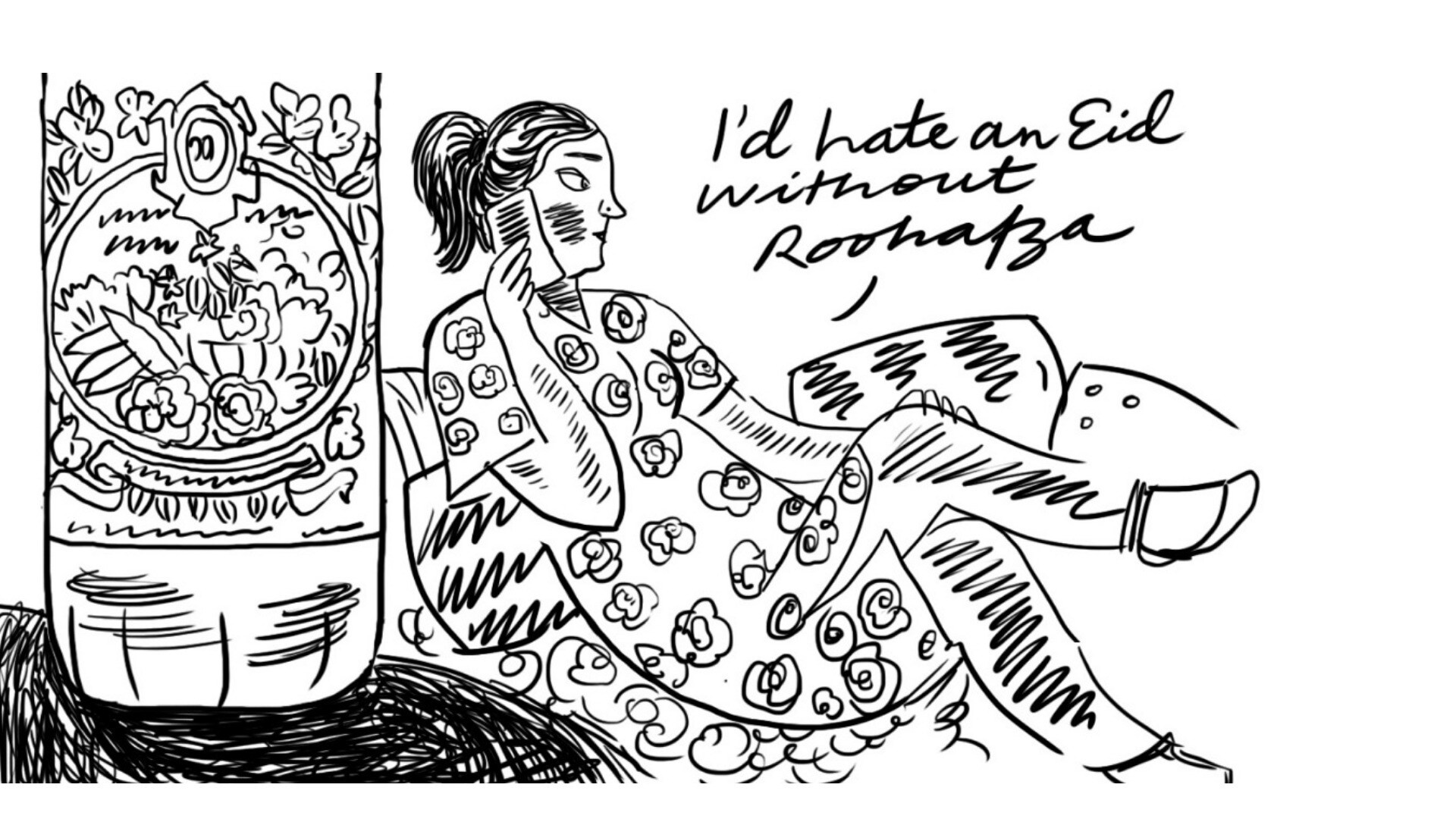 [/imgcenter]Oddly moved, the shopkeeper took it upon himself to score some Roohafza from a distant relative in another part of town, for the voice at the other end of the telephone. There hadn’t been much for her community to celebrate this year, he thought, little in the way of small pleasures and victories…***Writer-painter Amruta Patil is the author of graphic novels Kari, Adi Parva: Churning of the Ocean, Sauptik: Blood and Flowers, and Aranyaka: Book of the Forest. On Instagram: @amruta_gauri
First Published:May 26, 2020, 09:45:52 IST
Advertisement
Advertisement

Off-centre | Vande Mataram: The mother that we adore
A meditation on the meaning of India as the country celebrates 77th independence Day
Of nature, culture and alcohol: A glimpse into Sikkim’s age-old brewing traditions
Most rural households across Sikkim have their own breweries, which are an integral part of the local culture.
Revisiting the Bollywood dream sequence: A tour of the world, and within
The Bollywood dream sequence helped stretch my imagination in a way that I believed the whole world was within me. This self-sufficiency helped me get through the physical setting I was in, from awkward social gatherings to the confines of my home during the pandemic.
Trams, part of Kolkata heritage, are little more than a nostalgia ride today
In recent years, hit by natural disasters and official neglect, the city’s tram system has become little more than a nostalgia ride, its passengers more often looking for a lark than an efficient trip home.
Online exhibition archives oral histories of the Kolis, degradation of Mumbai's coastal ecology
The online exhibition Through the Eyes of the Kolis uses their photos to highlights how Mumbai's ecology has been disturbed and how the fishermen community are adapting.
Advertisement
Advertisement