
Advertisement


Sections
Urvashi Bahuguna on her poetry collection Terrarium, growing up in Goa, finding her way back to writing
Urvashi Bahuguna’s debut poetry manuscript Terrarium won The Great Indian Poetry Collective’s Emerging Writer’s Prize.

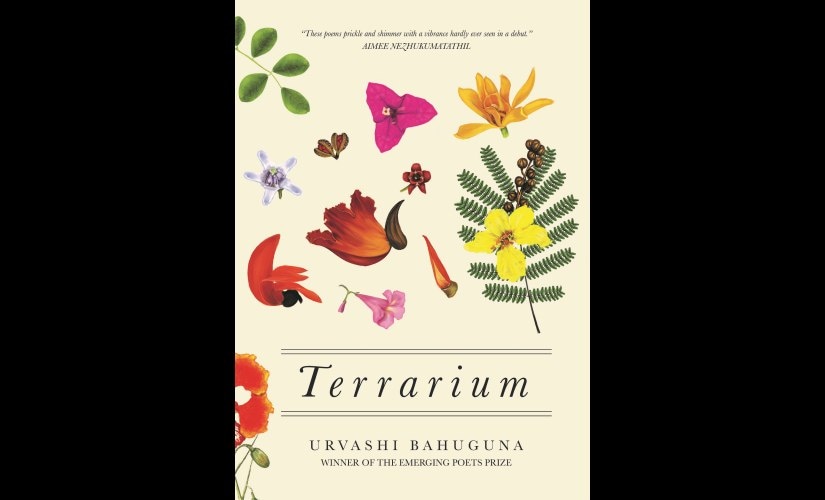 Terrarium, by Urvashi Bahuguna[/caption]Q. You grew up in Goa, a place that is more destination than home to most people who think and write about it. How does that affect one’s poetry, his or her attachment to nature and its degradation?Goa was a quiet place to grow up in. The state was quieter fifteen-twenty years ago, less endangered. The monsoon hemmed one in, kept one indoors for many months a year – I read a lot as a result. It may seem counter-intuitive, but the monsoon actually made the natural world unavoidable – tiny creatures would be in my house taking shelter from the rain, the greens of plants and trees became more vivid, it was the season of overgrowth. Further, for tourists, the monsoon meant off-season, the beach shacks would close, many restaurants and resorts would take a break, it would usually be just the residents in those months.I absorbed the world around me in those years in a way I don’t anymore – I have a lot of my time in Goa memorised (possibly in mutated forms): the sound of the rain beating down on the metallic exterior of the AC, the pencil-thin silver snakes, the yellow and black caterpillars that coil into a circle if one touches them, the smell of dead starfish, the sound of cars driving through puddles. Even as I’m writing this, it sounds fantastical and a little romanticised, but living in a relatively less developed state while also having access to vehicular mobility meant living amongst these sights, sounds, smells all the time. It’s a time that forms the bedrock of my writing – I write best when I’m able to tap into that quiet and clarity, but it’s also a time that has required the contrast of the years that followed to evolve into more thoughtful writing.I love looking at conservation biologist Neha Sinha’s Twitter, she documents what’s in danger, what’s fading, but more than that what still exists in India, what’s available for us to observe. I think my writing tries to do a (much, much smaller) version of that.
Q. Describe your shift to Delhi, the reasons behind it and how it changed (or didn’t) you as a person? Also, what did it make you think of space and people that you may not have thought before? Does the language of thought, change with the place as well?It’s interesting that you asked me about this, because it’s an era I haven’t written about a lot. I moved because the school I went to in Goa ended after standard ten, and I wanted to continue studying in the ICSE system. I can admit to myself, because it’s been enough years, that the move, especially high school, was difficult – I wasn’t clever enough, informed enough about current pop culture, I didn’t pronounce things right, I struggled with the offhand cruelty, it was isolating whereas Goa had been a little suffocating. It wasn’t that Goa hadn’t been imperfect in its own ways, but that I had been accustomed to them. After two years of high school, I went on to Delhi University. The syllabus, the students there pushed me to think about issues I hadn’t encountered before or think about them more deeply. My writing wasn’t immediately affected, but over several years of living in NCR, it became less abstract, more steeped in context and backgrounds.Q. In Terrarium, women are the prominent voice, even when they are subjects. Your mother, as you mention in the book, must have been an inspiration. Have you grown looking at her as a role model, or do you empathise with the many women who do not get to tell a story, like hers? How has her life influenced the way you look at yours, and your practice?There was a story my mother told me when I was about seven. Her class had been assigned the topic, “the best meal I ever had,” for writing an essay. She wrote about an elaborate meal she ate at her aunt’s house, but the teacher read out another child’s essay about wandering lost in a forest till he chanced upon a couple who fed him a simple meal of fermented rice and yogurt. There aren’t large things that come to mind when I think of how her life has shaped me and my writing – instead, it is instances like the one above that I think influenced really early on how I thought about storytelling, digging deep to tell stories that mattered, the role of the ordinary in good writing.I am aware that my access to education, to writing platforms, is far greater than any my mother had, and that she still had more access than most women. I read as many women writers in India as I hear of and can – they mould how I think and write, how I engage with my own story. Because I’m a features writer, reading and making space for women writers in India is something I’m able to do, and it is always an education. As you’ve pointed out, women drive Terrarium. It was women for the most part that put me back together in the difficult phases referred to in the collection. It felt appropriate to me to centre their role in the story.Q. Your strength, like Rohan (Rohan Chhetri – previous winner of Emerging Poets Prize) before you, is also narrative. It clearly suggests a comfort with prose. But it has to be worked on, I assume. Do you rewrite, and return to poems a lot? Do you note ideas and then string them together? Describe your process, and how you have worked on it since you started writing?For me, it takes a while for the structure of a poem to form. Narrative is a great way to describe what one arrives at after editing – the lines in a poem or an essay are rarely published in the same order as I first wrote them. The first draft is always disjointed, written in the order that the thoughts occur to me. I rewrite a great deal, and probably write about ten poems for every one I eventually complete and preserve. I usually share my poems with a writer friend or two, and work on suggested edits.I continue to make edits over long periods of time – some critical changes only come to me slowly, one at a time. I’ll have the poem at the back of my mind somewhere, and suddenly something in my surroundings will make me think of a phrase or an image that is just right for that poem. I usually send myself a quick email so I don’t forget. The process evolves all the time – I’ll listen to writing podcasts, read interviews, and when something in a writer’s process strikes a chord, I’ll try it out. But what’s changed most over time is that I know poems aren’t done the second I finish the first draft, and that I no longer hesitate to step away from a poem when it really isn’t working (even if I have spent weeks on it already).[caption id="attachment_6127771" align="alignnone" width="825"]
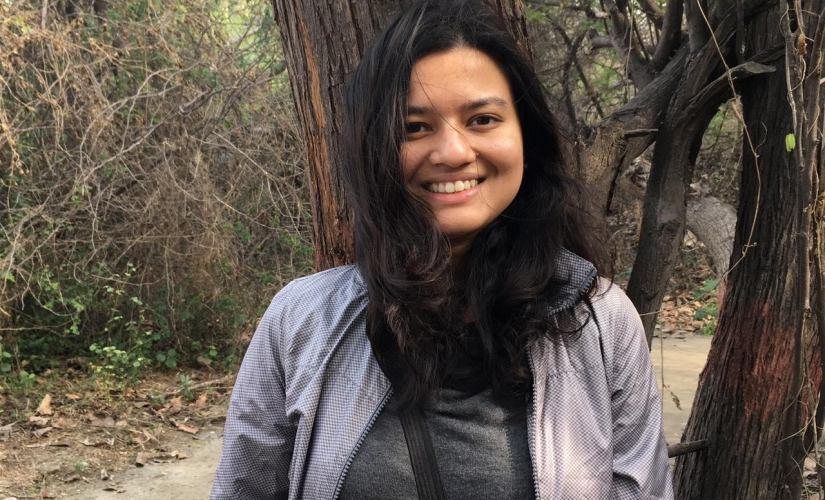 Urvashi Bahuguna. Image courtesy: Aarti Krupa Kumar[/caption]Q. You manage to incorporate many Indianisms – guthli of a mango - if you like. Why have you chosen to write this way? Most Indian writers writing in English – because they read western authors – struggle to find a balance. Have you struggled? How did you find a way around it?The words that are or were an unthinking part of my daily vocabulary wind their way into poems fairly organically. There are so many instances of contemporary poets embracing linguistic complexity – Sharanya Manivannan and Sohini Basak have both incorporated the non-Roman script of native languages within predominantly English poems, Safia Elhillo and Zeina Hashem Beck borrow from Arabic songs and poems. I wasn’t always as comfortable with the thought that some readers may not understand a phrase as I am now. I learned from these writers, amongst many others, how to write about my experiences while retaining linguistic integrity. It was helpful to think of their poems as templates and try to adapt their approach to my own context. For example, I use Hindi phrases in my poems, but I don’t write them in the Devanagari script because although I speak the language, I rarely use the script.Q. You mention in the acknowledgments that you had to be pushed into coming back to writing. What made you leave? What did it take for you to come back? You are also working on a prose book – how did that come about?For a little over two years, I couldn’t really write or read. I didn’t know this at the time, but I was depressed. Sometimes, I couldn’t [come] up with the words, other times I was convinced everything I was writing was drivel and I didn’t feel connected to the words in front of me. I stopped trying to force it. My day job at the time had nothing to do with writing, and writing felt irrelevant to the task of getting through the day.When I started therapy, I found that I had things to say and that I was comfortable vocalising them. The poem, The First Summer After You, refers to the summer of 2015 – the first summer of engaging in therapy, of returning to writing, of moving on from a relationship. It was the tentative return of health that allowed me to return to writing.The book of mental health essays evolved, in some part, from the completion of the book of poems. I’d said what I could in that genre. What could I say in a different, lengthier one? It was still just an idea when a newspaper editor (Aditya Mani Jha) I’d worked under as a freelancer moved to a publishing house, and I realised that he was someone I trusted enough to work with on a book of deeply personal essays on mental health. First readers have always been really important to me. The book of poems had been read by trusted friends as I’d written it. The essays were much, much harder to write, and they’ve transpired because I trusted my editor enough to write them.
Q. A question I always ask poets, especially young poets like yourself, is that of ‘to what end’. Poetry doesn’t pay, it has near negligible shelf value in the country, let alone readership. Why do we write? Why do we print (publish)?I write because I’m interested in what my fellow poet and friend, Sohini Basak, calls “re-arranging.” In the sometimes chaotic, often recursive course of life, I like to be able to choose details, anecdotes, or images that stick out from the madness and create pieces around them. I am intrigued by what I remember – a friend and I were talking about our very different regrets about a common period in our friendship, and I was astonished that I’d completely forgotten the parts they remembered. What I remember, I tend to remember with intensity, and I like to take them to the page and tease out why they have stayed with me, to arrive at an explanation by “arranging” the memory within a poem or an essay. Truthfully, I am able to publish because I have a day job, and I don’t depend on money I’d make from poetry. I publish because it’s less lonely that way, to show someone what one has built, to have that potential connect with them in the ways other writers have resonated with me. I also publish because even though poetry is a neglected genre, it has a dedicated audience. Some of us have been reading one another for years despite never having met – that’s something to me.
First Published:Feb 23, 2019, 09:29:34 IST
Advertisement
Advertisement

Here's why you crave sweets after every meal: This one thing can fix it
It's common to crave something sweet after meals. However, what's often dismissed as "having a sweet tooth," is mostly nutritional deficiency
1 min read
India's most beloved national parks for wildlife lovers
India holds some of the world’s most wonderful wilderness spaces. Forests and jungles where myth, beauty and survival exist side by side. From mangroves that swallow rivers to grasslands shaped by centuries of migration, the country’s national parks offer more than sightings. They offer moments of stillness, surprise, and reverence.
1 min read
Even the Beckhams break: The rise of family estrangement
People are choosing to cut off contact with their families, prioritising mental health.
4 min read
European Council Chief has an OCI card: What is it?
The OCI Scheme, introduced in 2005, grants foreign nationals of Indian origin a life-long visa for India, but no political rights.
1 min read
The 90s show Friends, and why we misread modern friendships
We’ve all heard about the loneliness epidemic at this point. It isn’t even particularly shocking — it seems like the result on the obvious — people consistently glued to their phones, seeking intimacy and even sex through phone screens, consistent comparison to other peoples’ partners, and what their relationships look like, to how far everyone has come in their jobs — there is much to feel diminished about.
5 min read
Advertisement
Advertisement