
Advertisement


Sections
How the guru-shishya parampara of Indian classical dance is navigated within a household
Explaining the absolute surrender demanded of the guru-shishya parampara, Vyjayanthi Kashi says that as a six-year-old student learning under a 40-year-old guru, she was strongly discouraged from complaining about him, everything he said about dance was the ultimate

The eight classical dances of India are rich, complex oral traditions that have been handed down from teacher to disciple for centuries, making guru-shishya parampara integral to their performance and practice.The National Centre for Performing Arts (NCPA), Mumbai is set to host on 26 July, 2019, Dance In The Family, an event conceptualised by the Kuchipudi exponent Vyjayanthi Kashi, in which family duos pursuing three distinct dance forms will explore through performances and a panel discussion how the tradition of the guru-shishya parampara thrives in their households.Odissi stalwart Madhavi Mudgal accompanied by her niece Arushi, and the Bharatnatyam danseuse Rama Vaidyanathan with her daughter Dakshina, will take the stage along with Kashi and her daughter Prateeksha, to discuss the intricacies of teaching and learning the dance forms within the family and the partnership shared on stage.[caption id="attachment_7046011" align="alignnone" width="825"]![The Kuchipudi mother-daughter duo Vyjayanthi Kashi and Prateeksha Kashi will be a part of the panel discussion, Dance In The Family on 26 July 2019.]() The Kuchipudi mother-daughter duo Vyjayanthi Kashi and Prateeksha Kashi will be a part of the panel discussion, Dance In The Family on 26 July 2019.[/caption]At a dancer's home, there prevails perennially an artistic atmosphere, dinner-table conversations are about dance and teaching occurs around the clock. Kashi says of her daughter Prateeksha, that she learnt a lot simply through observation, subtleties which had never been taught to her.When a dancer with a young daughter who also learns the form runs a dance school, says Swapnakalpa Dasgupta, programming head — Dance, NCPA, “sometimes the child imbibes much, much more because she is in that atmosphere all day, as opposed to the student who is visiting every week for two hours and going back home.”However the flip side, she continues, is that while the child picks up more because of this exposure, at a later stage, it becomes difficult for the guru to give her a chance to shine even if she is the best dancer in the group (as it could be perceived as favouritism/nepotism).Kashi suggests that practicing art within the family has certain bonuses such that if she is ever in a mood to choreograph, she can work with her daughter and burn the midnight oil — the kind of control she cannot have over her students in a modern dance school. This constant presence creates a strong rapport between them and the artists get to know one another inside and out.
The Kuchipudi mother-daughter duo Vyjayanthi Kashi and Prateeksha Kashi will be a part of the panel discussion, Dance In The Family on 26 July 2019.[/caption]At a dancer's home, there prevails perennially an artistic atmosphere, dinner-table conversations are about dance and teaching occurs around the clock. Kashi says of her daughter Prateeksha, that she learnt a lot simply through observation, subtleties which had never been taught to her.When a dancer with a young daughter who also learns the form runs a dance school, says Swapnakalpa Dasgupta, programming head — Dance, NCPA, “sometimes the child imbibes much, much more because she is in that atmosphere all day, as opposed to the student who is visiting every week for two hours and going back home.”However the flip side, she continues, is that while the child picks up more because of this exposure, at a later stage, it becomes difficult for the guru to give her a chance to shine even if she is the best dancer in the group (as it could be perceived as favouritism/nepotism).Kashi suggests that practicing art within the family has certain bonuses such that if she is ever in a mood to choreograph, she can work with her daughter and burn the midnight oil — the kind of control she cannot have over her students in a modern dance school. This constant presence creates a strong rapport between them and the artists get to know one another inside and out.![Kuchipudi exponents Vyjayanthi Kashi and Prateeksha Kashi. Image via Wikimedia Commons]() Kuchipudi exponents Vyjayanthi Kashi and Prateeksha Kashi. Image via Wikimedia Commons[/caption]Up until the mid-20th century, the guru was revered and was almost similar to a parental figure. The guru would treat his/her disciples like one's own children. While he would instill in his students the discipline required for the study of the dance form, the guru would prepare and serve them meals, arrange costumes, and look after logistics. A familial bond developed over time that nourished the physical, emotional, and psychological bearings of the budding artists.In addition, there was a profound emphasis on self-training. A trained Odissi artist, Dasgupta says, “The process of learning, imbibing and then producing has always been a part of structured dance forms.”Come the 21st century, the guru-shishya parampara shifted from one-to-one teaching to its institutionalisation, where classrooms were introduced and to some extent, dance became standardised.Dasgupta opines, “It is definitely very good when it comes to group choreographies,” as the dance must look uniform, “But at the same time, as a personal journey of the artist, is it good? Debatable.”As a programmer, she has also observed a shift in the audience’s preferences, from enjoying solo performances to leaning towards duets, trios and spectacular choreographies that demand synchronisation and standardisation.This means, “Your entire focus is to blend and in the process you have to lose some extent of your individuality,” so that when one opens dance school and wants to be a solo performer, there is a danger of actually being very similar in style and grace to a fellow batch mate.However, the journey of a classical dancer is towards salvation, to liberate the soul and reach the parabrahman (the ultimate entity). As a young dancer what remains is to multitask, she says, to find out how best we can purify the soul even as we fall into the rhythm of standardisation.Dance In The Family, will be held on Friday, 26 July 2019, 6.30 pm onwards at the Experimental Theatre of the National Centre for Performing Arts (NCPA), Mumbai
Kuchipudi exponents Vyjayanthi Kashi and Prateeksha Kashi. Image via Wikimedia Commons[/caption]Up until the mid-20th century, the guru was revered and was almost similar to a parental figure. The guru would treat his/her disciples like one's own children. While he would instill in his students the discipline required for the study of the dance form, the guru would prepare and serve them meals, arrange costumes, and look after logistics. A familial bond developed over time that nourished the physical, emotional, and psychological bearings of the budding artists.In addition, there was a profound emphasis on self-training. A trained Odissi artist, Dasgupta says, “The process of learning, imbibing and then producing has always been a part of structured dance forms.”Come the 21st century, the guru-shishya parampara shifted from one-to-one teaching to its institutionalisation, where classrooms were introduced and to some extent, dance became standardised.Dasgupta opines, “It is definitely very good when it comes to group choreographies,” as the dance must look uniform, “But at the same time, as a personal journey of the artist, is it good? Debatable.”As a programmer, she has also observed a shift in the audience’s preferences, from enjoying solo performances to leaning towards duets, trios and spectacular choreographies that demand synchronisation and standardisation.This means, “Your entire focus is to blend and in the process you have to lose some extent of your individuality,” so that when one opens dance school and wants to be a solo performer, there is a danger of actually being very similar in style and grace to a fellow batch mate.However, the journey of a classical dancer is towards salvation, to liberate the soul and reach the parabrahman (the ultimate entity). As a young dancer what remains is to multitask, she says, to find out how best we can purify the soul even as we fall into the rhythm of standardisation.Dance In The Family, will be held on Friday, 26 July 2019, 6.30 pm onwards at the Experimental Theatre of the National Centre for Performing Arts (NCPA), Mumbai
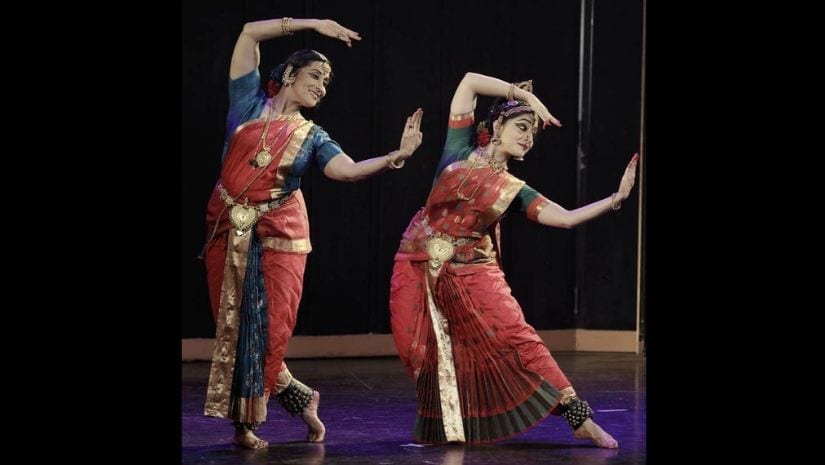 The Kuchipudi mother-daughter duo Vyjayanthi Kashi and Prateeksha Kashi will be a part of the panel discussion, Dance In The Family on 26 July 2019.[/caption]At a dancer's home, there prevails perennially an artistic atmosphere, dinner-table conversations are about dance and teaching occurs around the clock. Kashi says of her daughter Prateeksha, that she learnt a lot simply through observation, subtleties which had never been taught to her.When a dancer with a young daughter who also learns the form runs a dance school, says Swapnakalpa Dasgupta, programming head — Dance, NCPA, “sometimes the child imbibes much, much more because she is in that atmosphere all day, as opposed to the student who is visiting every week for two hours and going back home.”However the flip side, she continues, is that while the child picks up more because of this exposure, at a later stage, it becomes difficult for the guru to give her a chance to shine even if she is the best dancer in the group (as it could be perceived as favouritism/nepotism).Kashi suggests that practicing art within the family has certain bonuses such that if she is ever in a mood to choreograph, she can work with her daughter and burn the midnight oil — the kind of control she cannot have over her students in a modern dance school. This constant presence creates a strong rapport between them and the artists get to know one another inside and out.
At such an intersection, Dasgupta adds, this is rather like “a social discussion about the advantages and disadvantages of belonging to a family where the tradition is being followed.”So the panel discussion is like an unraveling of the perspectives of the younger performer and of the guru, who are both exceedingly immersed in the world of their art.Having grown up in the world of dance, Prateeksha says matter-of-factly, “For me, dance was a part of my life, it was something very natural.”It was after years of learning and performing Kuchipudi and simultaneously studying for her engineering assignments and examinations – in greenrooms, buses and train coaches – that the artist made up her mind to dedicate all her time to dance which had for the longest time simply been part of her daily routine.*The guru-shishya parampara rests on one simple principle: for a disciple, the guru is the last word on the subject of dance.Long before she turned to Kuchipudi, and trained under gurus such as Vedantham Prahalada Sarma and CV Acharya, Kashi would take Bharatnatyam lessons under Ramanna of Tumkur. Explaining the absolute surrender demanded of the guru-shishya parampara, the Sangeet Natak Akademi awardee points out that as a six-year-old student learning under a 40-year-old guru, she was strongly discouraged from complaining about him; everything he said about dance was the final word.“My parents would respect him as though he was their guru also and automatically I followed that.”[caption id="attachment_7046121" align="alignnone" width="825"]
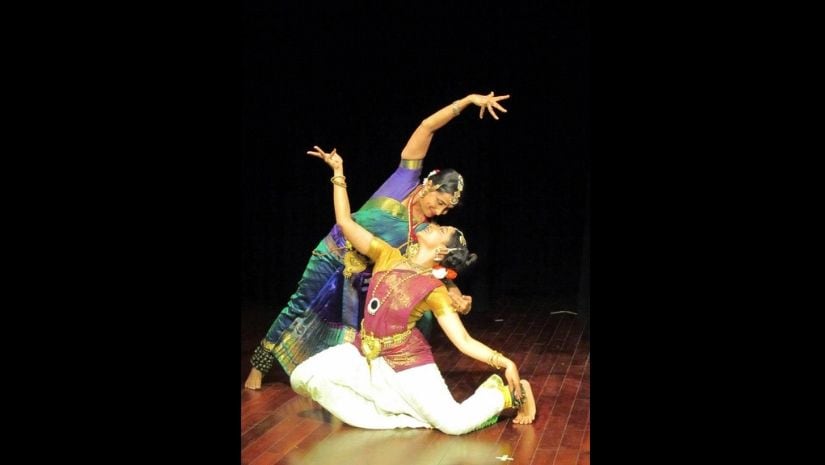 Kuchipudi exponents Vyjayanthi Kashi and Prateeksha Kashi. Image via Wikimedia Commons[/caption]Up until the mid-20th century, the guru was revered and was almost similar to a parental figure. The guru would treat his/her disciples like one's own children. While he would instill in his students the discipline required for the study of the dance form, the guru would prepare and serve them meals, arrange costumes, and look after logistics. A familial bond developed over time that nourished the physical, emotional, and psychological bearings of the budding artists.In addition, there was a profound emphasis on self-training. A trained Odissi artist, Dasgupta says, “The process of learning, imbibing and then producing has always been a part of structured dance forms.”Come the 21st century, the guru-shishya parampara shifted from one-to-one teaching to its institutionalisation, where classrooms were introduced and to some extent, dance became standardised.Dasgupta opines, “It is definitely very good when it comes to group choreographies,” as the dance must look uniform, “But at the same time, as a personal journey of the artist, is it good? Debatable.”As a programmer, she has also observed a shift in the audience’s preferences, from enjoying solo performances to leaning towards duets, trios and spectacular choreographies that demand synchronisation and standardisation.This means, “Your entire focus is to blend and in the process you have to lose some extent of your individuality,” so that when one opens dance school and wants to be a solo performer, there is a danger of actually being very similar in style and grace to a fellow batch mate.However, the journey of a classical dancer is towards salvation, to liberate the soul and reach the parabrahman (the ultimate entity). As a young dancer what remains is to multitask, she says, to find out how best we can purify the soul even as we fall into the rhythm of standardisation.Dance In The Family, will be held on Friday, 26 July 2019, 6.30 pm onwards at the Experimental Theatre of the National Centre for Performing Arts (NCPA), Mumbai
First Published:Jul 25, 2019, 11:01:44 IST
Advertisement
Advertisement

Here's why you crave sweets after every meal: This one thing can fix it
It's common to crave something sweet after meals. However, what's often dismissed as "having a sweet tooth," is mostly nutritional deficiency
1 min read
India's most beloved national parks for wildlife lovers
India holds some of the world’s most wonderful wilderness spaces. Forests and jungles where myth, beauty and survival exist side by side. From mangroves that swallow rivers to grasslands shaped by centuries of migration, the country’s national parks offer more than sightings. They offer moments of stillness, surprise, and reverence.
1 min read
Even the Beckhams break: The rise of family estrangement
People are choosing to cut off contact with their families, prioritising mental health.
4 min read
European Council Chief has an OCI card: What is it?
The OCI Scheme, introduced in 2005, grants foreign nationals of Indian origin a life-long visa for India, but no political rights.
1 min read
The 90s show Friends, and why we misread modern friendships
We’ve all heard about the loneliness epidemic at this point. It isn’t even particularly shocking — it seems like the result on the obvious — people consistently glued to their phones, seeking intimacy and even sex through phone screens, consistent comparison to other peoples’ partners, and what their relationships look like, to how far everyone has come in their jobs — there is much to feel diminished about.
5 min read
Advertisement
Advertisement