
Advertisement


Sections
Dalit writing, global contexts: JV Pawar's poetry collection Blockade embodies the spirit of the Dalit Panthers
JV Pawar is an activist – more a Dalit Panther than a writer – and this reflects in his works. The poems in his collection Blockade speak of the Dalit community’s everyday life, their struggles, their agonies, and their hope amidst it all, as the purveyors of Babasaheb’s legacy. Despite his reputation as a historian-writer in Marathi, Blockade remained untouched, unreviewed and outside the discussions of English readers and critics

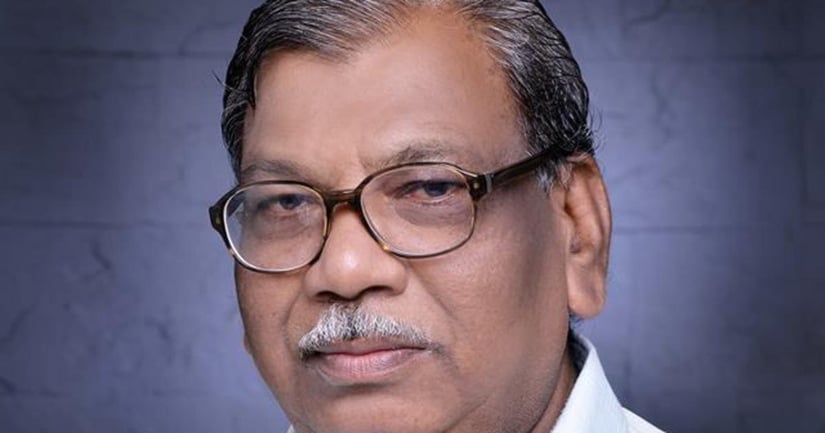 JV Pawar[/caption]Blockade (Nakebandi in Marathi) embodies a new vision adopted by the Dalits. The poems in this collection speak of the community’s everyday life, their struggles, their agonies – and their hope amidst it all, as the purveyors of Babasaheb’s legacy. The poems also comment on the hypocrisy of culture and the famine in Maharashtra, which was not a theme in the works of Savarna writers.Blockade was translated into English in 1978 by Professor VD Chandanshive, but published only in 1992. What makes Blockade a significant work is not just the fact that it is one of the first books/anthologies/collections by a Dalit writer to be translated into English, but also that it presented the thinking of the Dalit panthers in a poetic form, which gave rise to a more radical anti-caste movement in India.The English used in translation is traditional, which means that the construction of the lines of the poems are guided by grammar and syntax above all. However, the translation does successfully convey the essence of the original Marathi poems; this was perhaps aided by the lack of metaphors (it can be difficult to find equivalents of phrases/metaphors when translating).
On the subject of Blockade’s arrival on the English literary scene and its significance in the context of cultural change, Raja Dhale, one of the founding members of the Dalit Panthers movement and prolific writer and Buddhist philosopher, wrote in the foreward to the collection:"JV Pawar's poetry nullifies the attempts of all those who refuse Dr Ambedkar's mission and leadership, who devalue his liberation struggle, who reject comprehensiveness of the struggle against untouchability and who make all embracing Buddhism sectarian and communal. This nullification, therefore, has an acute awareness." (Blockade, 1992)At a time when there was no literary theory available to interpret Dalit literature, which emerged out of the experience of untouchability, Raja Dhale provides the blueprint to interpret Blockade in his foreward, examining the poems microscopically, as a sharp literary critic should."Pawar's poetry serves as a mirror in which one can behold the reflection of our future poetry. Of course, it is not a subjective mirror. It is, on the contrary, an objective one, the mirror of the whole downtrodden society. The image it reflects is on the whole social." (Blockade, 1992)Blockade is perhaps the first translated Dalit text to centre on local history. Sample one of the poems from the collection:The ashes of hundreds in Sherpur is our culture’s greater achievement and the Gawai brothers’ case at Dhakli is the greatest felicitationFriends, let us sing in chorus the songs of our culture ‘my culture is the greatest Which I am very proud of’Look, out there on the ground They too wish to have a share in our chorus the eyes of Gawai brothers, Shambuka’s head, Eklavya’s thumb, Ramdasa’s hammered penis and Gopi’s chopped off hands and feetWhy bother about music? the shrill cries of Kilavenmani the wailing of Sherpur will tune the chorusOn 26 September, 1974, the daughter of one of the Gawai brothers in the Dhakli village was raped by the son of a Maratha farm owner, at whose farm she was working; she got pregnant. The Gawai brothers then went to the Wada of Patil to seek justice. Instead of paying heed to their complaint, his men injured and took out their eyes. JV Pawar and the other Panthers followed this case to ensure that justice would be served. Pawar held a conference in Mumbai in January 1975 and gave the Gawai brothers a platform to tell their story.Many other Indians who were writing in English at the time attempted to write revolutionary poems about the suffering of people whilst being far away from the problem itself. They capitalised on the oppression of people. Pawar, on the hand, wrote of the injustice and oppression he witnessed with his own eyes, in his own life and those of the people around him.
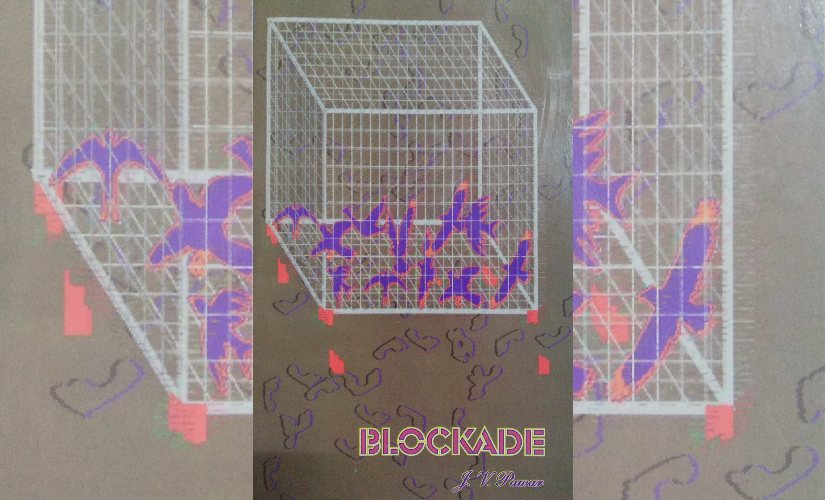 What this poem says still rings true in the context of the 21st century and the brutalities suffered by Dalit people. And yet, the translated version of Blockade remained untouched, unreviewed and outside the discussions of English readers and critics. This is despite JV Pawar establishing himself as a writer-historian in Marathi, with an audience that consisted of scholars, academicians, activists and lay people.One factor that can explain this is that in the 70s and even in the 90s, there was no demand for Dalit writing in English, unlike today, where Dalit literature has captured the imagination of the West, both in academic and literary circles. Upper caste publishers, too, are lining up to publish English translations of Dalit writers' fictional and autobiographical works.Shouting slogans to condemn or uphold a blaze of fire marches forth and forest fire takes birth in oceans which seek to oppose what obstacles shall now withhold our vein is turning volcanic digging trenches every inch of the terrain? What fear does imprisonment pose? Life itself was suffering conceived as a prison Yet it does have some advantage It is possible to blow up dynamite at the base of the prison How many jails, how many barracks It's impossible to count them The oceans are stormy Impossible to try and bind them Birds have drunk deep of winds of equality Oh, do not enslave them They’ll soar aloft bearing your prison along Do not underrate them—'Birds In Prison' from Blockade by JV Pawar***Yogesh Maitreya is a poet, translator and founder of Panther's Paw Publication, an anti-caste publishing house. He is pursuing a PhD at the Tata Institute of Social Sciences, Mumbai.
First Published:Jun 27, 2019, 09:38:17 IST
Advertisement
Advertisement

Here's why you crave sweets after every meal: This one thing can fix it
It's common to crave something sweet after meals. However, what's often dismissed as "having a sweet tooth," is mostly nutritional deficiency
1 min read
India's most beloved national parks for wildlife lovers
India holds some of the world’s most wonderful wilderness spaces. Forests and jungles where myth, beauty and survival exist side by side. From mangroves that swallow rivers to grasslands shaped by centuries of migration, the country’s national parks offer more than sightings. They offer moments of stillness, surprise, and reverence.
1 min read
Even the Beckhams break: The rise of family estrangement
People are choosing to cut off contact with their families, prioritising mental health.
4 min read
European Council Chief has an OCI card: What is it?
The OCI Scheme, introduced in 2005, grants foreign nationals of Indian origin a life-long visa for India, but no political rights.
1 min read
The 90s show Friends, and why we misread modern friendships
We’ve all heard about the loneliness epidemic at this point. It isn’t even particularly shocking — it seems like the result on the obvious — people consistently glued to their phones, seeking intimacy and even sex through phone screens, consistent comparison to other peoples’ partners, and what their relationships look like, to how far everyone has come in their jobs — there is much to feel diminished about.
5 min read
Advertisement
Advertisement