
Advertisement


Sections
A new guidebook on mental health for LGBTQ community tackles associated stigma, misinformation
White Swan Foundation’s e-book Mental Health 101: LGBTQIA+ Edition aims to serve as a guidebook for members of the community. It details issues and causes for the queer community, discusses methods of self-care, and provides tips when coming out or seeking help.

Within any community, mental health issues stem largely from oppression and a lack of acceptance, and the biggest hurdles for LGBTQIA+ individuals in India are social stigma and misinformation attached to the community, resulting from a lack of knowledge among masses.According to Mahesh Natarajan, Bengaluru-based counsellor at InnerSight Counselling and Training Services, common struggles among LGBTQIA+ individuals are “concerns of identity and belonging, and the anxieties and mood issues stemming from these concerns.” Other issues include bullying, abuse, violence and related trauma, besides other life-stage issues that manifest with varying intensities. However, members of the community often hesitate while seeking help, because of damaging experiences with mental health professionals, who resort to labelling their identities as a mental illness, and try to "cure" them, thereby revealing damaging prejudices and insensitivity. “Awareness among mental health professionals really is the key limitation,” adds Natarajan.Another important aspect of mental health and well-being is cohesiveness among the community. “I would like to see all our LGBTQIA+ communities be aware of mental health, as a means of self-care and community care,” says Rohini Malur, queer poet and writer. Organised on-ground and online community-building gives individuals a place to turn to when looking for a safe space, and people with whom one can freely express themselves. “More and more of us are in the mental health field too, which is a direct way to expand the industry and make it more accepting,” explains Malur.[caption id="attachment_7101191" align="alignnone" width="825"]
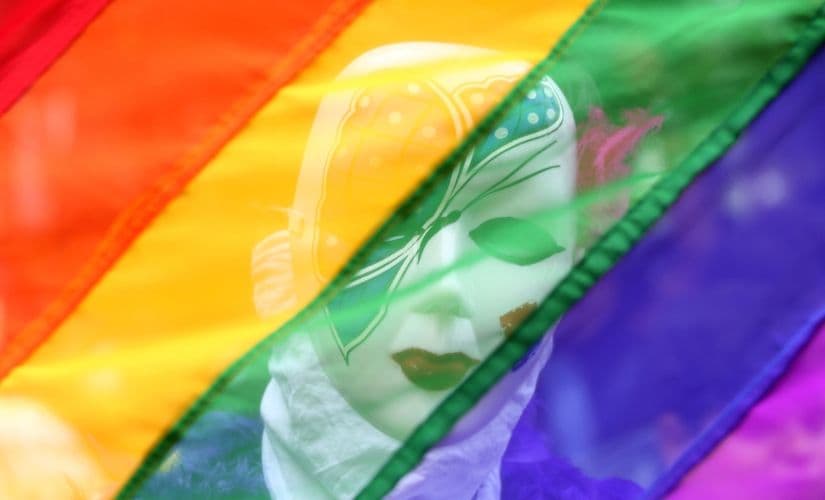 Another important aspect of mental health and well-being is cohesiveness among the community. Photo credit: Reuters/P Ravikumar.[/caption]A massive wave of support for individuals of the LGBTQIA+ community in India has followed the striking down of Section 377. “The relief of not being criminalised is huge. It allows people to be able to talk of their issues and concerns with much less fear, and without the stigma of being unconvicted felons,” says Natarajan. However, Section 377 is not the last barrier for the community, since phobia is still rampant in society. “Many of our mental stressors are the same,” explains Malur.Even after 377, microaggression abounds. People making faces, not making the effort to understand the spectrums of gender and sexuality, casual use of slurs and stereotypes, and the assumptions based on those, “talking with loved ones who always, always are hopeful that you will change your mind”, and countless others acts of discrimination cause discomfort to LGBTQIA+ individuals, making daily life a major struggle every step of the way. “The daily disrespect is a violence against the social norms that call for kindness, and a drain on our spiritual and emotional strength,” explains Malur.Allies must also make concerted efforts to normalise LGBTQIA+ individuals within the folds of society. “Hire, work with and engage with queers. We exist in your daily life. Changes in society are not one step actions. They require multiple engagements and interventions every day,” says Malur. Speaking up when witnessing bigotry and challenging the normalisation of slurs are the basic benchmarks for respect. “All of this is dependent on the recognition of our common and equalising humanity,” she adds.Often, however, “people don’t even understand that they are being stigmatic in what they say and do,” Chandran says. This hate and fear is sometimes internalised by individuals of the community, leading to toxic and potentially damaging thoughts. Every individual in society, therefore, becomes a powerful stakeholder, and a possible ally, for the LGBTQIA+ community. “Knowledge [dispersal] is perhaps the very first thing that must happen to be able to empower the members and their allies, so that their decisions are in the right direction,” Chandran says, emphasising on a how a collective dialogue on the subject is the need of the hour.
First Published:Aug 04, 2019, 11:56:23 IST
Advertisement
Advertisement

Here's why you crave sweets after every meal: This one thing can fix it
It's common to crave something sweet after meals. However, what's often dismissed as "having a sweet tooth," is mostly nutritional deficiency
1 min read
India's most beloved national parks for wildlife lovers
India holds some of the world’s most wonderful wilderness spaces. Forests and jungles where myth, beauty and survival exist side by side. From mangroves that swallow rivers to grasslands shaped by centuries of migration, the country’s national parks offer more than sightings. They offer moments of stillness, surprise, and reverence.
1 min read
Even the Beckhams break: The rise of family estrangement
People are choosing to cut off contact with their families, prioritising mental health.
4 min read
European Council Chief has an OCI card: What is it?
The OCI Scheme, introduced in 2005, grants foreign nationals of Indian origin a life-long visa for India, but no political rights.
1 min read
The 90s show Friends, and why we misread modern friendships
We’ve all heard about the loneliness epidemic at this point. It isn’t even particularly shocking — it seems like the result on the obvious — people consistently glued to their phones, seeking intimacy and even sex through phone screens, consistent comparison to other peoples’ partners, and what their relationships look like, to how far everyone has come in their jobs — there is much to feel diminished about.
5 min read
Advertisement
Advertisement