


Why disease outbreaks are becoming more frequent across the world
As Ebola, Hantavirus, Nipah and other diseases re-emerge, epidemiologist Dr Lalit Kant explains how deforestation, urbanisation, climate pressures and closer human-animal contact are increasing outbreak risks worldwide.

As humans are pushing deeper into nature, old viruses are finding new hosts.
This is what virologists believe, as fresh outbreaks alarms are rising again in a post-COVID world.
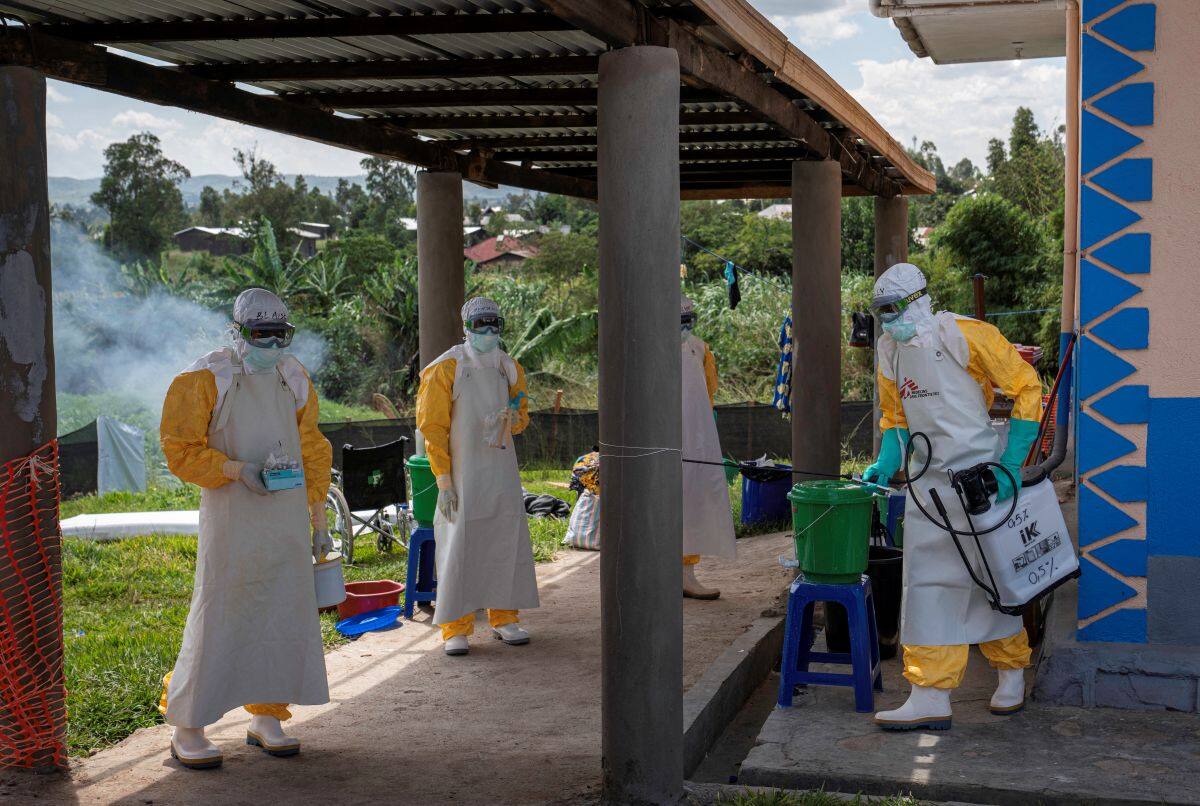
Outbreaks of diseases such as Ebola, Hantavirus, Nipah, avian influenza, and dengue continue to surface across continents, reminding public health experts that the age of emerging infections is far from over.
The recent concern around Ebola and Hantavirus has revived a difficult question: Why are outbreaks appearing more frequently now?
WHO says it is estimated that, globally, about one billion cases of illness and millions of deaths occur every year from zoonoses, diseases transmitted from vertebrate animals. Some 60% of emerging infectious diseases that are reported globally are zoonoses. Over 30 new human pathogens have been detected in the last three decades, 75% of which have originated in animals.
 More from Lifestyle
According to infectious disease experts, the answers lie not only in viruses themselves but also in the way human civilization is reshaping the planet.
Firstpost spoke to one of the country's prominent epidemiologists, a public health expert, and a senior scientist widely recognized for his extensive contributions to communicable disease control and the management of biomedical research in India. He spent over 25 years at the Indian Council of Medical Research (ICMR), where he served as the Senior Deputy Director General and headed the Division of Epidemiology & Communicable Diseases for a decade.

Excerpts from an interview with Dr Kant
We are once again focusing on outbreaks like Ebola and hantavirus. Some years back, it was the Nipah and Zika viruses. Why are the infectious disease outbreaks increasing?
There is an imbalance between biodiversity and human activity. The main reason is the growing interaction between humans and the animal world. As forests are cut down, mining expands, cities grow, and humans move deeper into previously untouched areas, people are coming into closer contact with animals, birds, insects, and the viruses and bacteria they carry.
Many organisms that once remained confined to wildlife are now finding opportunities to infect humans because of environmental disruption and human encroachment.
There is more interaction now between humans and the animal world. We are taking over their land and disturbing the ecological balance.
How do deforestation and urbanisation contribute to outbreaks?
Natural ecosystems are disturbed by activities such as logging, dam construction, agricultural expansion, and unplanned urbanization.
When forests are destroyed or habitats shrink, insects and animals move closer to human settlements. Mosquitoes and other vectors that previously remained in forested areas are increasingly entering urban and rural human dwellings.
Mosquito vectors are moving from forests into human habitations. When infected insects bite humans or animals like pigs, they can transmit viruses and bacteria to which humans were not previously exposed.
In some cases the transmission becomes more potent as it jumps from one human to another. Growing interest in exotic meat and wildlife consumption. People traveling to remote areas to consume or handle wild animals may unknowingly expose themselves to unfamiliar viruses. The handling, slaughtering, and preparation of wild meat can increase the chances of animal-to-human transmission.
There is more exposure now because people are traveling to places where these animals are found. The way this uncooked meat or the carcasses are handled exposes them to many vectors. People are not even aware that they need to take some precautions.
The WHO says many communicable diseases come from animals. They even say 70-75% of infectious diseases come from animals?
The World Health Organization does say that. What is also evident is that most emerging infectious diseases originate in animals.
These new organisms are largely coming from the animal world. Diseases such as Ebola, Nipah, avian influenza, and Hantavirus are examples of infections linked to animal reservoirs.
But humans have always lived around rats, bats, and mosquitoes. So why are these diseases becoming more noticeable now?
It isn't simply coexistence with animals, but rather changing ecological interactions.
Earlier, domesticated animals and humans had less interaction with wildlife carrying dangerous pathogens. But now, ecological disruption is increasing contact among wild animals, domestic animals, insects, and humans.
Animals act as “amplifiers” of infection. They may not become severely ill themselves, but they help viruses multiply and spread through insect bites or other routes of transmission.
For example, pigs play an important role in amplifying viruses like Japanese encephalitis.
How do diseases like Hantavirus spread?
Most incidents involve travelers and birdwatchers visiting areas with landfills where rodents are present.
Rodents such as rats and mice can spread Hantavirus through infected urine, droppings, or contaminated air particles. People may inhale these particles unknowingly.
The expert described how some travelers became exposed during visits to birdwatching areas where rodents and migratory birds coexisted. So, people unknowingly expose themselves to these viruses.
Are outbreaks increasing because surveillance has improved?
Better surveillance is one factor, but not the only reason.
Countries can now detect outbreaks more quickly than before, especially after the COVID-19 pandemic improved global disease monitoring systems.
However, environmental disruption, increased interactions with wildlife, and viral mutations are also driving the rise in outbreaks.
The viruses are constantly changing, particularly influenza viruses, which mutate frequently, leading to new strains. Because the virus's RNA polymerase lacks a proofreading mechanism, genetic errors accumulate constantly, rendering previous immunity obsolete and necessitating annual vaccine updates.
Which infectious diseases are currently worrying epidemiologists the most?
The expert highlighted several diseases that continue to concern global public health experts, including:
Dengue
Japanese encephalitis
Nipah virus
H5N1 avian influenza
New coronavirus variants
Rotavirus infections
Zika virus
Mpox
The concern is greater when diseases spread rapidly, diagnostic tests are limited, or treatment options are inadequate.
For diseases where medicines are not available or tests are difficult to access, controlling outbreaks becomes much harder.
What are the biggest weaknesses in outbreak preparedness today?
Surveillance systems, manpower, and financial resources remain major challenges, especially in developing countries. Most countries developed their preparedness and surveillance plans after Covid 19.
Even if governments have pandemic preparedness plans on paper, implementation requires trained staff, laboratories, testing systems, and rapid response mechanisms.
Money, manpower, and infrastructure are all essential.
Governments often face competing priorities. There is a struggle to balance healthcare investment and spending with competing demands such as roads, communication, and development projects.
Where does India stand in handling infectious disease outbreaks?
It is a “difficult question to answer. India has improved surveillance and response capacity in recent years, but there is always room for improvement.
India faces challenges linked to population growth, rapid urbanisation, ecological disruption, and uneven public health infrastructure.
These problems are not unique to India, and countries across the world are grappling with similar pressures.
Diseases such as dengue, Japanese encephalitis, and Nipah continue to pose concerns in different parts of the country.
Why are dengue and chikungunya spreading more widely?
Unplanned urbanisation and stagnant water are major contributors.
Water stagnation, poor drainage, and overcrowding create ideal breeding conditions.
Mosquitoes breed easily in waterlogged urban areas, and diseases that were once mostly confined to cities are now spreading into rural regions as well.
What is worrying is that Dengue is spreading from urban to rural areas.
What is the `one health’ approach you keep talking about?
We have to understand the importance of the “One Health” approach — the idea that human, animal, and environmental health are deeply interconnected.
The human world, the animal world, and the plant world are all connected-this is the future of disease prevention. This approach argues that preventing future pandemics requires coordinated work between doctors, veterinarians, environmental scientists, and governments.
What is the key lesson from these repeated outbreaks?
Outbreaks are becoming more frequent because humanity’s relationship with nature is changing rapidly. The next pandemic threat may not come from a virus alone, but from humanity’s increasingly fragile relationship with nature. As humans expand into forests, disturb ecosystems, and increase contact with wildlife, the risk of viruses crossing into humans also rises.
The solution, the expert suggested, lies not only in medicines and surveillance but also in respecting ecological balance, accounting for environmental pressures, and strengthening public health systems before the next outbreak.
Toufiq Rashid is a journalist with over 25 years of experience in print and digital media. She covers health and lifestyle.

Trade the hustle for the Shire: Inside the "hobbitmaxxing" trend
Spices, health and the Indian plate: Why chilli can be good for you—but moderation is still key
The right way to break up without feeling groggy
How Spider-Man actor Tom Holland has been on a sobriety journey of 4.5 years after being "addicted to alcohol"
Why Chennai is India's filter coffee capital, one tumbler at a time