


Why Pride Month is celebrated: The story of the Stonewall riots
Beyond the modern rainbow banners and parade floats lies a legacy of civil rights defiance. The1969 Stonewall riots in New York permanently shaped the history of Pride Month, transforming underground queer resistance into an enduring global fight for liberation

Every June, the internet fills up with a carefully curated sea of rainbow banners, corporate solidarity statements, and city-wide parades. But underneath all the colour and celebration (and heavy commodification) is a history built on real struggle, defiance, and fighting just to exist.
What is celebrated today as a month-long festival of visibility began as a literal battle for survival on the streets of New York City. To understand the soul of Pride, one must look past the modern corporate sponsorships and trace it back to where it all began: the Stonewall Riots of June 1969.
Life before the uprising
In the 1960s, living openly as a queer person in the West meant facing hostility from every direction. Homosexuality was a crime in almost every American state, and police raids on gay bars were routine, violent, and deeply humiliating.
Officers regularly used petty rules — like requiring people to wear at least three items of clothing that matched the sex they were assigned at birth — as excuses to arrest, assault, and publicly shame transgender people, cross-dressers, and drag queens.
 More from Lifestyle
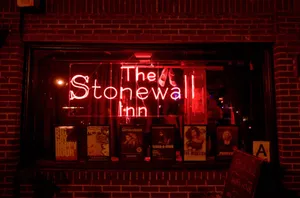
Bars and clubs that served queer people were routinely denied liquor licenses, which forced many of them, including the Stonewall Inn in Greenwich Village, Manhattan, to operate illegally and in secret.
The night Greenwich Village fought back
In the early hours of June 28, 1969, everything changed. Police raided the Stonewall Inn. But this time, instead of quietly slipping away out of fear of being exposed or shamed, the people inside decided they were done.
Led largely by trans women of colour, drag queens, and young people living on the streets, including key figures like Marsha P. Johnson and Sylvia Rivera, the crowd refused to move. When an officer hit a handcuffed woman as she was being pushed into a police van, something broke open. Bottles, coins, and raw anger flew through the air. The police were forced to retreat and lock themselves inside the bar they had come to raid.
The unrest went on for six nights in a row. Stonewall didn't create the gay rights movement out of nothing, but it served as a massive spark, pulling scattered, underground groups together into one powerful political force.
From riot to resistance: The first Pride march
What made Stonewall matter beyond that one week was the determination of those who lived it to make sure the world didn't forget. Exactly one year later, on June 28, 1970, activists organised the Christopher Street Liberation Day March to mark the anniversary of the uprising.
Thousands of people marched 51 blocks from Greenwich Village to Central Park. There were no corporate floats or celebrity performances. It was a deliberate act of showing up, being seen, and refusing to disappear.
At the same time, similar marches took place in Los Angeles, Chicago, and San Francisco, making it the first coordinated Gay Pride event in the world, and setting the model for everything that followed.
A different kind of fight in India
As this spirit of resistance spread across the world, it took on a unique shape in India, where the fight wasn't sparked by a single night of riots, but by a long, slow battle against a law left behind by British colonisers.
For decades, Section 377, introduced in 1860, made queer relationships a criminal offence across the country. India's first public act of pride came on July 2, 1999, when just 15 people walked through the streets of Kolkata in what became South Asia's first pride march.
In major Indian cities, June has rapidly transformed into a vibrant hub for queer community events, art festivals, and celebrations. Ever since the Supreme Court read down Section 377 in 2018, the Indian movement has increasingly carved out its own unique identity.
Rather than just celebrating, contemporary Indian activists are actively fighting the controversial Transgender Persons (Protection of Rights) Amendment Act, 2026, which rolled back the right to gender self-identification. For the Indian community, the spirit of Stonewall lives on not through corporate floats but through active legal battles and intersectional resistance against caste, class, and regressive state policies.
Why Stonewall still matters today
As Pride has moved into the mainstream, a fair criticism has grown louder: companies change their logos to rainbows for a month without making any real changes inside their walls. The term for it — "rainbow capitalism" — has stuck because it describes something real.
But remembering Stonewall matters for reasons that go deeper than calling out corporate hypocrisy. The fight is not over.
In dozens of countries, same-sex relationships are still treated as crimes. Even in places that consider themselves progressive, laws targeting transgender healthcare show just how quickly hard-won rights can be taken away.
Pride Month exists because a group of people who had been pushed to the edge chose to push back. It is a yearly reminder that being visible is itself an act of resistance — and that every celebration we have now was paid for by people who had far less to celebrate, and far more to lose.
From films to music to internet trends, Preetika covers cultural moments that feel bigger than themselves, and the context that makes them matter.

Trade the hustle for the Shire: Inside the "hobbitmaxxing" trend
Spices, health and the Indian plate: Why chilli can be good for you—but moderation is still key
The right way to break up without feeling groggy
How Spider-Man actor Tom Holland has been on a sobriety journey of 4.5 years after being "addicted to alcohol"
Why Chennai is India's filter coffee capital, one tumbler at a time