


Marilyn Monroe gets her Hollywood reckoning at 100
A major new exhibition opens in Los Angeles marking what would have been Monroe's 100th birthday, placing her at the centre of a conversation about image, power and Hollywood mythology.

A century after Marilyn Monroe was born Norma Jeane Mortenson in a Los Angeles charity hospital, the institution that represents Hollywood's highest honours has turned its attention to a woman it never once nominated for an Oscar during her lifetime.
"Marilyn Monroe: Hollywood Icon," which runs from May 31, 2026 through February 28, 2027 at the Academy Museum of Motion Pictures, arrives as Monroe would have turned 100. She died at her Brentwood home at 36, in 1962. The timing is deliberate, the scale ambitious, and the argument the exhibition makes is that Monroe was not merely a symbol but a strategist.
The show examines how she created and shaped her public image within the classical Hollywood studio system, presenting hundreds of original objects — posters, portraits, photographs, production documents, letters, and rarely seen personal materials, many on display for the first time. Side lining the dominant narrative of tragedy and overdose, this exhibition insists on its own agency.
 More from Lifestyle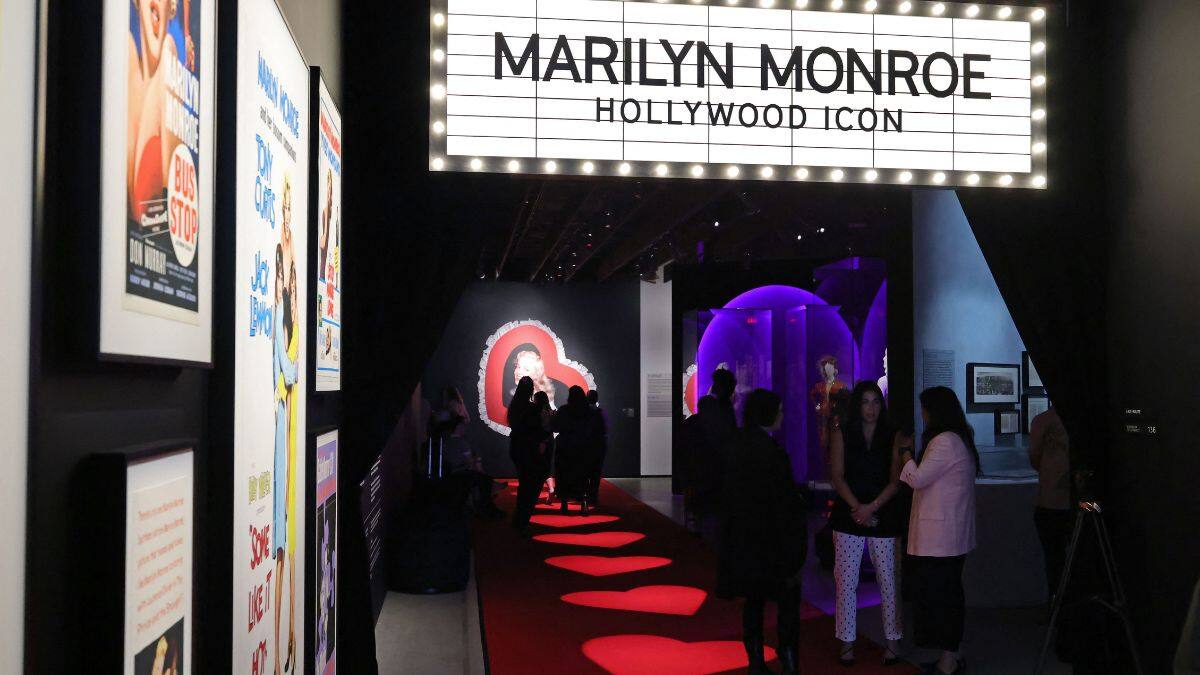
The pink gown
The centrepiece is a gown that has taken on a life entirely its own. The shocking pink peau d'ange silk dress Monroe wore while performing "Diamonds Are a Girl's Best Friend" in Gentlemen Prefer Blondes (1953) — the number that later inspired Madonna's "Material Girl" video and Ryan Gosling's Ken moment at the 2024 Oscars — is back in public view for the first time in decades.
One collector originally purchased the gown from Fox for a paltry $12; it hadn't been seen since the 1980s until Bryan Johns of the Icon Collection tracked down the previous buyer and acquired it.
The dress, up close, is a very different object from its legend. Its origins were chaotic. The original costume for the number was a scandalously revealing burlesque confection in rhinestones.
Then Monroe's earlier nude calendar photographs resurfaced, and Fox panicked. Designer William Travilla was given little more than a week to produce something else entirely. The improvisation shows, in the construction, in the seam work, in the evidence of frantic tinkering to make the fabric move with Monroe's body under hot lights. Associate curator Sophia Serrano has noted that the design is brilliant, but the garment was not built to survive beyond the filming of that number.
One of the most immortal dresses in cinema history was, materially speaking, a rush job. .
A studio star
Monroe's response to the nude photograph scandal says something essential about her. Where studios routinely buried anything inconvenient about their stars, Monroe simply told the press the truth, that she had needed the rent money and she was not ashamed.
The exhibition frames Monroe as a visionary image-maker, offering insight into the degree of agency she exercised in constructing her own icon status. She reviewed contact sheets obsessively, crossed out negatives she disliked, cut up photographs she did not want reproduced, and demanded approval over her photoshoots. She defied studio heads, launched one of Hollywood's first actress-owned production companies, and spoke openly about psychoanalysis and the cost of fame at a time when such candour was professionally dangerous.
The exhibition also features screen-worn costumes spanning her entire career, from a dress worn in Love Happy (1949) to items from her final, unfinished film Something's Got to Give (1962), along with two Orry-Kelly costumes from Some Like It Hot. Personal effects round out the picture: the shoes from her wedding to Joe DiMaggio, annotated scripts, a face-slimming mask she was reportedly told to wear after a studio note about her chin. The portrait that emerges is far more dimensional than the one most visitors will arrive expecting.
The exhibition runs through February 2027. Admission is $25 for adults, with free entry for visitors 17 and under and California EBT cardholders.
Treya Sinha is an Arts and Lifestyle writer. She loves literature and music and wants to have a Mary Oliver-esque affinity with the world.

Trade the hustle for the Shire: Inside the "hobbitmaxxing" trend
Spices, health and the Indian plate: Why chilli can be good for you—but moderation is still key
The right way to break up without feeling groggy
How Spider-Man actor Tom Holland has been on a sobriety journey of 4.5 years after being "addicted to alcohol"
Why Chennai is India's filter coffee capital, one tumbler at a time