


From TVS-BMW to Titan-IWC? Inside India’s luxury watchmaking ambitions
As India's luxury watch market grows, major players are debating the fastest route to relevance. Titan aims to turn the country into a component powerhouse, but homegrown brands BWC and Rotoris are chasing a different kind of growth.

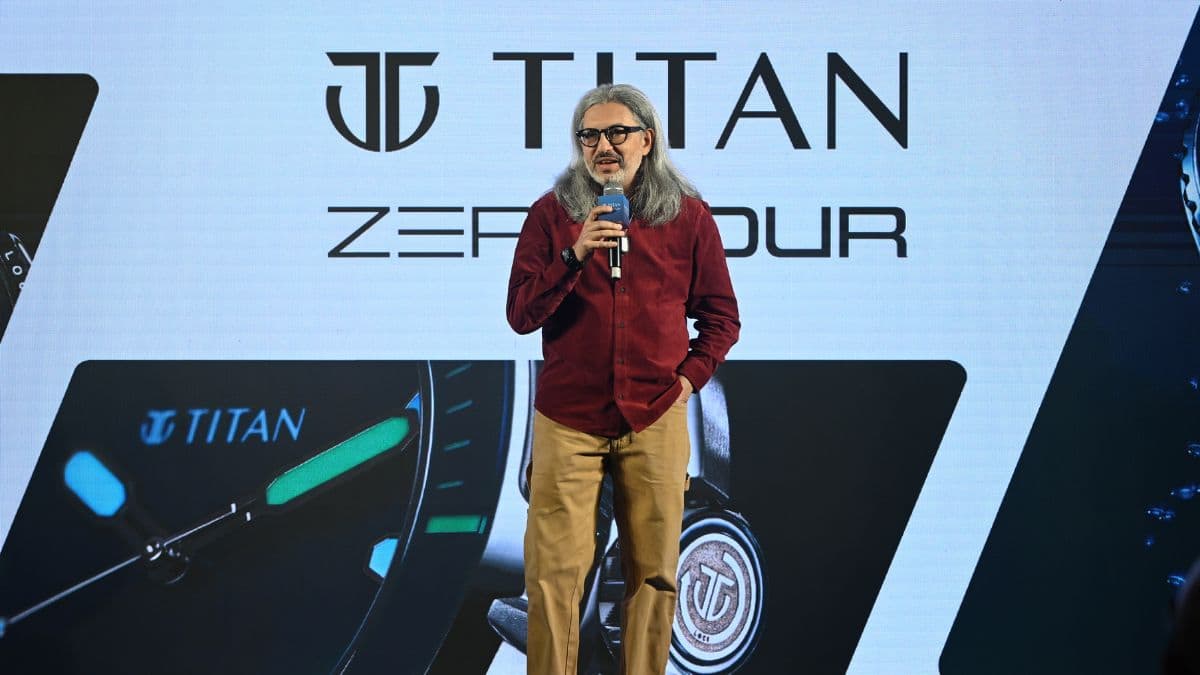
In a recent interview with Firstpost, Kuruvilla Markose, Titan Watches CEO, mentioned that India could emerge as a major watchmaking ecosystem after Switzerland and the Far East. Markose said India would take about five years to get there.
A claim like that from the head of the world's fifth-largest manufacturer is bound to invite scrutiny, as well as a lingering feeling that perhaps Markose knows more than he is letting on. But what exactly does he mean by ‘watchmaking ecosystem’? Does he mean that India will make complete, high-end watches? Or that it will become a place where much of the world will source components from, the way it does with auto parts?
The answer to those questions is still taking shape, but the conversation couldn't have happened at a better time. There is now a growing understanding about watches. Swiss watch exports to India have jumped 32.7% to CHF 138.4 million in the first five months of 2026, and watch retailers (Art of Time) and watch brands (Rotoris) are raising capital.
 More from Lifestyle
The segment above Rs 25,000 is growing at roughly 30% every year, nearly three times the rate of cheaper watches, while some domestic microbrands such as Bangalore Watch Company, whose component quality matches that of microbrands anywhere in the world, have found buyers in over 30 countries. And to top it all, Ethos, India's largest luxury watch retailer, will host the prestigious Grand Prix d'Horlogerie de Geneve, often termed the Oscars of the watch world, later this year in Mumbai.
But beyond Titan, which operates two manufacturing plants and three assembly units in India and makes its own in-house automatic movements, we don't have much of an ecosystem. In fact, it is largely just one company, Ethos-owner KDDL, whose high-end arm Tara Tech makes, among others, world-class dials once available only from Switzerland and China. (KDDL earns a lot more retailing watches through Ethos than making components.) By contrast, and for some perspective, the auto components industry recorded a turnover of $88 billion – exports were at $22.90 billion – in FY 2025.
Titan, though, does more than most people assume. It maintains a library of over 150 in-house movement designs (both mechanical and quartz), and manufactures many of the components that go into them, from plates and bridges to wheels, rotors, and cases. But it is yet to master the hardest parts of a mechanical watch: the escapement and the hairspring. No one in India makes the hairspring yet, but Markose is hoping "we'd be the first".
As the leader of a company that makes about 20 million watches a year, Markose envisions a global sourcing model – some work onshore, some nearshore, some offshore – with India gradually becoming a component supplier to the world. Markose believes that components will be the story.
He references it through the L0-to-L3 grading system Titan has created: India today makes good L2 and L3 watches, has started on L0 and L1, and the ecosystem will fill in around it as demand grows and suppliers emerge. What makes the story genuinely interesting is that the people building India's watch industry disagree on what “building” means.
What “building” means
Nirupesh Joshi's Bangalore Watch Company makes about 1,000 watches a year. The watches, priced between CHF 1,500 and 2,000, are assembled, tested, and regulated in-house. BWC sources Sellita and La Joux Perret movements from Switzerland; cases are finished abroad; and straps and dials are increasingly sourced from India.
For its latest drop, Peninsula Carbon, the company co-developed a carbon-fibre dial with Bangalore material science firm Carbon Craft. Joshi sees no contradiction between this material innovation and the use of imported movements. He believes that “growth will come from high-margin brand and narrative, not manufacture and push”. “It's the Apple model. Apple isn't building factories in California,” Joshi says. He is also blunt about the ‘Made in India’ label others chase. "Made in India is a lie. There is no standard. Unlike the Swiss ‘Made in Switzerland’ designation, which requires 70% of value addition to happen domestically, India has no such benchmark," he says. "Anyone can call it ‘Made in India’ if you want."
For Joshi, the only true watchmakers are independents such as F P Journe and Akrivia, who make every bridge and pallet by hand. "Everybody else is doing industrial manufacturing in some way, including Rolex and AP." The implication is clear: if even Rolex is an industrial manufacturer, why should an Indian brand pretend otherwise?
Before Aakash Anand co-founded Rotoris – with $3 million in seed funding from entrepreneurs Nikhil Kamath and Vivek Oberoi, VC firms Venture Catalysts and 100Unicorns, and angel investors such as consumer electronics company Noise's founder Gaurav Khatri – he built perfume brand Bella Vita into a D2C success. Rotoris doesn't follow the same playbook as Bella Vita, says Anand, though one can discern echoes of it in his approach to horology.
Anand sources straps from India, cases from Germany, China, and India; dials from India, China, and Japan, and quartz and mechanical movements from Chinese and Japanese suppliers. The watches are designed and assembled in India. Access to them is released in controlled waves, and every potential customer is put on a waitlist. Prices start at roughly Rs 40,000. Anand is not concerned – at least, not yet – with what he doesn't make. He insists an Indian brand does not need a costly in-house movement to be taken seriously.
Most watchmakers, even prestigious brands, buy in their movements, he points out. His plans for Rotoris' own movement will come from a partnership rather than brute spend. Rotoris is in what he calls a “deep relationship” with Swiss movement maker Sellita, and plans to build calibres on Sellita's base movements. The long-term ambition is an Indo-Swiss tie-up. “I'd be a fool to spend millions and decades creating my own manufacturing process when I can buy or borrow the expertise,” he says.
A view from Switzerland
The divergence between the philosophies of India's largest watchmaker and other stakeholders in the ecosystem needs an adjudicator, and Oliver Müller, the former CEO of luxury watchmaker Laurent Ferrier, is as close as one can get.
Müller is the founder of the consultancy LuxeConsult and the lead author of the highly regarded Swiss Watch Industry report published by Morgan Stanley since 2018. He has no horse in this race, and is respectfully sceptical of Titan's five-year timeframe. “I'm not saying they won't make it. They have the financial means and all the technical know-how, but five years seems a very short timeframe," he says.
Muller summons the example of Grand Seiko, which focused on its domestic market for 50 years and only launched internationally in 2010, reaching Europe in 2020. The brand now sits at roughly number 22 or 23 in the Morgan Stanley ranking. China, he says, acquired its watchmaking knowledge through licenced movements and Swiss component-making about 45 years ago.
A decade, Muller says, is a reasonable timeframe. He believes India will achieve both – brands that get more visibility and a component ecosystem that develops alongside them. The critical constraint, he adds, is not capital or technology. It is competition. The ecosystem will only grow once a substantial rival to Titan emerges, “to create an emulation, a competition that will help all the suppliers around those brands to grow”.
The partnership play
Markose, though, isn't just betting on the gradual maturing of the Indian watch ecosystem – he is thinking about other, shorter routes to get there. And he has one analogy, which, more than any data point, explains how he thinks it will work.
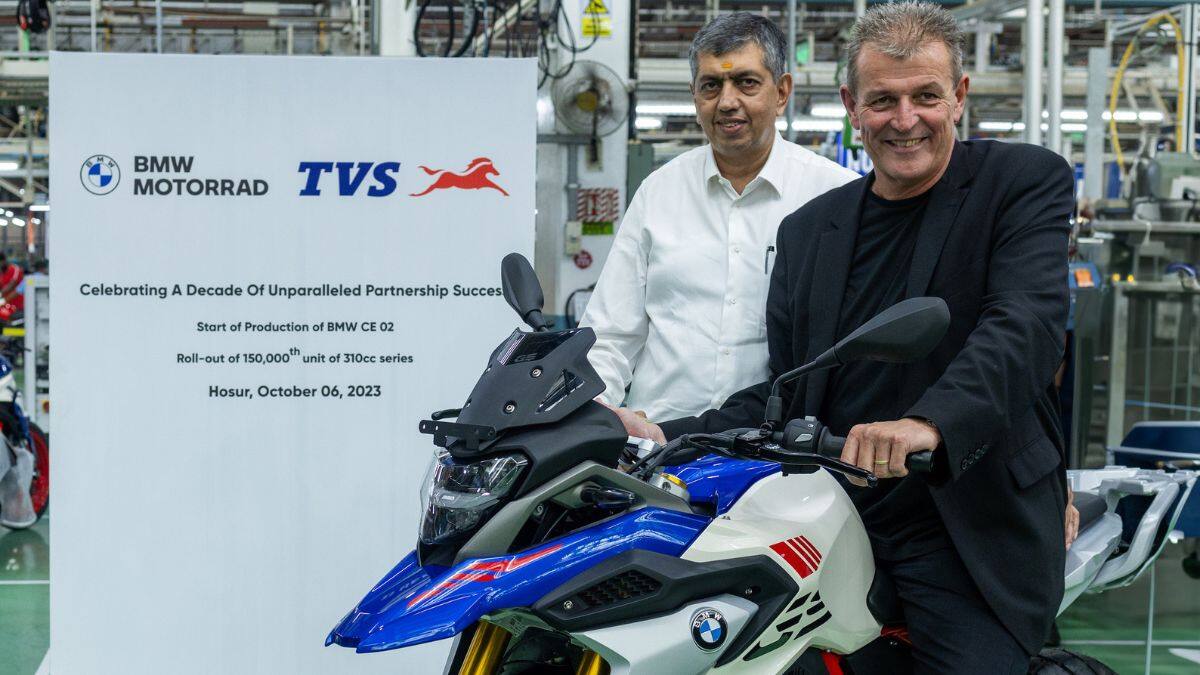
He points to the two-wheeler industry. India’s scale, he says, has drawn the world’s biggest motorcycle brands into local tie-ups: Harley-Davidson with Hero; BMW with TVS, and Triumph with Bajaj. “They get access to the Indian market, and they can make products they otherwise couldn’t.” The watch equivalent would work the same way. “TVS couldn't have engineered the F 450 GS,” Markose says. "But neither could BMW have manufactured it at that cost. This is the best of both worlds.”
Müller, the sceptic on the five-year timeline, thinks the partnership idea itself is sound. “It's definitely a shortcut,” he says. “Rather than trying to do everything in-house from the beginning, it's a smart way to acquire the know-how. It limits the learning curve, it limits the financial means you need.”
Markose is clear he is not talking about buying a Swiss brand, but partnering with one. Does that mean we could be looking at a Titan-Breitling, or a Titan-Moser, or, perhaps, a Titan-IWC? “At this point, nothing like that is in the works. I’m just painting a picture of how the world could evolve,” he says. “Is that a possibility if both parties are interested? Yes, it is a possibility.”

Trade the hustle for the Shire: Inside the "hobbitmaxxing" trend
Spices, health and the Indian plate: Why chilli can be good for you—but moderation is still key
The right way to break up without feeling groggy
How Spider-Man actor Tom Holland has been on a sobriety journey of 4.5 years after being "addicted to alcohol"
Why Chennai is India's filter coffee capital, one tumbler at a time