


India Design ID 2026: Inside India’s biggest design week
From craft-led reinterpretations to collectible design, this year’s India Design ID offered a snapshot of where India’s premium interiors, and the industry behind them, are headed.

If you want to understand how India’s premium homes will look in three years, India Design week is a good place to start.
The 14th edition of India Design ID brought together over 150 brands, architects, and design thinkers in Delhi this February. More than a trade fair, it operates as a cultural checkpoint where the industry collectively negotiates aesthetics, sustainability, craft and collectibility. The result is less about individual objects and more about the evolving idea of the contemporary Indian home.
The global look
Walk through the exhibition halls, and a visual pattern quickly settles in: curved silhouettes, brushed metals, textured stone, sculptural lighting, muted palettes. Ornamentation has receded; tactility has taken centre stage.
Brands such as KOHLER, Ligne Roset and Jaipur Rugs sat alongside Indian studios presenting carefully edited collections. The coherence was striking. Indian design today feels globally fluent: not derivative, but comfortable within the same aesthetic conversation as Milan or Paris.
 More from Lifestyle
That fluency signals confidence. It also signals convergence. As Indian interiors increasingly mirror international luxury codes, the question becomes less about catching up and more about differentiation within a shared visual language.
Craft, repositioned
This year’s theme, The Age of Design Syncretism, framed the fair as a meeting point of tradition and technology. In practice, the syncretism was subtle. Craft appeared not as nostalgia, but as a strategy integrated into minimalist forms, re-engineered for contemporary markets.
Director, Experience and Partnerships, Mohita Gandhi, underscored this continuity, “India’s heritage influences contemporary creativity. From geometry to engineering, ancient principles continue to guide modern solutions, balancing aesthetics with environmental intelligence.”
It reflects a real shift. Indian craft is no longer being presented solely as heritage to be preserved, but as material intelligence to be deployed. That repositioning matters, particularly in a market that is growing more design-aware.
Yet as craft becomes embedded within premium narratives, its structural realities remain largely outside the spotlight. Recognition is visible; reform is less so. The industry seems aware of this tension, even if it is still navigating how to address it.
The collector’s turn
One of the most telling additions was ID Salon at Bikaner House, introduced as a dedicated platform for collectable design. Limited-edition furniture, sculptural objects and art-adjacent works suggested a maturing collector ecosystem. Collectable design shifts the conversation from function to authorship. The home becomes curated, not just furnished. Ownership becomes a statement.
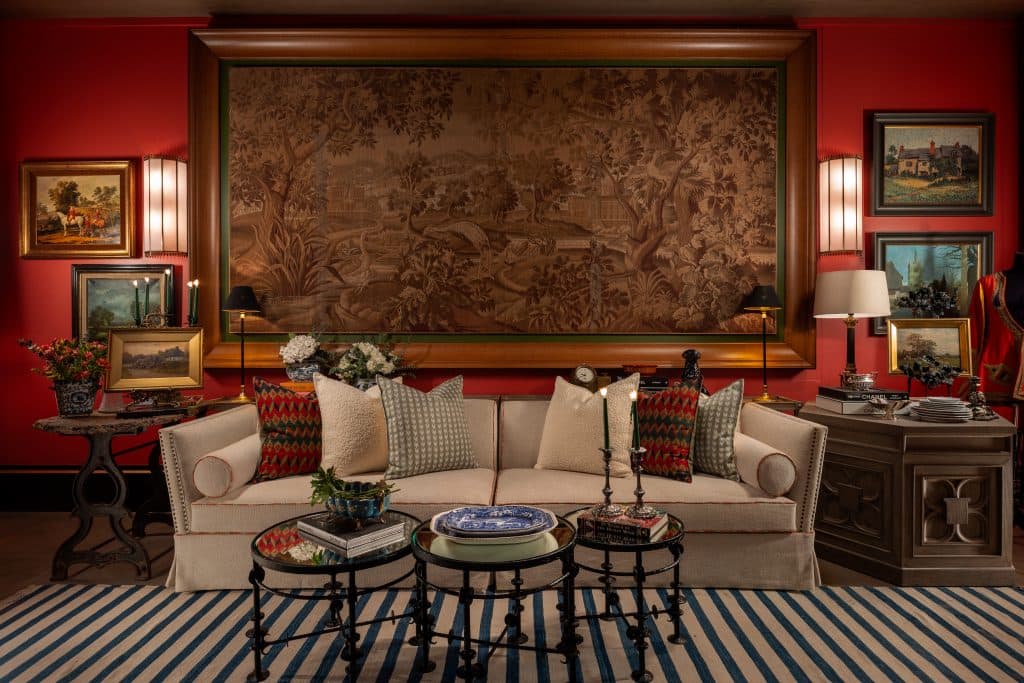
This evolution signals confidence in the market and a growing appetite for rarity. It also reinforces who this ecosystem primarily serves: a design-literate, upwardly mobile, culturally invested elite. India Design ID does not disguise that reality; it operates within it.
Designing for longevity
At the ID Symposium, speakers including Mateo Kries of the Vitra Design Museum, architect-designer India Mahdavi, British designer Max Lamb, and Indian practitioners such as Vinu Daniel and Sourabh Gupta addressed sustainability, pedagogy and material futures.
“Sustainability is no more a movement, it is a way of life as it should be,” Gandhi noted, adding that India Design ID aims to foreground ideas of sustainability and innovation as design “quietly leads the way.”
Sustainability is no longer a peripheral theme; it is embedded in design language. But luxury production by scale and by nature complicates the rhetoric. The fair reveals an industry conscious of environmental responsibility, yet still operating within aspirational frameworks that demand growth, scale and novelty.
The contradiction is not unique to India. It is global, but it is increasingly unavoidable.
Setting the tone
India Design ID ultimately functions as calibration. Because its primary audience is industry-facing, the aesthetics validated here will ripple outward into luxury apartments in Gurugram, boutique hotels in Jaipur, and commercial spaces across Mumbai and Bengaluru.
If tensions are visible between global alignment and local specificity, sustainability claims and material indulgence, they reflect the broader evolution of Indian design itself. The fair does not attempt to resolve them. It makes them legible.
And perhaps that is its real significance. India Design ID 2026 is not merely about objects on display. It is about direction-setting. About how a rapidly urbanising, increasingly design-literate India imagines comfort, status, responsibility and beauty, all at once.
The modern Indian home, as seen here, is no longer tentative. It is confident, curated and globally conversant. The challenge now is ensuring it is also distinct and accountable.
Culture writer.

Trade the hustle for the Shire: Inside the "hobbitmaxxing" trend
Spices, health and the Indian plate: Why chilli can be good for you—but moderation is still key
The right way to break up without feeling groggy
How Spider-Man actor Tom Holland has been on a sobriety journey of 4.5 years after being "addicted to alcohol"
Why Chennai is India's filter coffee capital, one tumbler at a time