
Advertisement


Sections
Mob lynchings: Lack of media coverage, response from State show Indians don't care about stopping rogue justice
Tripura banned internet as a response to the lynching. To me, this is astonishing and shows the government thinks that the way to stop public murders is through stopping WhatsApp.

Newspapers have been around in India for over two centuries, but if we were to have opened one from 1780 many stories would be similar.[caption id="attachment_4205929" align="alignleft" width="380"]![Representational image. Getty Images]() Representational image. Getty Images[/caption]An Indian father somewhere would have killed his daughter for falling in love (an act we call ‘honour killing’). We expect that modernity and urbanisation would end this sort of primitive reaction, but in many ways Indians seem unchanged and honour killings happen regularly in 2018.Another thing we seem to be unable to leave behind as a modern society is lynching. The dictionary defines this as to kill someone for an alleged offence without a legal trial. For me, it is not easy to understand how a group of people, many of whom don’t know each other, find it easy to get together and act in concert to kill someone they don’t know.This week came the incredible news that a man sent by the Tripura government to stop lynchings was himself lynched by villagers. This man, Sukanta Chakrabarty, had been travelling from village to village dispelling rumours about child-lifters on social media. He was talking through a loudspeaker and asking people not to get swayed by rumours. He was beaten to death and two men with him were also assaulted. (Editor's note: A fresh lynching incident was reported from Maharashtra's Dhule district on Sunday. Five men were killed on suspicion that they were "child lifters".)I did not even know of this event till I read it in a foreign newspaper. This was because in our media, particularly the national TV channels, lynching is no longer a big story. The newsroom processes information in a particular way and stories that come too frequently are demoted because they are no longer ‘news’. This has happened to lynching, which has slowly moved away from the front pages and night-time debates. This does not mean that the violence has gone. If anything it seems to have increased.In just the past month, 14 Indians have been killed in lynchings: Two people each in Assam, Andhra Pradesh, Tripura, Maharashtra, Bengal, Telangana and one each in Gujarat and Karnataka. These are just the recorded fatalities. I assure you there will be others that the police will have covered up using their many tricks. Odisha alone in the past 30 days registered 15 assaults on 28 people.Foreigners are horrified by what they read is happening in our country. To them, it is not easy to understand why such things continue to happen in 2018. We do not seem to be concerned enough to act. There is no Mann ki Baat on lynching and no front page advertisements against such violence and what damage it does to our society and our nation. If the government is at all concerned about it, the only angle is that it not be given prominence. A publication that was recording the number of incidents of such hate crimes was instructed by the government to stop, and it did.The defenders of the government say that this is a law and order problem and a State subject. Both these things are true. But there is a role that all of us have here if we ask ourselves what a lynching is and why it happens.There are three reasons why episodes of mass public violence occur so frequently in India: First, because of the structure of our society and religion, we have group identity. We recognise the stereotype characteristics of communities: The wise Brahmin, the violent butcher, the stupid barber and so on. We do not recognise the individual and the fact that no two of us are alike. This makes it easier for the mob because little information is needed about the accused other than his community identity before anger is built up and violence breaks out against him.Second, this violence is difficult to contain because in India the government is small and weak. It has all the weaknesses of our society and is further burdened by not having adequate resources. Almost no act of mob violence is ultimately punished in court. Even where the State is present, it is unable or unwilling to challenge the mob. To look at only the latest example, a man, Zahir Khan, was lynched despite seeking refuge at a paramilitary camp.Third, often the State and the individuals who control it are participants in the violence. The knowledge that the rule of law is weak and that this will lead to murder does not stop leaders from pushing laws that promote it such as the beef ban.
Representational image. Getty Images[/caption]An Indian father somewhere would have killed his daughter for falling in love (an act we call ‘honour killing’). We expect that modernity and urbanisation would end this sort of primitive reaction, but in many ways Indians seem unchanged and honour killings happen regularly in 2018.Another thing we seem to be unable to leave behind as a modern society is lynching. The dictionary defines this as to kill someone for an alleged offence without a legal trial. For me, it is not easy to understand how a group of people, many of whom don’t know each other, find it easy to get together and act in concert to kill someone they don’t know.This week came the incredible news that a man sent by the Tripura government to stop lynchings was himself lynched by villagers. This man, Sukanta Chakrabarty, had been travelling from village to village dispelling rumours about child-lifters on social media. He was talking through a loudspeaker and asking people not to get swayed by rumours. He was beaten to death and two men with him were also assaulted. (Editor's note: A fresh lynching incident was reported from Maharashtra's Dhule district on Sunday. Five men were killed on suspicion that they were "child lifters".)I did not even know of this event till I read it in a foreign newspaper. This was because in our media, particularly the national TV channels, lynching is no longer a big story. The newsroom processes information in a particular way and stories that come too frequently are demoted because they are no longer ‘news’. This has happened to lynching, which has slowly moved away from the front pages and night-time debates. This does not mean that the violence has gone. If anything it seems to have increased.In just the past month, 14 Indians have been killed in lynchings: Two people each in Assam, Andhra Pradesh, Tripura, Maharashtra, Bengal, Telangana and one each in Gujarat and Karnataka. These are just the recorded fatalities. I assure you there will be others that the police will have covered up using their many tricks. Odisha alone in the past 30 days registered 15 assaults on 28 people.Foreigners are horrified by what they read is happening in our country. To them, it is not easy to understand why such things continue to happen in 2018. We do not seem to be concerned enough to act. There is no Mann ki Baat on lynching and no front page advertisements against such violence and what damage it does to our society and our nation. If the government is at all concerned about it, the only angle is that it not be given prominence. A publication that was recording the number of incidents of such hate crimes was instructed by the government to stop, and it did.The defenders of the government say that this is a law and order problem and a State subject. Both these things are true. But there is a role that all of us have here if we ask ourselves what a lynching is and why it happens.There are three reasons why episodes of mass public violence occur so frequently in India: First, because of the structure of our society and religion, we have group identity. We recognise the stereotype characteristics of communities: The wise Brahmin, the violent butcher, the stupid barber and so on. We do not recognise the individual and the fact that no two of us are alike. This makes it easier for the mob because little information is needed about the accused other than his community identity before anger is built up and violence breaks out against him.Second, this violence is difficult to contain because in India the government is small and weak. It has all the weaknesses of our society and is further burdened by not having adequate resources. Almost no act of mob violence is ultimately punished in court. Even where the State is present, it is unable or unwilling to challenge the mob. To look at only the latest example, a man, Zahir Khan, was lynched despite seeking refuge at a paramilitary camp.Third, often the State and the individuals who control it are participants in the violence. The knowledge that the rule of law is weak and that this will lead to murder does not stop leaders from pushing laws that promote it such as the beef ban.
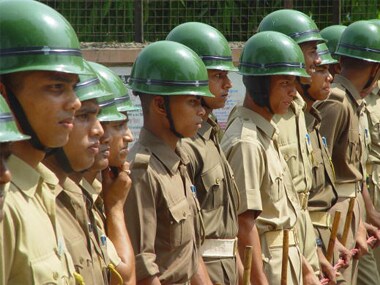 Representational image. Getty Images[/caption]An Indian father somewhere would have killed his daughter for falling in love (an act we call ‘honour killing’). We expect that modernity and urbanisation would end this sort of primitive reaction, but in many ways Indians seem unchanged and honour killings happen regularly in 2018.Another thing we seem to be unable to leave behind as a modern society is lynching. The dictionary defines this as to kill someone for an alleged offence without a legal trial. For me, it is not easy to understand how a group of people, many of whom don’t know each other, find it easy to get together and act in concert to kill someone they don’t know.This week came the incredible news that a man sent by the Tripura government to stop lynchings was himself lynched by villagers. This man, Sukanta Chakrabarty, had been travelling from village to village dispelling rumours about child-lifters on social media. He was talking through a loudspeaker and asking people not to get swayed by rumours. He was beaten to death and two men with him were also assaulted. (Editor's note: A fresh lynching incident was reported from Maharashtra's Dhule district on Sunday. Five men were killed on suspicion that they were "child lifters".)I did not even know of this event till I read it in a foreign newspaper. This was because in our media, particularly the national TV channels, lynching is no longer a big story. The newsroom processes information in a particular way and stories that come too frequently are demoted because they are no longer ‘news’. This has happened to lynching, which has slowly moved away from the front pages and night-time debates. This does not mean that the violence has gone. If anything it seems to have increased.In just the past month, 14 Indians have been killed in lynchings: Two people each in Assam, Andhra Pradesh, Tripura, Maharashtra, Bengal, Telangana and one each in Gujarat and Karnataka. These are just the recorded fatalities. I assure you there will be others that the police will have covered up using their many tricks. Odisha alone in the past 30 days registered 15 assaults on 28 people.Foreigners are horrified by what they read is happening in our country. To them, it is not easy to understand why such things continue to happen in 2018. We do not seem to be concerned enough to act. There is no Mann ki Baat on lynching and no front page advertisements against such violence and what damage it does to our society and our nation. If the government is at all concerned about it, the only angle is that it not be given prominence. A publication that was recording the number of incidents of such hate crimes was instructed by the government to stop, and it did.The defenders of the government say that this is a law and order problem and a State subject. Both these things are true. But there is a role that all of us have here if we ask ourselves what a lynching is and why it happens.There are three reasons why episodes of mass public violence occur so frequently in India: First, because of the structure of our society and religion, we have group identity. We recognise the stereotype characteristics of communities: The wise Brahmin, the violent butcher, the stupid barber and so on. We do not recognise the individual and the fact that no two of us are alike. This makes it easier for the mob because little information is needed about the accused other than his community identity before anger is built up and violence breaks out against him.Second, this violence is difficult to contain because in India the government is small and weak. It has all the weaknesses of our society and is further burdened by not having adequate resources. Almost no act of mob violence is ultimately punished in court. Even where the State is present, it is unable or unwilling to challenge the mob. To look at only the latest example, a man, Zahir Khan, was lynched despite seeking refuge at a paramilitary camp.Third, often the State and the individuals who control it are participants in the violence. The knowledge that the rule of law is weak and that this will lead to murder does not stop leaders from pushing laws that promote it such as the beef ban.
If lynchings are occuring frequently in India, it is the responsibility of those who lead the country to try and end them, not promote them.The foreign newspaper I saw the lynching report in, The Guardian, struggled to make sense of what was happening. It reported that “videos such as a Pakistani safety video showing a child being kidnapped by two men on a motorbike are often passed off as real incidents along with text messages that urge parents to be on high alert, fuelling mass hysteria in response to the hoax warnings.”It added: “The rash of attacks — usually targeting outsiders — has left authorities scrambling to mount an effective response, with awareness campaigns and alerts to the public having a limited effect.”Tripura banned internet as a response to the lynching. To me, this is astonishing and shows the government thinks the way to stop public murders is through stopping WhatsApp. The regularity and frequency with which these killings occur is itself a story. But it doesn’t seem to concern us too much as a people and that says many things about us. What we call the mob is often actually just Indian society.
Aakar Patel is a writer and columnist. He is a former newspaper editor, having worked with the Bhaskar Group and Mid Day Multimedia Ltd.
First Published:Jul 01, 2018, 11:08:04 IST
Advertisement
Advertisement

China has dominated Myanmar’s rare earth mines — now India eyes deal to harness country’s critical minerals
India is deepening rare earth cooperation with Myanmar as New Delhi seeks alternative sources of critical minerals dominated by China, including dysprosium and terbium used in EVs, defence systems and clean energy technologies
6 min read
CJP protest in Delhi: New videos of stone pelting, violence emerge as police, agitators trade charges
Fresh videos of violence that broke out during the Cockroach Janta Party's (CJP) protest in Delhi have surfaced, with the police releasing footage showing alleged stone pelting, vandalism and attacks on security personnel
3 min read
'From make in India to launch from India': Skyroot COO on why Vikram-1 could change India’s space sector
Skyroot Aerospace’s successful Vikram-1 mission marks a major milestone for India’s private space sector, as the country seeks to shift from “Make in India” to “Launch from India” and compete in the global commercial satellite launch market
8 min read
Choke terror funding, keep international shipping lanes safe: Jaishankar at Asean Regional Forum
Jaishankar's remarks came against the backdrop of recent terror attacks targeting India and growing threats to commercial shipping amid conflicts in West Asia and Europe
2 min read
PM Modi announces fast-track courts for paper leak cases; CJP responds ‘Dharmendra Pradhan must go’
Amid protests demanding accountability for the leak of medical entrance test Neet and other irregularities in the education system, Prime Minister Narendra Modi has announced that the government has decided to set up fast-track courts to ensure swift and stringent punishment for those involved in paper leaks.
3 min read
Advertisement
Advertisement