
Advertisement


Sections
Trial by Water: After Cyclone Yaas, residents of Sunderbans rue lost livelihoods, lack of clean drinking water, govt apathy
Caught in the web of lack of development, natural calamities, and governmental apathy, it remains to be seen how the locals will bounce back

On the afternoon of 26 May, 2021, when cyclone Yaas hit the eastern coast of India, the combined impact of the cyclone and a full moon tidal surge breached embankments built along the coast. As a result, the Sundarbans delta region of West Bengal faced massive flooding, ruining agriculture and property of the local residents.“Coronavirus, cyclone, lockdowns and another cyclone - we have nothing left that could possibly be destroyed,” said Fatima, a resident of Petkulchand village in Kultali constituency of Sundarbans. “Where do we go? How do we survive? The fields where we worked are flooded. The lockdowns have made it impossible for us to go to the cities to look for jobs,” she added.Similar conversations with locals from Sundarbans’ Kultali constituency illustrate their loss, suffering, and anxieties not only because of climatic disasters but also due to an increasing uncertainty around livelihoods following the pandemic and deep recession.[caption id="attachment_9872481" align="alignnone" width="640"]![Conversations with locals bring to light the loss, suffering, and anxieties not only because of climate disasters but also due to an increasing uncertainty around livelihoods. Image courtesy: Taniya Sarkar]() Conversations with locals bring to light the loss, suffering, and anxieties not only because of climate disasters but also due to an increasing uncertainty around livelihoods. Image courtesy: Taniya Sarkar[/caption]The government estimates damage of nearly 2.21 lakh hectares of crops and 71,560 hectares of horticulture in West Bengal alone. Salinity ingress — a process by which saline water enters areas with freshwater — caused insurmountable damage to the fields, rendering them uncultivable for the coming seasons.Under normal circumstances, when income from farming shrinks, locals turn to aquaculture for sustenance. However, cyclone Yaas also created massive losses in the aquaculture industry by arriving during harvest season. Reportedly, 12,000 tonnes of shrimps were lost during the cyclone, leading to monetary losses of approximately Rs 1,000 crore. In addition, a West Bengal’s state fisheries department survey reported nearly 30 percent of all boats would not sail this year due to flooding and consequent destruction caused by Yaas.[caption id="attachment_9872491" align="alignnone" width="640"]
Conversations with locals bring to light the loss, suffering, and anxieties not only because of climate disasters but also due to an increasing uncertainty around livelihoods. Image courtesy: Taniya Sarkar[/caption]The government estimates damage of nearly 2.21 lakh hectares of crops and 71,560 hectares of horticulture in West Bengal alone. Salinity ingress — a process by which saline water enters areas with freshwater — caused insurmountable damage to the fields, rendering them uncultivable for the coming seasons.Under normal circumstances, when income from farming shrinks, locals turn to aquaculture for sustenance. However, cyclone Yaas also created massive losses in the aquaculture industry by arriving during harvest season. Reportedly, 12,000 tonnes of shrimps were lost during the cyclone, leading to monetary losses of approximately Rs 1,000 crore. In addition, a West Bengal’s state fisheries department survey reported nearly 30 percent of all boats would not sail this year due to flooding and consequent destruction caused by Yaas.[caption id="attachment_9872491" align="alignnone" width="640"]![In the aftermath Cyclone Yaas, dead fish and saline ingress turned water in local ponds unsuitable for drinking and domestic use. Image courtesy: Taniya Sarkar]() In the aftermath Cyclone Yaas, dead fish and saline ingress turned water in local ponds unsuitable for drinking and domestic use. Image courtesy: Taniya Sarkar[/caption]In the aftermath of the cyclone, dead fish and saline ingress turned the water in the local ponds unsuitable for drinking and domestic use. The villagers lamented that the hand pumps have also been pumping out brackish water. Repeated seawater intrusion into the aquifers due to flooding as well as massive withdrawal of groundwater resources over time have resulted in salinisation of the region’s water table. The process of desalinating groundwater is long and expensive, leaving the locals with very few options at hand.[caption id="attachment_9872501" align="alignnone" width="640"]
In the aftermath Cyclone Yaas, dead fish and saline ingress turned water in local ponds unsuitable for drinking and domestic use. Image courtesy: Taniya Sarkar[/caption]In the aftermath of the cyclone, dead fish and saline ingress turned the water in the local ponds unsuitable for drinking and domestic use. The villagers lamented that the hand pumps have also been pumping out brackish water. Repeated seawater intrusion into the aquifers due to flooding as well as massive withdrawal of groundwater resources over time have resulted in salinisation of the region’s water table. The process of desalinating groundwater is long and expensive, leaving the locals with very few options at hand.[caption id="attachment_9872501" align="alignnone" width="640"]![Many women travel almost two to three kilometres to fetch clean drinking water for their family, just to save them from water-borne diseases during the flood and monsoon. Image courtesy: Taniya Sarkar]() Many women travel almost two to three kilometres to fetch clean drinking water for their family, just to save them from water-borne diseases during the flood and monsoon. Image courtesy: Taniya Sarkar[/caption]Since Yaas disrupted the lives of the locals, women walk kilometres to gather clean drinking water for their families. Not only has the cyclone intensified their work but also made them more vulnerable to instances of sexual violence and human trafficking activities that are highly prevalent in the region.In an interview, Anurag Danda, a senior fellow at Observer’s Research Foundation, noted, “Economic hardships also have an ecological angle. As land turns saline or there are breaches of embankments, people lose land and economic hardships ensue. Also, with every generation, landholdings turn smaller as they get divided among scions. All this leads to a higher incidence of poverty and subsequently child marriages and trafficking.”[caption id="attachment_9872521" align="alignnone" width="640"]
Many women travel almost two to three kilometres to fetch clean drinking water for their family, just to save them from water-borne diseases during the flood and monsoon. Image courtesy: Taniya Sarkar[/caption]Since Yaas disrupted the lives of the locals, women walk kilometres to gather clean drinking water for their families. Not only has the cyclone intensified their work but also made them more vulnerable to instances of sexual violence and human trafficking activities that are highly prevalent in the region.In an interview, Anurag Danda, a senior fellow at Observer’s Research Foundation, noted, “Economic hardships also have an ecological angle. As land turns saline or there are breaches of embankments, people lose land and economic hardships ensue. Also, with every generation, landholdings turn smaller as they get divided among scions. All this leads to a higher incidence of poverty and subsequently child marriages and trafficking.”[caption id="attachment_9872521" align="alignnone" width="640"]![The dam over the Thakuran river broke, flooding and drowning everything in sight. Image courtesy: Taniya Sarkar]() The dam over the Thakuran river broke, flooding and drowning everything in sight. Image courtesy: Taniya Sarkar[/caption]Having lost their primary sources of livelihood, locals have complained that the government’s relief measures have been inadequate, saying that they are now entirely dependent on aid provided by civil society organisations. They expressed frustrations with the inadequacy of the government's relief measures.Their frustration draws attention towards the state’s repeated botched responses to climate calamities, the lack of proper policies, and inefficient legal and institutional frameworks, which have continually added to the misery of the locals. From the Bengal Embankment Act (1882), which was last amended in 1981, to the Forest Rights Act, 2006, which continues to remain unimplemented in the Sundarban region, the government’s limited interest in the region’s development presents a grim reality.
The dam over the Thakuran river broke, flooding and drowning everything in sight. Image courtesy: Taniya Sarkar[/caption]Having lost their primary sources of livelihood, locals have complained that the government’s relief measures have been inadequate, saying that they are now entirely dependent on aid provided by civil society organisations. They expressed frustrations with the inadequacy of the government's relief measures.Their frustration draws attention towards the state’s repeated botched responses to climate calamities, the lack of proper policies, and inefficient legal and institutional frameworks, which have continually added to the misery of the locals. From the Bengal Embankment Act (1882), which was last amended in 1981, to the Forest Rights Act, 2006, which continues to remain unimplemented in the Sundarban region, the government’s limited interest in the region’s development presents a grim reality.![Threats to livelihood and economy because of water, such as rising sea levels, salinisation, flooding and so forth, have made the Sundarbans uninhabitable. Image courtesy: Taniya Sarkar]() Threats to livelihood and economy because of water, such as rising sea levels, salinisation, flooding and so forth, have made the Sundarbans uninhabitable. Image courtesy: Taniya Sarkar[/caption]A recent investigation showing that the government rejected 90 percent of all public objections made against the Coastal Regulation Zone [CRZ] notification brought to light its disregard towards public concern.Threats to livelihood and economy because of water, such as rising sea levels, salinisation, flooding and so forth, have made the Sundarbans uninhabitable. Paradoxically, the all-pervasive presence of water in the delta makes it impossible for the locals to disengage from the presence and play of water. Caught in the web of lack of development, natural calamities, and governmental apathy, it remains to be seen how the locals will bounce back.[caption id="attachment_9872541" align="alignnone" width="640"]
Threats to livelihood and economy because of water, such as rising sea levels, salinisation, flooding and so forth, have made the Sundarbans uninhabitable. Image courtesy: Taniya Sarkar[/caption]A recent investigation showing that the government rejected 90 percent of all public objections made against the Coastal Regulation Zone [CRZ] notification brought to light its disregard towards public concern.Threats to livelihood and economy because of water, such as rising sea levels, salinisation, flooding and so forth, have made the Sundarbans uninhabitable. Paradoxically, the all-pervasive presence of water in the delta makes it impossible for the locals to disengage from the presence and play of water. Caught in the web of lack of development, natural calamities, and governmental apathy, it remains to be seen how the locals will bounce back.[caption id="attachment_9872541" align="alignnone" width="640"]![Caught in the web of lack of development, natural calamities, and governmental apathy, it remains to be seen how the locals will bounce back. Image courtesy: Taniya Sarkar]() Caught in the web of lack of development, natural calamities, and governmental apathy, it remains to be seen how the locals will bounce back. Image courtesy: Taniya Sarkar[/caption]To quote Amitav Ghosh from The Hungry Tide on the locals of Sunderbans, “In the tide country our fault, our crime, was that we were just human beings, trying to live as human beings always have, from the water and the soil. No human being could think this is a crime unless they have forgotten that this is how humans have always lived—by fishing, by clearing land and by planting the soil.”Somiha Chatterjee is a research assistant at Social and Political Research Foundation. Taniya Sarkar is an independent photographer based in Kolkata, India. Headquartered in New Delhi, SPRF is a young policy think-tank seeking to make public policy research holistic and accessible.
Caught in the web of lack of development, natural calamities, and governmental apathy, it remains to be seen how the locals will bounce back. Image courtesy: Taniya Sarkar[/caption]To quote Amitav Ghosh from The Hungry Tide on the locals of Sunderbans, “In the tide country our fault, our crime, was that we were just human beings, trying to live as human beings always have, from the water and the soil. No human being could think this is a crime unless they have forgotten that this is how humans have always lived—by fishing, by clearing land and by planting the soil.”Somiha Chatterjee is a research assistant at Social and Political Research Foundation. Taniya Sarkar is an independent photographer based in Kolkata, India. Headquartered in New Delhi, SPRF is a young policy think-tank seeking to make public policy research holistic and accessible.
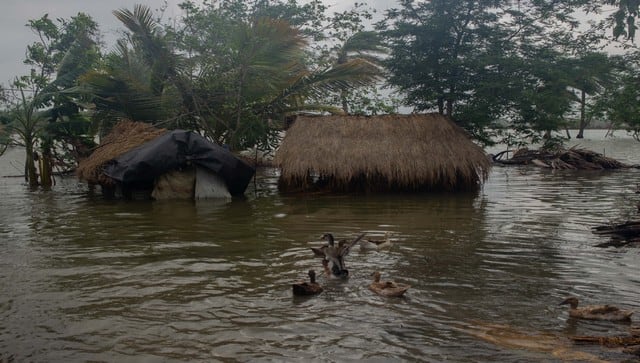 Conversations with locals bring to light the loss, suffering, and anxieties not only because of climate disasters but also due to an increasing uncertainty around livelihoods. Image courtesy: Taniya Sarkar[/caption]The government estimates damage of nearly 2.21 lakh hectares of crops and 71,560 hectares of horticulture in West Bengal alone. Salinity ingress — a process by which saline water enters areas with freshwater — caused insurmountable damage to the fields, rendering them uncultivable for the coming seasons.Under normal circumstances, when income from farming shrinks, locals turn to aquaculture for sustenance. However, cyclone Yaas also created massive losses in the aquaculture industry by arriving during harvest season. Reportedly, 12,000 tonnes of shrimps were lost during the cyclone, leading to monetary losses of approximately Rs 1,000 crore. In addition, a West Bengal’s state fisheries department survey reported nearly 30 percent of all boats would not sail this year due to flooding and consequent destruction caused by Yaas.[caption id="attachment_9872491" align="alignnone" width="640"]
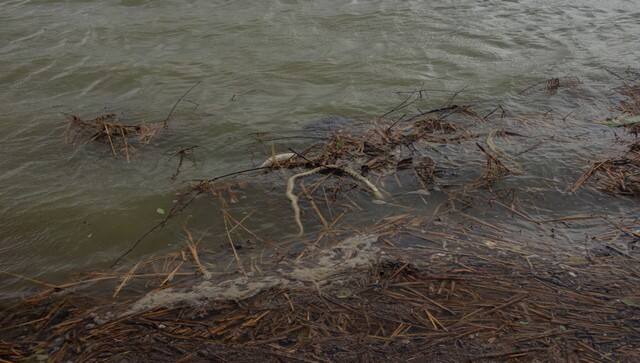 In the aftermath Cyclone Yaas, dead fish and saline ingress turned water in local ponds unsuitable for drinking and domestic use. Image courtesy: Taniya Sarkar[/caption]In the aftermath of the cyclone, dead fish and saline ingress turned the water in the local ponds unsuitable for drinking and domestic use. The villagers lamented that the hand pumps have also been pumping out brackish water. Repeated seawater intrusion into the aquifers due to flooding as well as massive withdrawal of groundwater resources over time have resulted in salinisation of the region’s water table. The process of desalinating groundwater is long and expensive, leaving the locals with very few options at hand.[caption id="attachment_9872501" align="alignnone" width="640"]
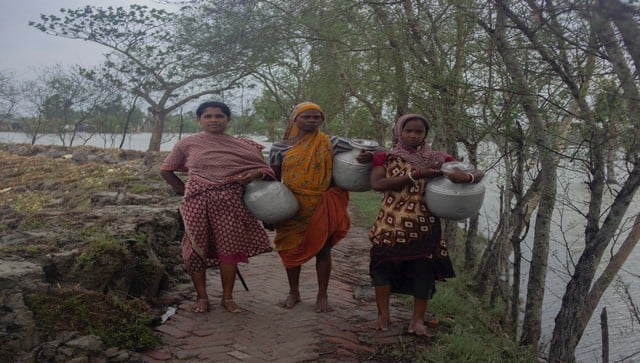 Many women travel almost two to three kilometres to fetch clean drinking water for their family, just to save them from water-borne diseases during the flood and monsoon. Image courtesy: Taniya Sarkar[/caption]Since Yaas disrupted the lives of the locals, women walk kilometres to gather clean drinking water for their families. Not only has the cyclone intensified their work but also made them more vulnerable to instances of sexual violence and human trafficking activities that are highly prevalent in the region.In an interview, Anurag Danda, a senior fellow at Observer’s Research Foundation, noted, “Economic hardships also have an ecological angle. As land turns saline or there are breaches of embankments, people lose land and economic hardships ensue. Also, with every generation, landholdings turn smaller as they get divided among scions. All this leads to a higher incidence of poverty and subsequently child marriages and trafficking.”[caption id="attachment_9872521" align="alignnone" width="640"]
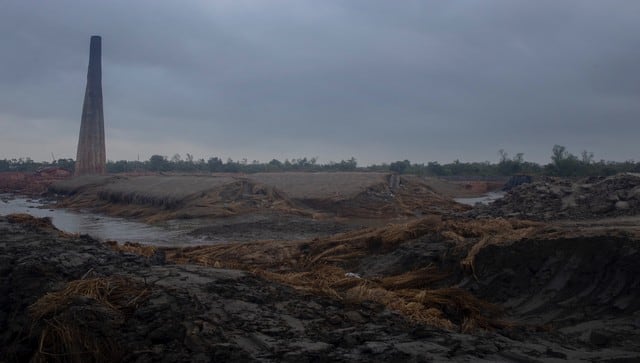 The dam over the Thakuran river broke, flooding and drowning everything in sight. Image courtesy: Taniya Sarkar[/caption]Having lost their primary sources of livelihood, locals have complained that the government’s relief measures have been inadequate, saying that they are now entirely dependent on aid provided by civil society organisations. They expressed frustrations with the inadequacy of the government's relief measures.Their frustration draws attention towards the state’s repeated botched responses to climate calamities, the lack of proper policies, and inefficient legal and institutional frameworks, which have continually added to the misery of the locals. From the Bengal Embankment Act (1882), which was last amended in 1981, to the Forest Rights Act, 2006, which continues to remain unimplemented in the Sundarban region, the government’s limited interest in the region’s development presents a grim reality.
Soil and water salinisation, flooding, and a rise in sea level are likely to worsen due to climate change.Such factors mandate the need for stronger embankment systems, installing appropriate methods to combat salinisation, and directing resources towards livelihood development. However, the state and central governments have consistently mismanaged planning for the coastline's present and fast-approaching future.[caption id="attachment_9872531" align="alignnone" width="640"]
 Threats to livelihood and economy because of water, such as rising sea levels, salinisation, flooding and so forth, have made the Sundarbans uninhabitable. Image courtesy: Taniya Sarkar[/caption]A recent investigation showing that the government rejected 90 percent of all public objections made against the Coastal Regulation Zone [CRZ] notification brought to light its disregard towards public concern.Threats to livelihood and economy because of water, such as rising sea levels, salinisation, flooding and so forth, have made the Sundarbans uninhabitable. Paradoxically, the all-pervasive presence of water in the delta makes it impossible for the locals to disengage from the presence and play of water. Caught in the web of lack of development, natural calamities, and governmental apathy, it remains to be seen how the locals will bounce back.[caption id="attachment_9872541" align="alignnone" width="640"]
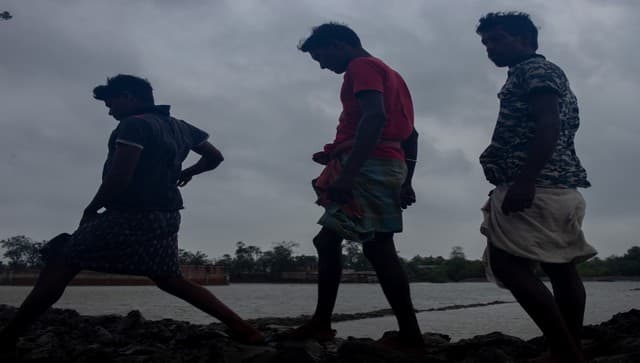 Caught in the web of lack of development, natural calamities, and governmental apathy, it remains to be seen how the locals will bounce back. Image courtesy: Taniya Sarkar[/caption]To quote Amitav Ghosh from The Hungry Tide on the locals of Sunderbans, “In the tide country our fault, our crime, was that we were just human beings, trying to live as human beings always have, from the water and the soil. No human being could think this is a crime unless they have forgotten that this is how humans have always lived—by fishing, by clearing land and by planting the soil.”Somiha Chatterjee is a research assistant at Social and Political Research Foundation. Taniya Sarkar is an independent photographer based in Kolkata, India. Headquartered in New Delhi, SPRF is a young policy think-tank seeking to make public policy research holistic and accessible.
First Published:Aug 08, 2021, 17:10:50 IST
Advertisement
Advertisement

J&K cop on Amarnath Yatra duty shot dead in Anantnag terror attack; TRF claims responsibility
The Resistance Front (TRF), a shadow outfit of Lashkar-e-Taiba, claimed responsibility for the attack through a social media post
2 min read
Jaishankar meets Canada's Anita Anand, discusses bilateral cooperation and shared interests
External Affairs Minister S Jaishankar on Wednesday held talks on bilateral ties with his Canadian counterpart Anita Anand, focusing on cooperation and common goals.
1 min read
Delhi, Bengaluru, Hyderabad... Neet paper leak protest spreads nationwide even as govt reaches out to CJP, Opposition
Protests over the alleged NEET paper leak intensified across multiple cities, while the Centre signalled talks with the Opposition and the Cockroach Janta Party. The Delhi High Court also stepped in, seeking preservation of CCTV footage related to police action.
3 min read
Why is India seeing 95% cloud cover despite a Super El Niño?
India is witnessing nearly 95 per cent cloud cover despite a Super El Niño, a climate event usually linked to weaker monsoons. Regional weather systems, cyclonic circulations, the monsoon trough and moisture from two seas are temporarily overpowering one of the world's strongest climate phenomena
5 min read
Jaishankar, Rubio review trade, defence, AI cooperation at Manila meeting
Jaishankar and US Secretary of State Marco Rubio reviewed key pillars of the India-US Comprehensive Global Strategic Partnership, including trade, defence, energy, critical minerals and artificial intelligence, while also exchanging views on regional and global developments.
1 min read
Advertisement
Advertisement