


SC order extending Aadhaar deadline allays concerns of the elite but fails to protect the most vulnerable
It is imperative that public policy professionals and policymakers examine Aadhaar from an access-to-resources perspective, and not just from a data protection one.

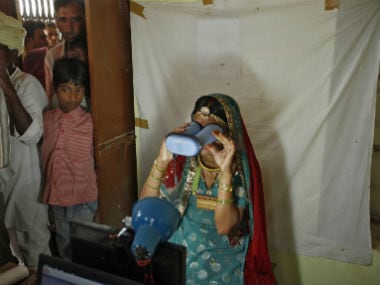
Representational image. Reuters.[/caption]The Supreme Court order is elitist — it has only allayed the concerns of the privileged who don’t necessarily access the public distribution system, and were only concerned with the Aadhaar linkage with bank accounts and mobiles. The Section 7 exception in the order is a direct violation of the citizens' fundamental freedoms and constitutional rights because for the most marginalised, Aadhaar has been made mandatory.What the Supreme Court did was protect the interests of the elite who are debating the privacy aspects of the Aadhaar Act, while denigrating the needs of the most vulnerable. The Indian Express notes that “Failing to provide relief to the most vulnerable citizens of the country, the poor and marginalized, for whom access to these welfare services is a crucial lifeline, the order is ultimately a disappointment.”In September 2017, Santoshi Kumar, an 11-year old girl from Jharkhand’s Simdega district died of starvation after her family’s ration card, under the National Food Security Act, was cancelled because it was not linked to their Aadhaar. This was a shock that perhaps no Right to Food activist could recover from and some journalists even called it a “death by data”. In fact, in Jharkhand, it has been reported that 11 lakh ration cards have been cancelled, and this has affected close to 25 lakh people who are otherwise eligible for food aid and subsidies. And this is not an isolated incident – three Dalit brothers in Gokarna, Karnataka also died of starvation in July 2017. The family was refused rations for nearly six months because they did not have an Aadhaar card. In Bareilly, a 50-year-old woman starved to death after her family was denied rations because her biometric data for Aadhaar authentication had not been completed. The Supreme Court order does not bring up any of these incidents and provides no mechanism to help the most vulnerable.Another problem that the Supreme Court causes is perpetuating discrimination against the most marginalised. The people most affected by the Section 7 exception are the lower castes, the hungry, the impoverished. In essence, the Supreme Court just went ahead and entrenched a digitised e-governance system to further exploit the exploited – “This means a poor person can only access food through a ration shop based on the availability of an Aadhaar card, a ration card, a linked database of the two, a functional biometric-enabled POS machine, uninterrupted supply of electricity and the internet; and unquestionable ability to recognise humans from their data. Once all these requirements are met, the fair price shop must have adequate supply of ration to distribute among the beneficiaries.”India’s concerns about the Aadhaar Act have so far been about privacy and data protection, but there is an objective that Aadhaar set out to achieve: offsetting information asymmetry while improving access to government welfare and benefits. It has been unable to do this despite integration of databases and linkages to the public distribution system. The system that is supposed to work towards inclusion, is itself causing exclusion of the most vulnerable, and this is a grave concern.It is imperative that public policy professionals, lobbyists and policymakers examine Aadhaar from an access-to-resources perspective, and not just from a data protection one. At this point, the vision of Digital India and a centralised social security system is built on the lives of the marginalised and the impoverished.

J&K cop on Amarnath Yatra duty shot dead in Anantnag terror attack; TRF claims responsibility
Jaishankar meets Canada's Anita Anand, discusses bilateral cooperation and shared interests
Delhi, Bengaluru, Hyderabad... Neet paper leak protest spreads nationwide even as govt reaches out to CJP, Opposition
Why is India seeing 95% cloud cover despite a Super El Niño?
Jaishankar, Rubio review trade, defence, AI cooperation at Manila meeting